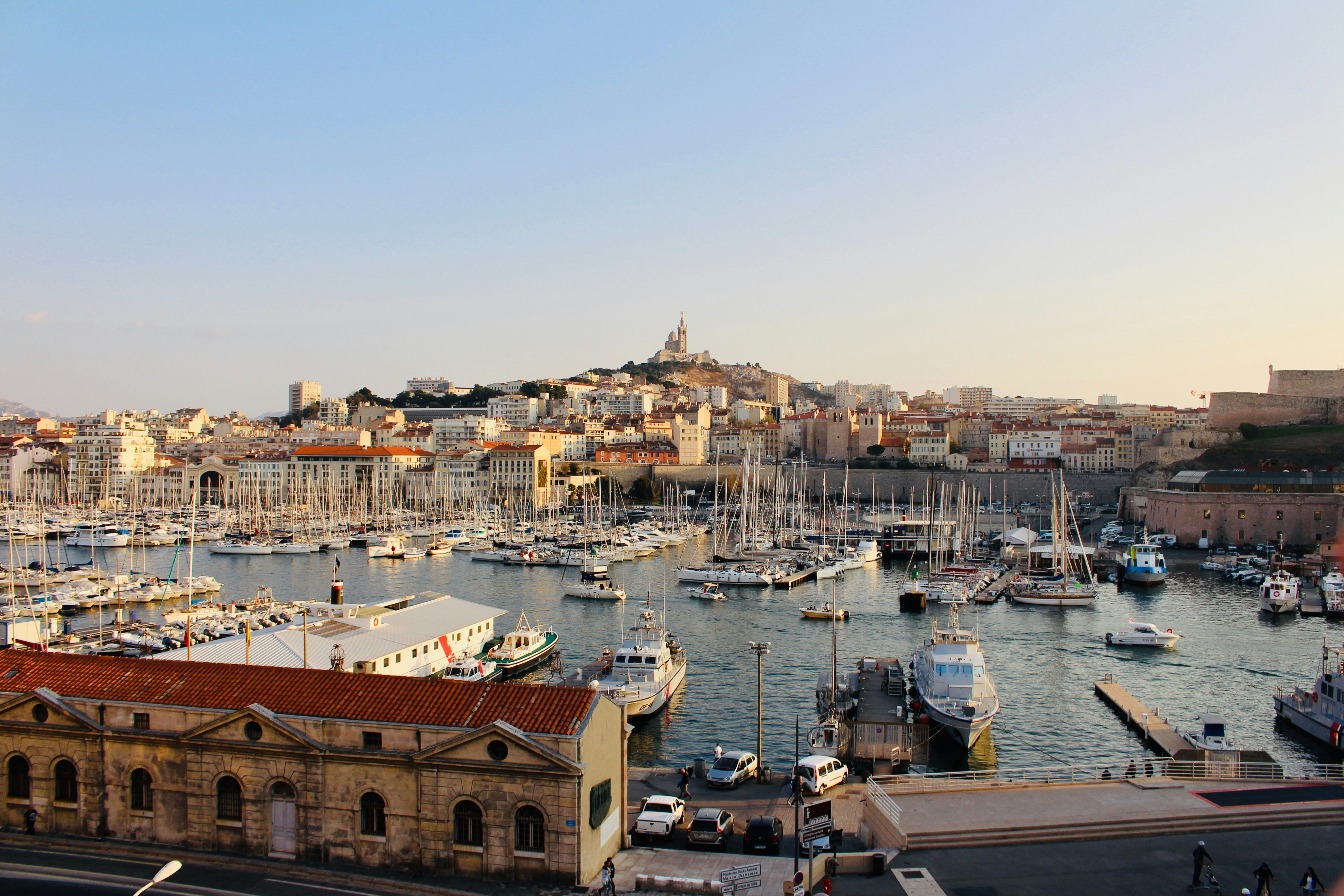
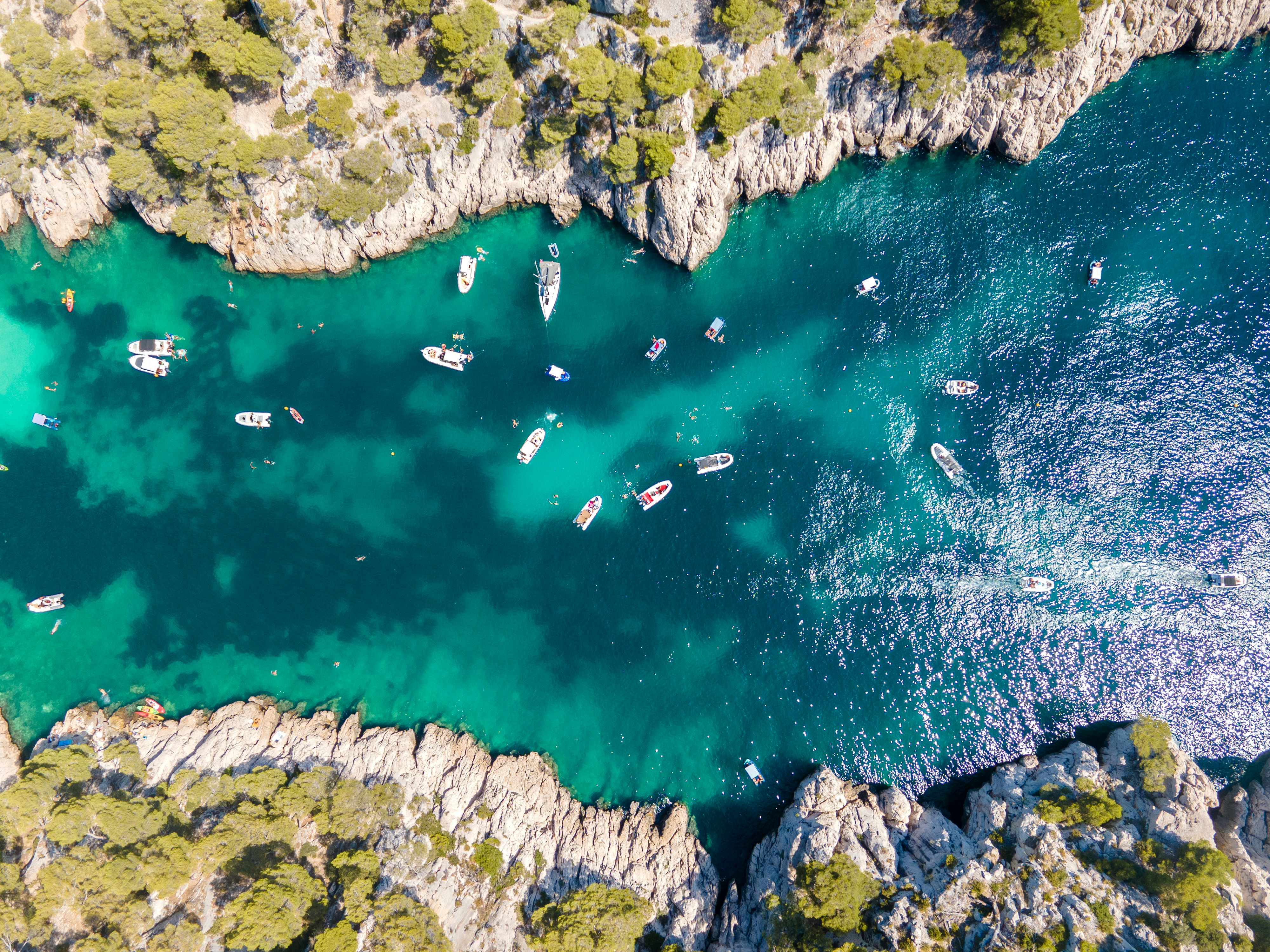
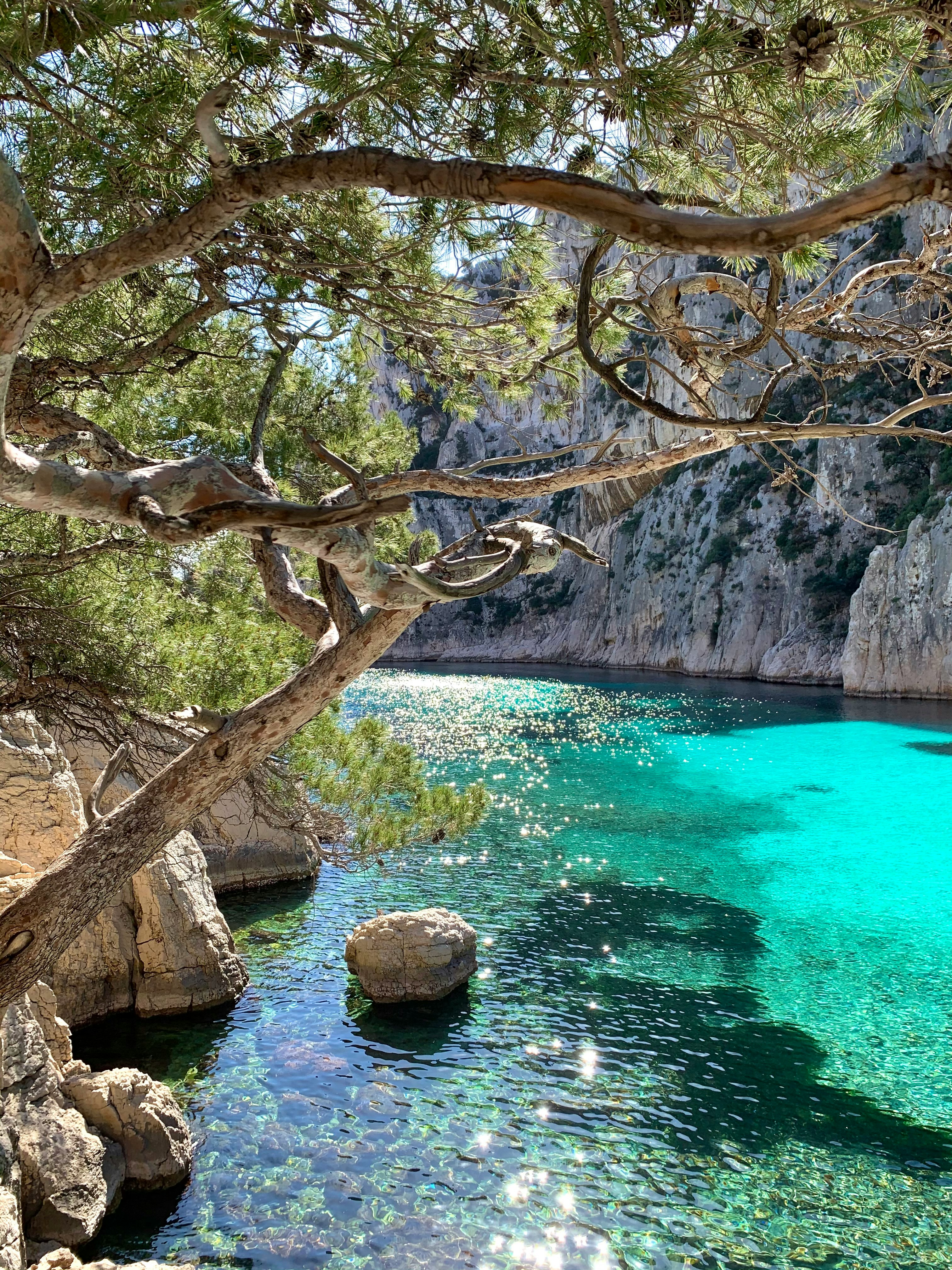
Marseille is the oldest city in France — founded by Greek Phocaeans in 600 BC — and its most cosmopolitan: the Vieux-Port, where fishermen unload their catch at dawn while bistros prepare bouillabaisse, is the gravitational centre around which a city of over three hundred thousand different stories revolves. The Basilique Notre-Dame de la Garde, the «Bonne Mère» watching over the city from atop its gilded rock, is visible from the harbour, the beaches and the hinterland. The Panier quarter, the oldest, is a labyrinth of staircases, colourful lanes and murals; the MuCEM — Musée des Civilisations de l'Europe et de la Méditerranée — is one of France's most innovative museums, its perforated concrete lattice extending over the sea at Fort Saint-Jean. The Calanques, the white limestone coves opening to the east of the city (a National Park), are reachable by boat or on foot and offer crystalline turquoise waters. Raw, generous, unrepeatable: Marseille is not a city one half-loves.
Auto
Giorno 2 — Marseille → Aix en Provence
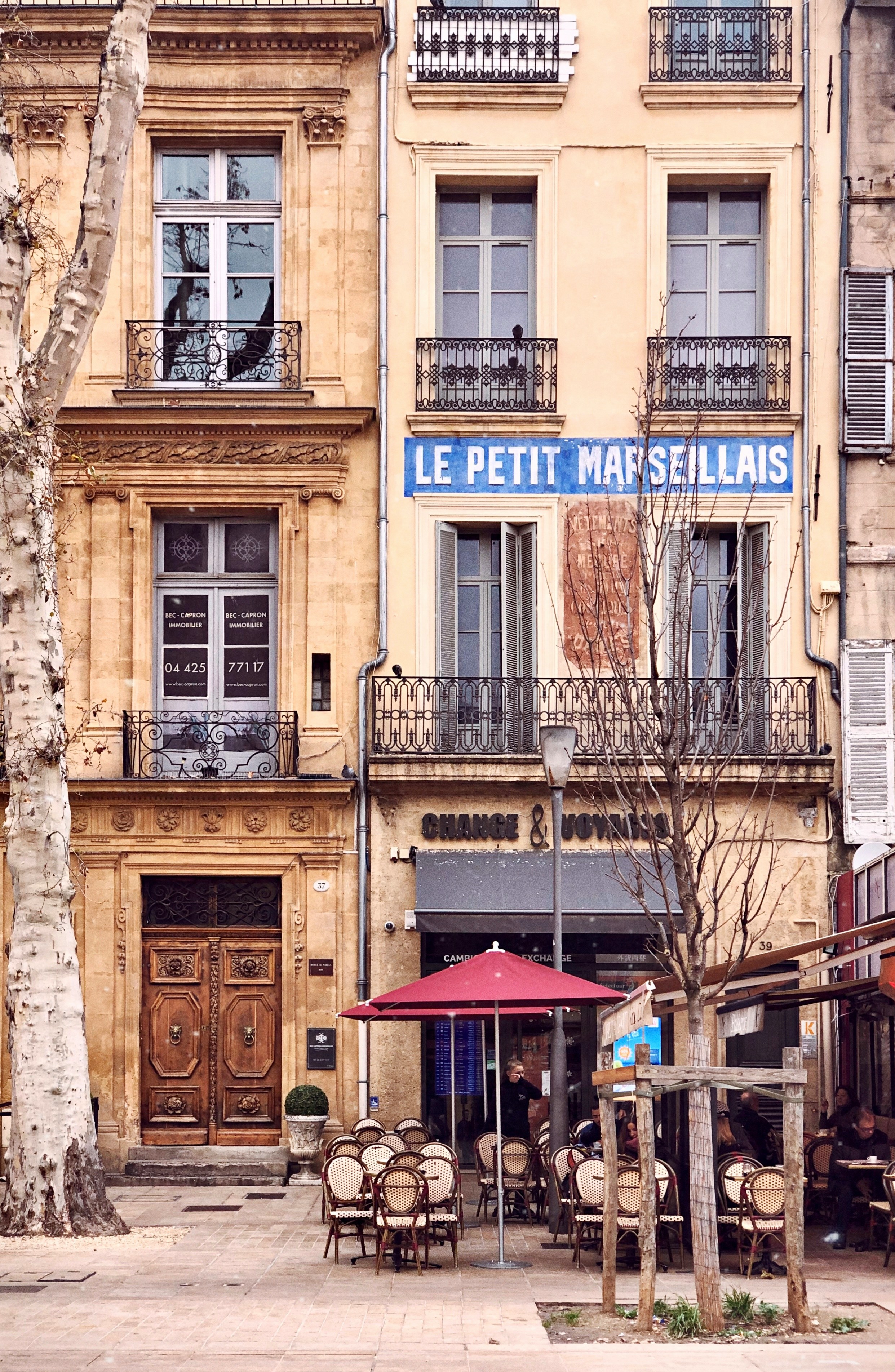
Aix-en-Provence is the city of Cézanne and the Cours Mirabeau: the long plane-tree-lined avenue crossing the centre, flanked by seventeenth-century fountains and historic cafés such as Les Deux Garçons, is one of the most elegant thoroughfares in Provence. Founded by the Romans as Aquae Sextiae, it preserves an old centre of airy squares, hôtels particuliers with sculpted doorways and shops selling calissons — the city's characteristic almond sweet. The Atelier de Cézanne, on the Lauves hill, remains almost untouched with the master's brushes, jugs and dried fruit; the Montagne Sainte-Victoire, which he painted obsessively, is visible on the horizon from many points in the city. The Richelme square market, every morning, offers olives in every variety, herbes de Provence and goat's cheeses. A mood of serene refinement pervades Aix: a place where beauty is at home, and the door is always open.
Auto
Giorno 3 — Aix en Provence → Avignone
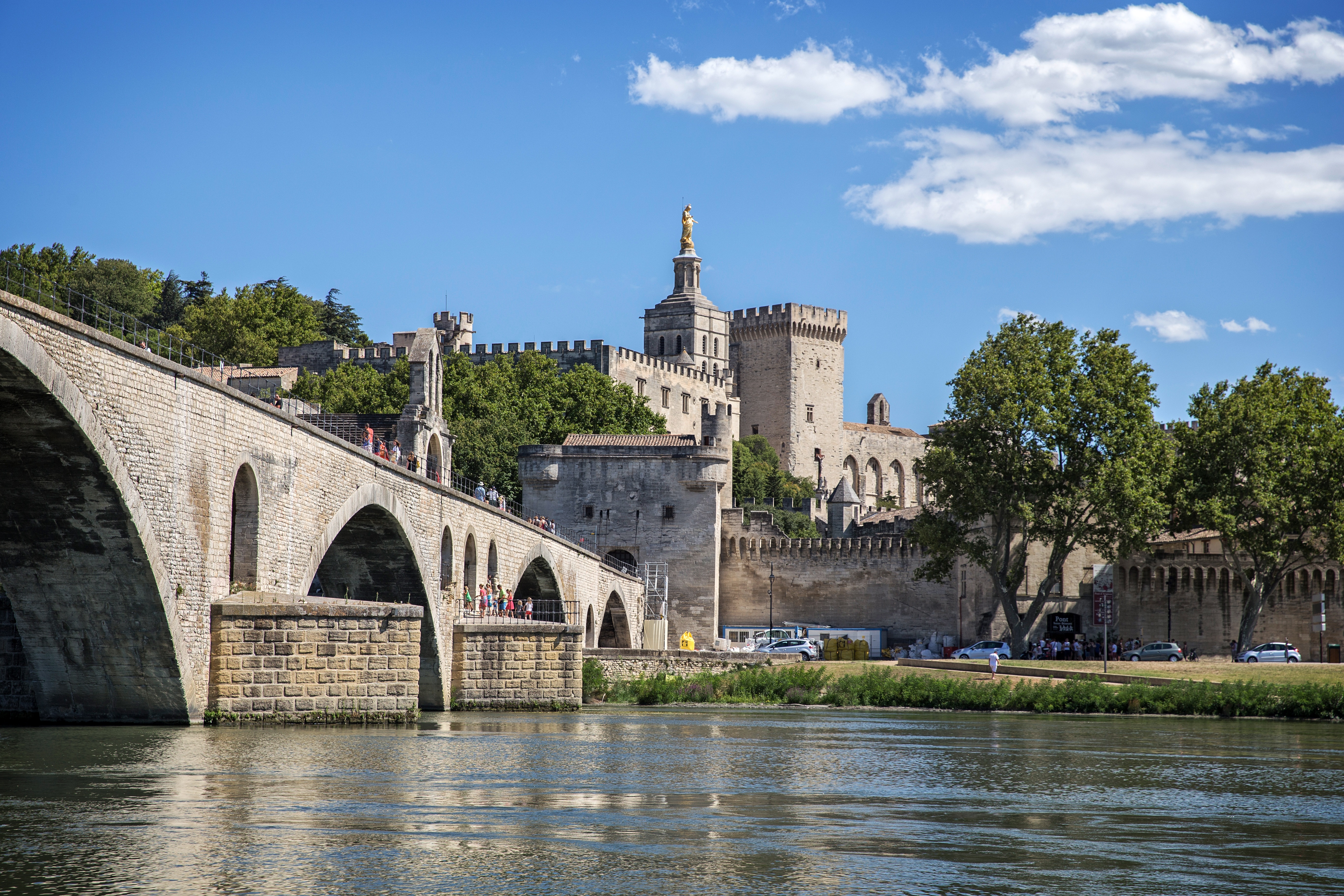
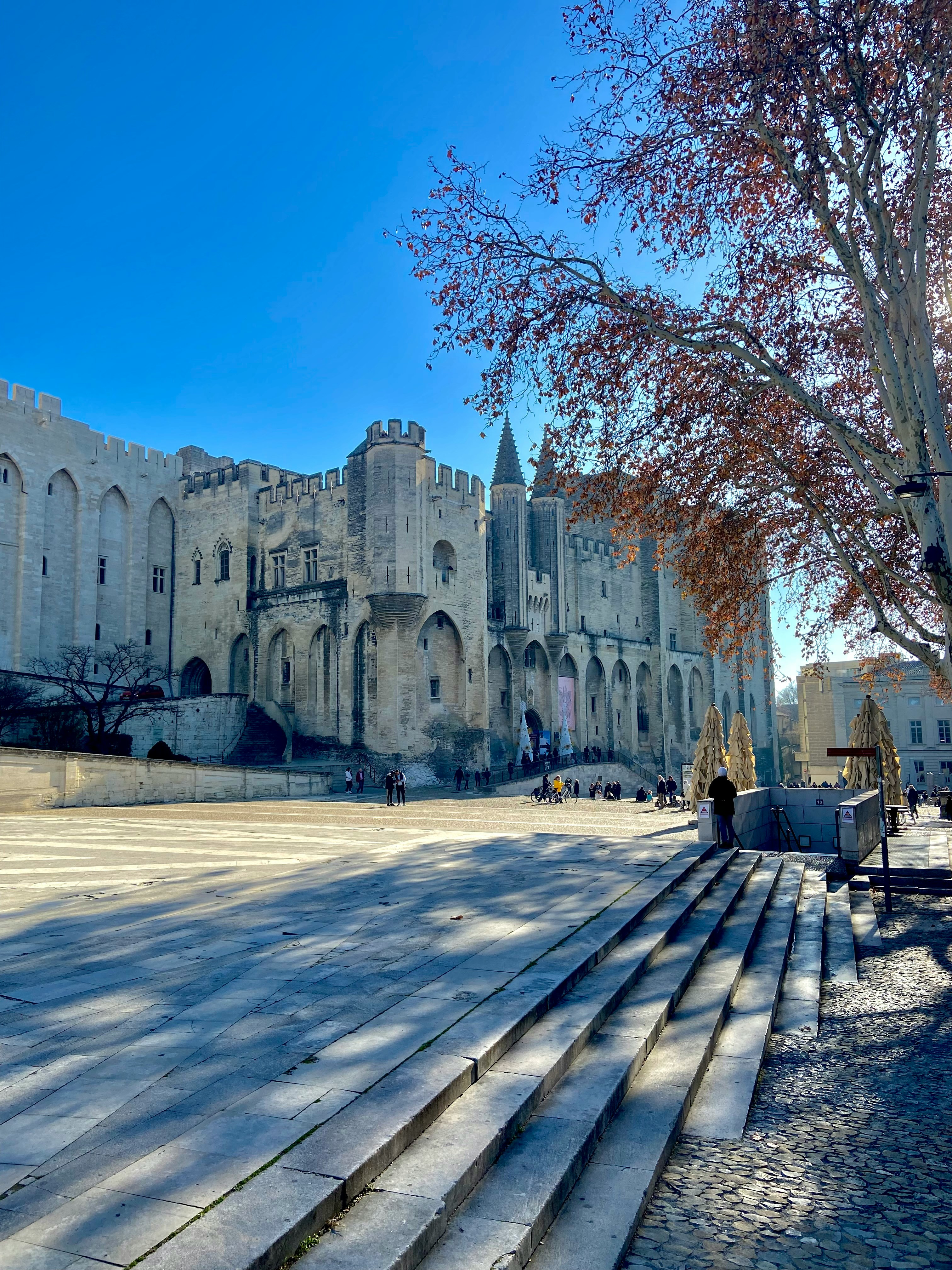
Avignon still bears in its stone the memory of when it was the capital of Christendom: from 1309 to 1377 it was here that the popes established their court, and the Palais des Papes — the largest Gothic building in Europe — still dominates the city with its imposing mass, declared a UNESCO World Heritage Site along with the Pont Saint-Bénézet (the famous «bridge of Avignon» of the popular song, broken off midway across the Rhône). Inside the palace, the frescoed Chambre du Cerf and the Grande Chapelle convey the grandeur of that pontifical court. The intra-muros city is a labyrinth of squares, lanes and Renaissance palaces animated by festivals throughout the year — above all the Festival d'Avignon in July, which transforms every courtyard and square into a stage. The Villeneuve-lès-Avignon quarter on the opposite bank offers a memorable panorama of the city. The surrounding countryside produces Châteauneuf-du-Pape, one of Provence's most celebrated red wines.
Auto
Giorno 5 — Avignone → Arles
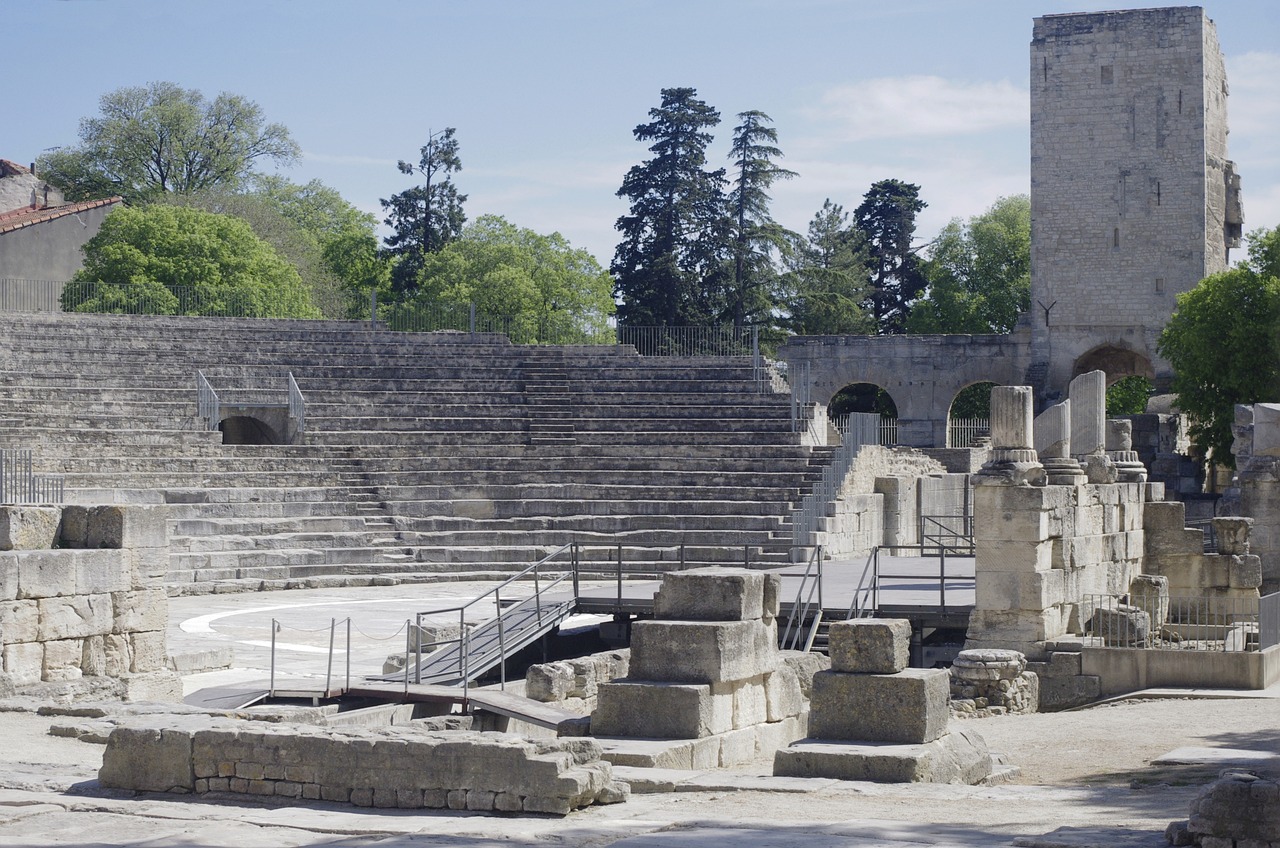
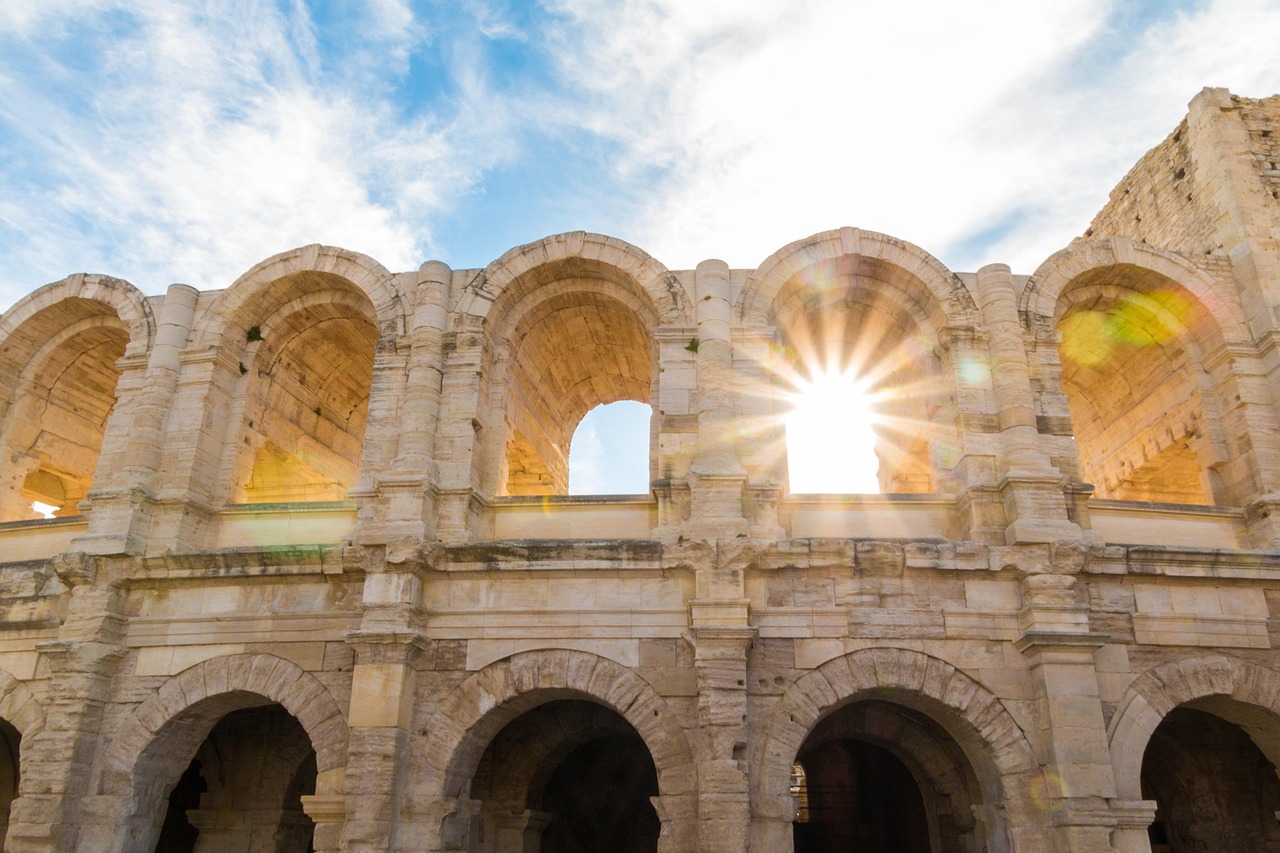
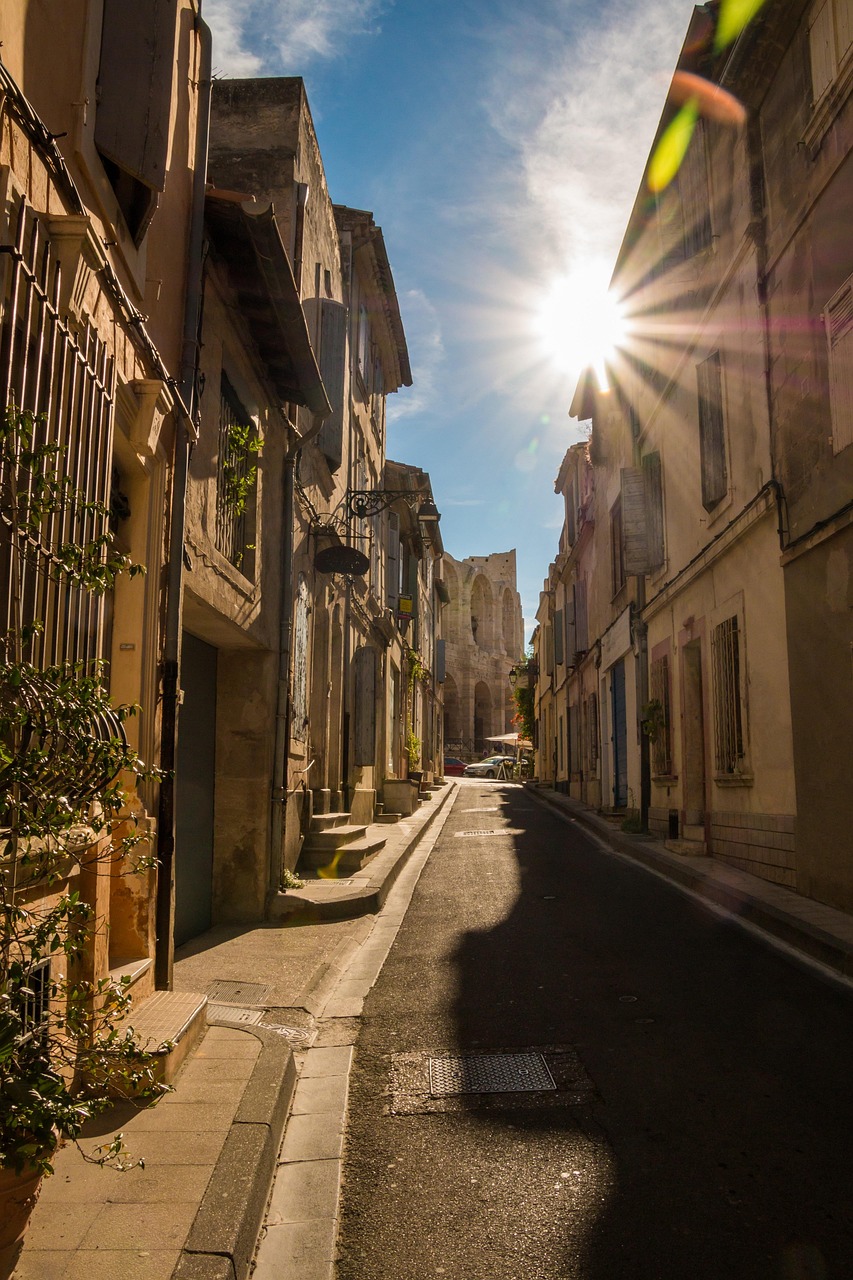
Arles carries two thousand years of history in its stone body: the city was the Rome of Gaul, a river port and administrative capital of the Western Empire, and its Roman monuments — the amphitheatre (Les Arènes), the ancient theatre, the Alyscamps (the early Christian necropolis) — are listed as UNESCO sites alongside the other Romanesque monuments of Provence. But Arles is also the city of Van Gogh: he spent a year here between 1888 and 1889, painting «The Bedroom», «The Night Café» and dozens of other masterpieces. His haunts are marked by panels reproducing the paintings; the Fondation Vincent van Gogh Arles exhibits contemporary artists in dialogue with the master. Every July, the Rencontres de la Photographie d'Arles transforms the city into a vast open-air museum. Provençal cuisine here is elemental: Crau lamb, tapenade, fleur de sel from the Camargue.