Available departures
Guaranteed
Abstract
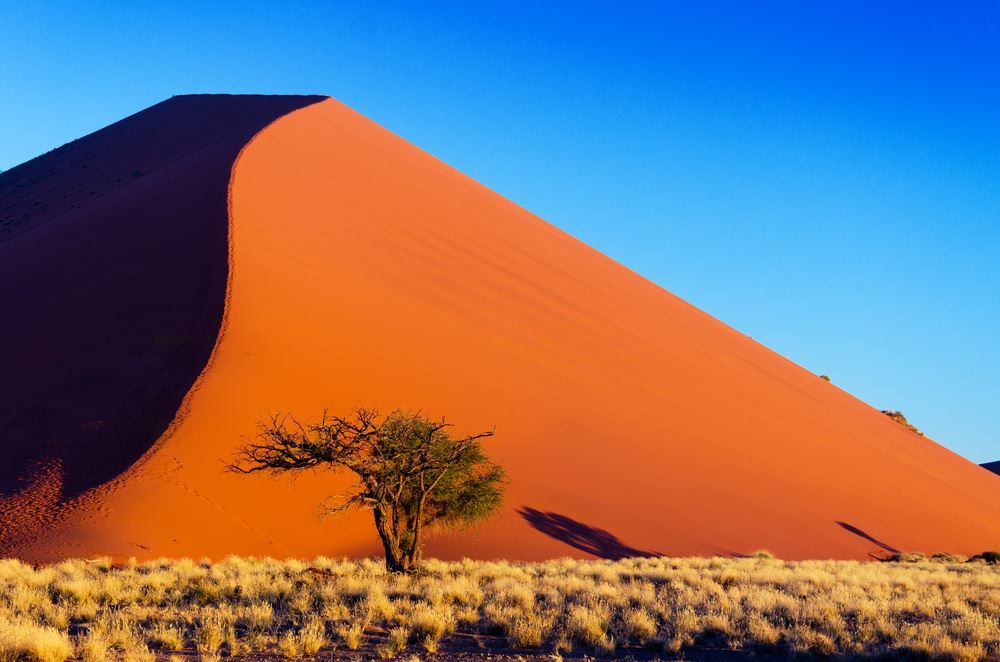
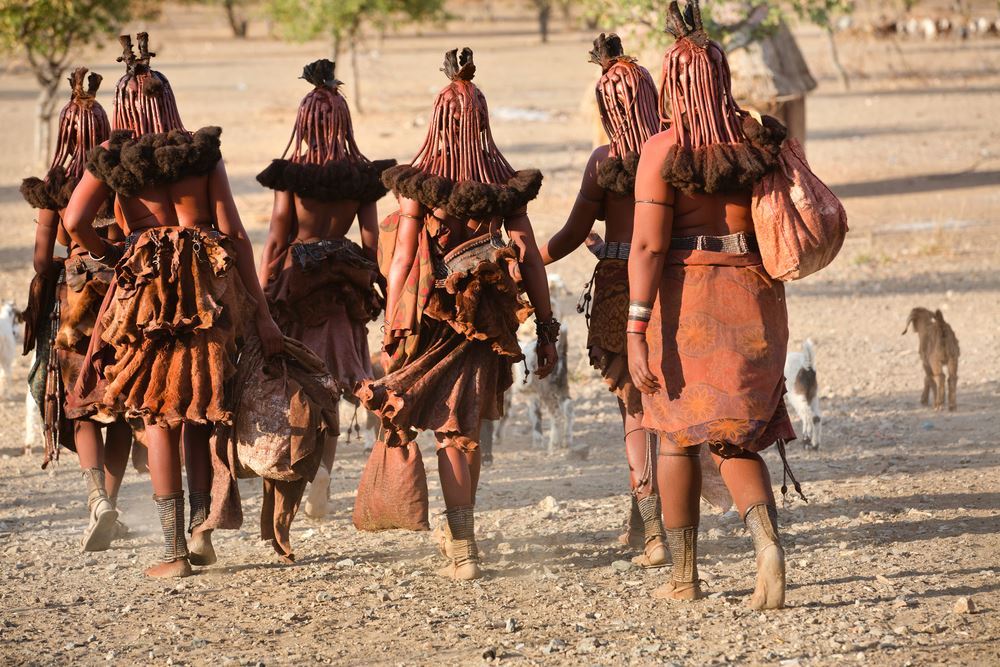
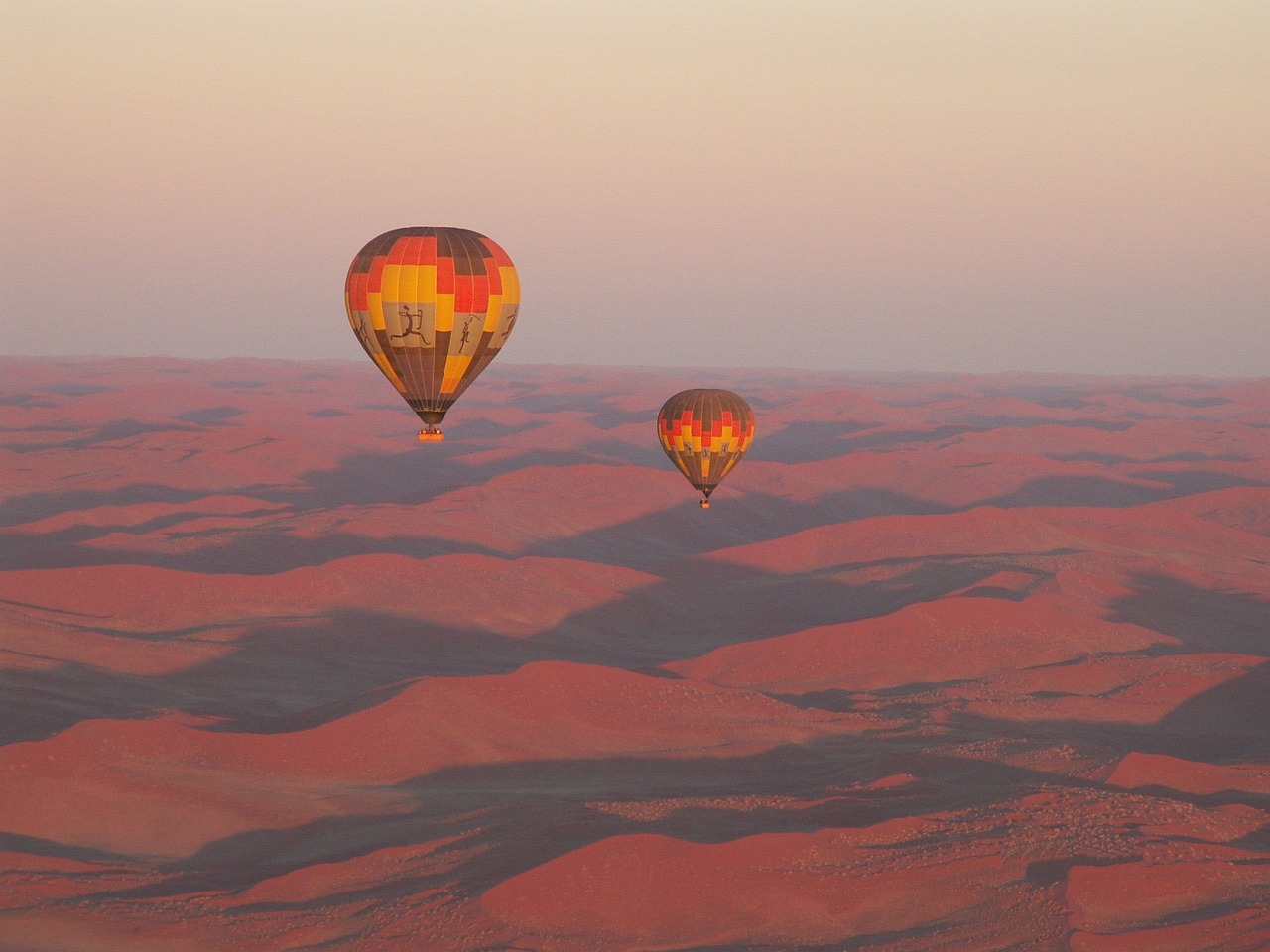
Discover the vastness of Namibia: climb the highest sand dunes in the world in the red Namib Desert, experience the adventure of a bush camp among the spectacular mountains of Spitzkoppe, reach the border with Angola where the suggestive Epupa Falls are located and learn about the Himba nomads with their customs and traditions; be fascinated by the landscapes and animals of Etosha National Park. A memorable experience.
Importante : Safari recommended for people in good physical condition and with an adventurous spirit, who desire an adventurous vacation.,
Characteristics
- Group tour
- Driver/guide in English with interpreter in Italian.
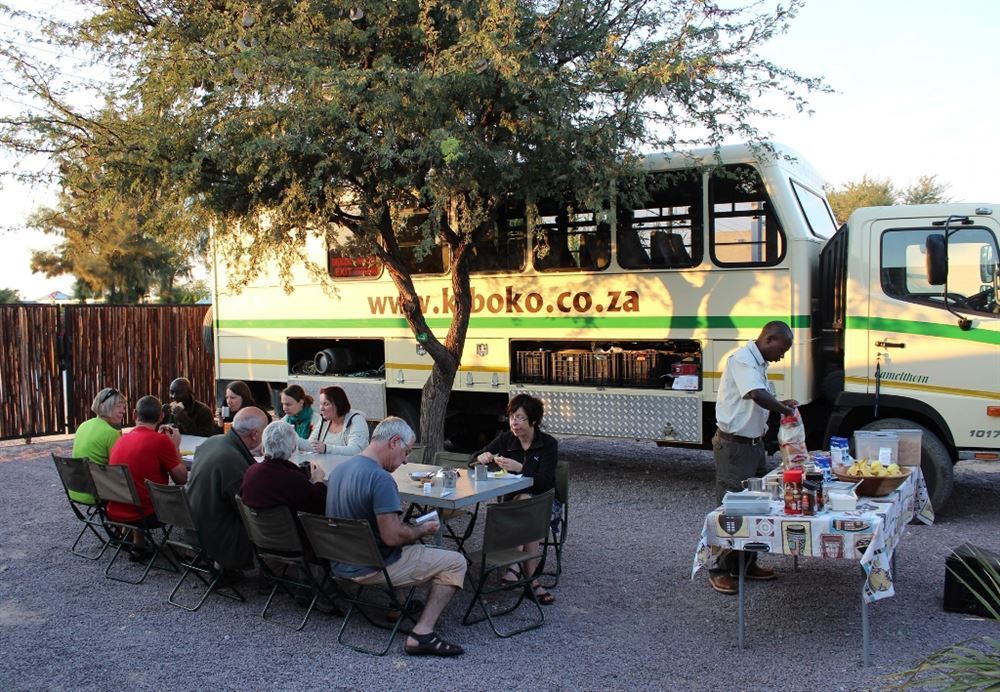
- 9 nights in a mobile tent camp and 3 nights in a hotel at Windhoek e Swakopmund.
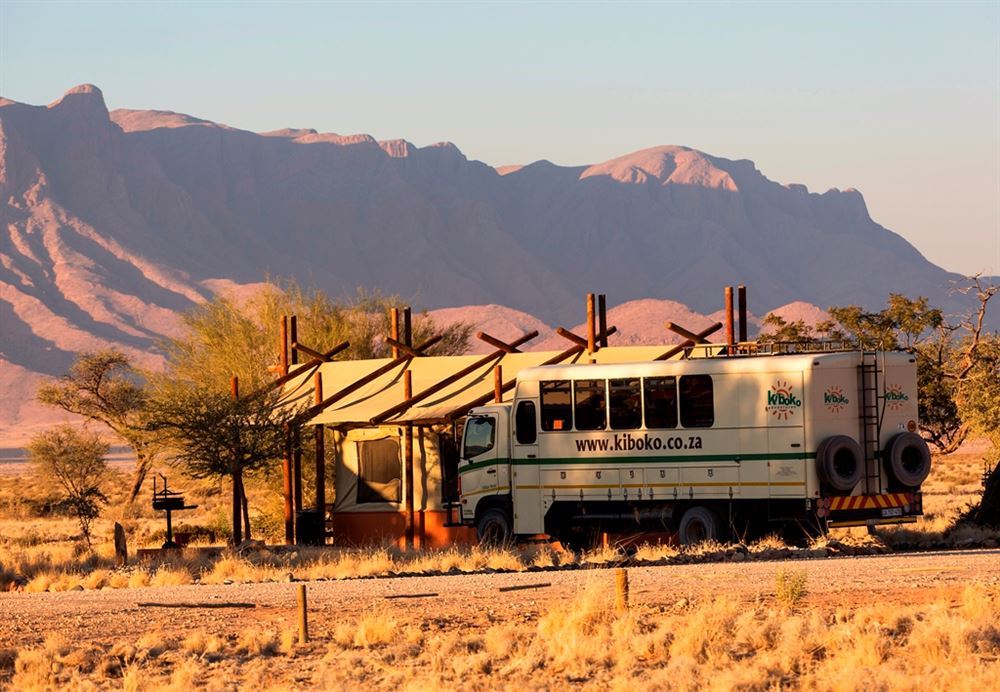
- transportation by overland vehicle (truck)
- departures are guaranteed (min 4 / max 16 participants); subject to availability
- small groups (max. 16 participants)
- minimum age: 12 years
Note: In 2022, the Namibia tours will no longer be separate camping and lodge tours, but will be combined into one tour. The basic tour will be sold as fully serviced camping accommodation, with the option to upgrade to 3-star lodge accommodation with private bathrooms for an additional fee (except in Spitzkoppe, where camping will be the only option). With the Lodge option, breakfasts will be provided at the lodges, while lunches and dinners will be provided at the campsites.
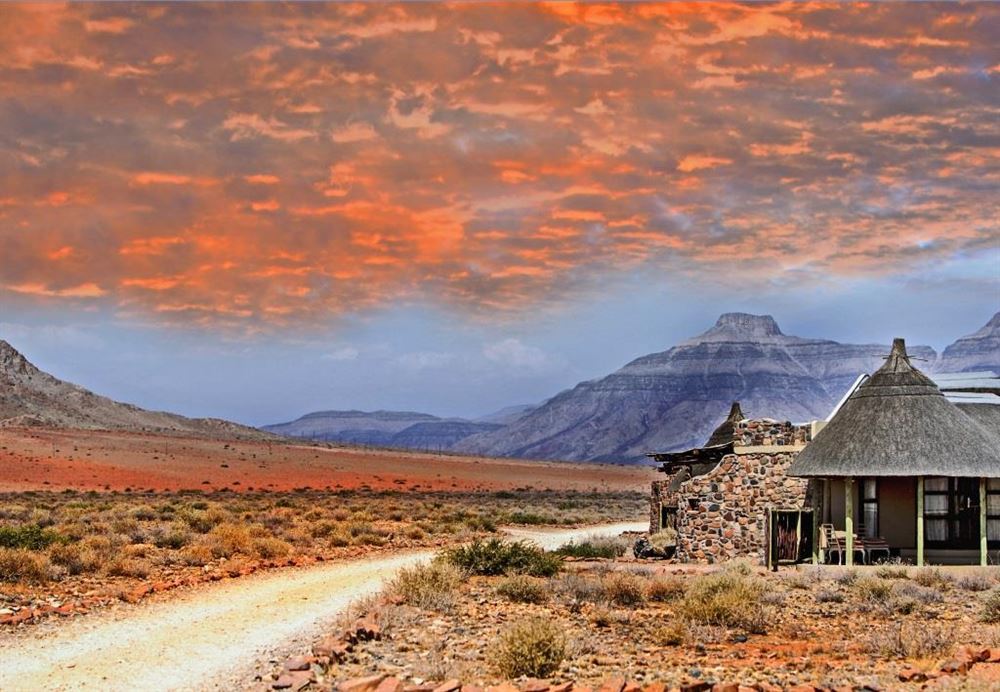
Accommodations planned with the lodge option (or similar)
Sossusvlei: Desert Quiver Camp
Swakopmund: Artemis Hotel
Spitzkoppe: camping
Twyfelfontein: Palmwag Lodge
Epupa Falls: Omarunga Lodge
Opuwo: Opuwo Lodge
Etosha: Okakeujo and Namutoni Rest Camp
Itinerary
Day 1 — Windhoek
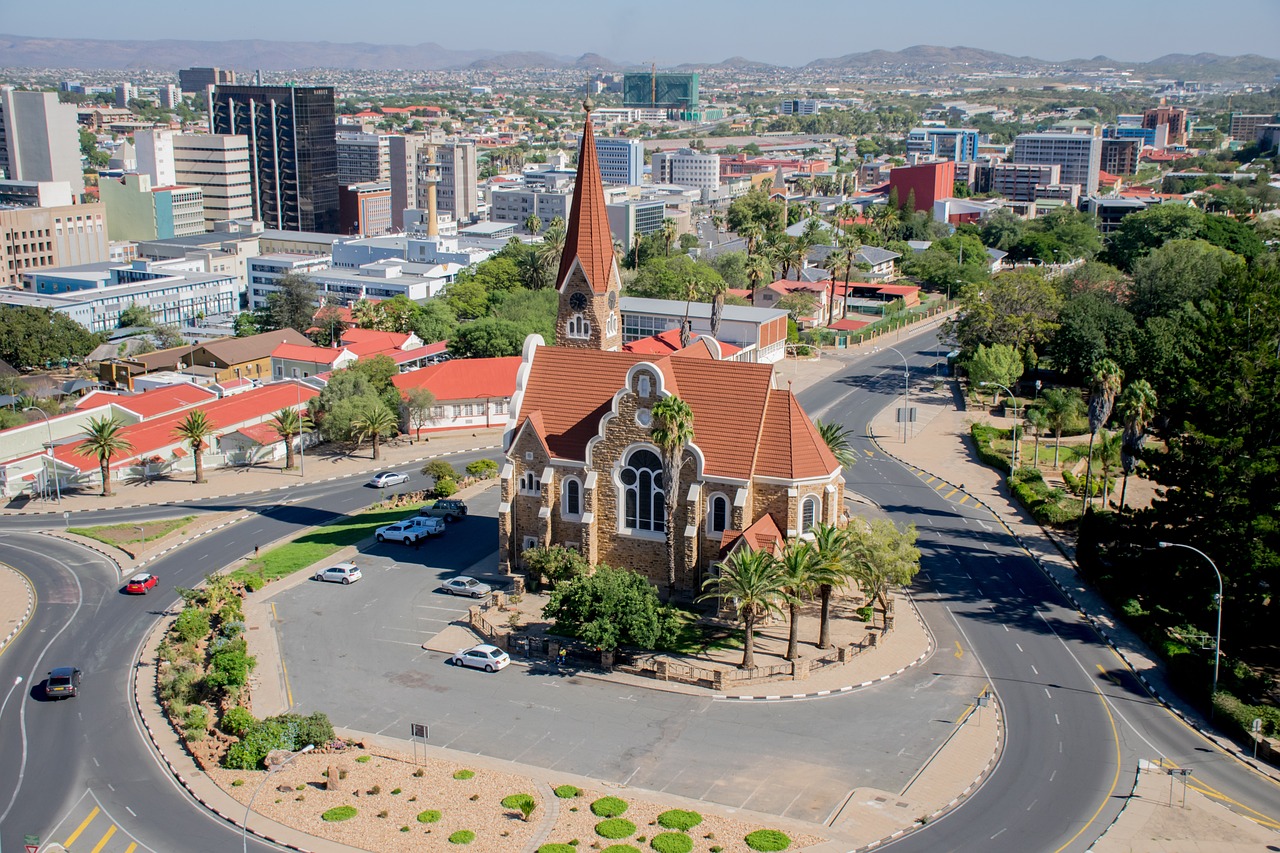
Arrival and transfer to the hotel, meeting with the guide at the reception at 18 for an informative orientation on the trip, Boasting about 350,000 inhabitants, Windhoek is Namibia’s capital as well as its largest city. Rising in a verdant valley amidst the Auas mountains, at an altitude of 1,700 m, this pleasant town combines its elegant colonial tradition with a modern spirit. Its central location makes it the perfect gateway to the rest of the country., free evening and night, accommodation Hilton Garden Inn Las Vegas Strip South, Dinner at leisure.
Day 2 — Windhoek → Sossusvlei
370 km – about 5 hours
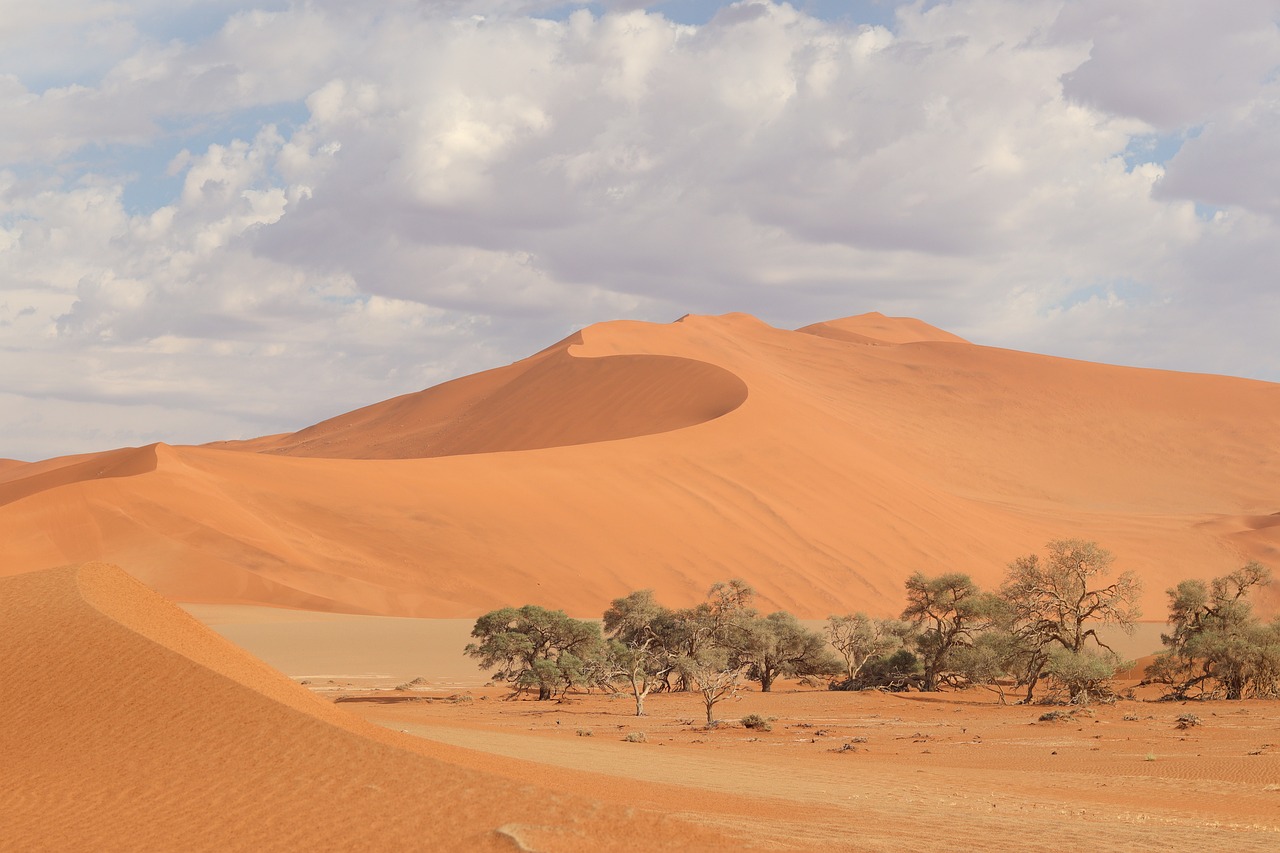
breakfast, departure to deserto del Namib, The Namib is one of the oldest deserts in the world. It owes its fame to is majestic, towering dunes, encompassed by the vast Namib Naukluft Park., mobile accommodation, Sesriem Camping is located right at the entrance of the park that encompasses the vast Namib Desert and the Sossusvlei dunes, a short distance from the Sesriem Canyon., accommodation Mainstay Suites Casper, dinner.
Day 3 — Sossusvlei
Wake up in the early hours of the morning to admire the spectacle of the sunrise on the highest sand dunes in the world, which change color with the changing light. The morning continues with a visit to Dead Vlei, a very suggestive salt pan created by the evaporation of a section of the Tsauchab River and surrounded by monumental dunes; the vlei is reached by a walk of about 5 km (about an hour and a half); the silence is almost unreal and the color contrasts are strong: the black of the "camelthorn" trees, the white of the clayey ground, the reddish tones of the dunes that stand out against the intense blue of the sky. In the afternoon, a short excursion to the Sesriem Canyon, carved by the erosive action of wind and water 18 million years ago., accommodation, dinner.
Day 4 — Sossusvlei → Swakopmund
500 km – about 6:30 hours
breakfast, You leave the desert for the ocean, crossing the northernmost part of the Namib Naukluft Park., Stop off at, spectacular the pink expanse of flamingos in the lagoon, arrival at in the afternoon, time at leisure for visiting the place, Swakopmund is the largest coastal town in the country, nestled between a sea of dunes and the Atlantic Ocean. Founded by the Germans in 1892 as the main port for their colony, it is a pleasant town with colonial buildings in German style and excellent restaurants; but above all, it is an ideal base for numerous excursions in the surrounding area. The city offers numerous outdoor activities, such as surfing, fishing, skydiving, quad biking, and desert excursions., free evening and night, accommodation Private Transfer Hotel to Airport - YOWMLA e YOWMLC, Dinner at leisure.
Day 5 — Swakopmund → Spitzkoppe
290 km – about 4:30 hours
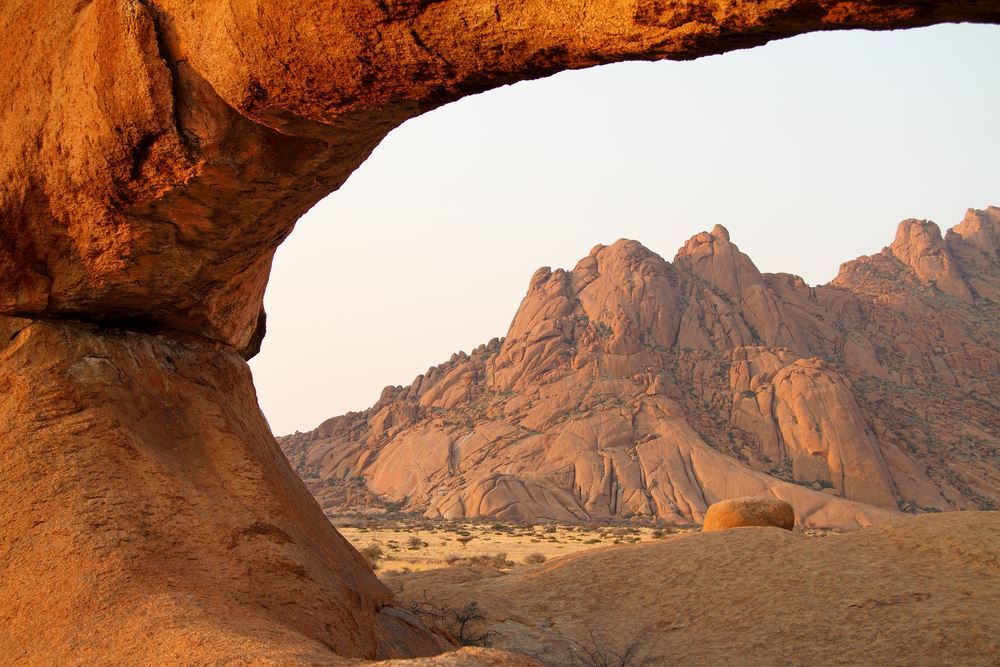
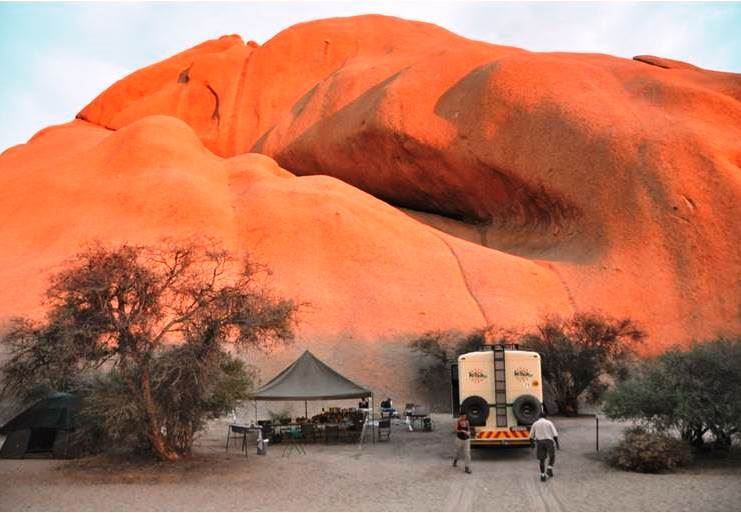
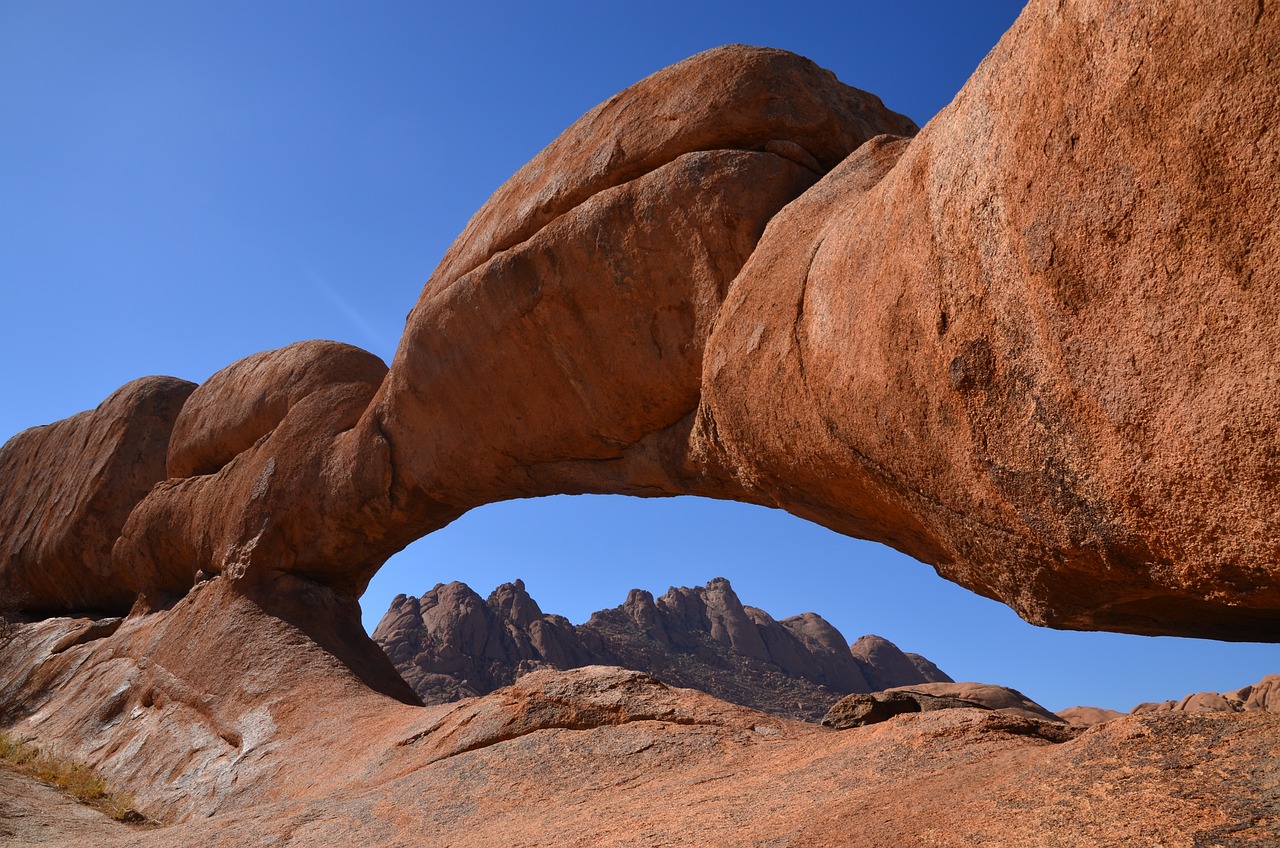
breakfast, morning at leisure, free lunch, continue to, The camp is set up at Spitzkoppe Camp, the only one in the area, recently set up; for tonight it will not be possible to set up portable toilets or showers, as it is in a protected area: the park's restroom facilities will be used., afternoon at leisure for optional activities, Spitzkoppe: hike and starry sky show, dinner.
Day 6 — Spitzkoppe → Twyfelfontein
300 km – about 5 hours
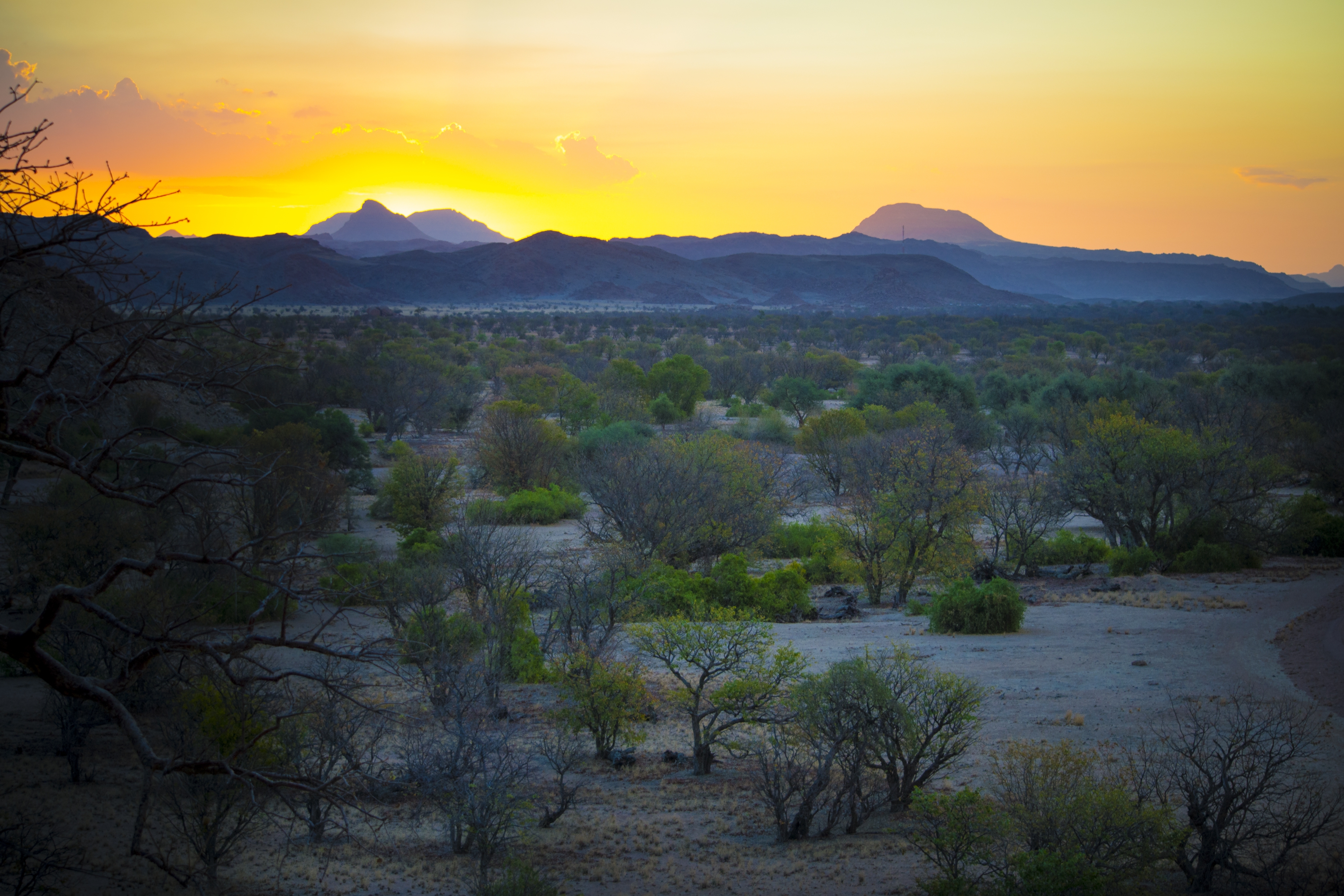
breakfast, The journey continues in the Damaraland region, a harsh and rocky desert expanse with suggestive landscapes and unique rock formations, inhabited by desert elephants., arrival at, An hour-long walk to admire the rock paintings of the Bushmen; then you reach the petrified forest, about 50 km away, with enormous petrified tree trunks up to 34 m long and 6 m in diameter, dating back approximately 260 million years ago., Leaving Twyfelfontein, the first half of the 80 km road to Palmwag is very scenic, passing through mesas (flat-topped cliffs) and sand dunes of the Etendeka Plateau, a massive lava bed formed approximately 200 million years ago when the drifting of continents split the single continent of Gondwana and opened the Atlantic Ocean, creating South America and Africa., accommodation Mainstay Suites Casper, dinner.
Day 7 — Twyfelfontein → Epupa Falls
180 km – about 3 hours
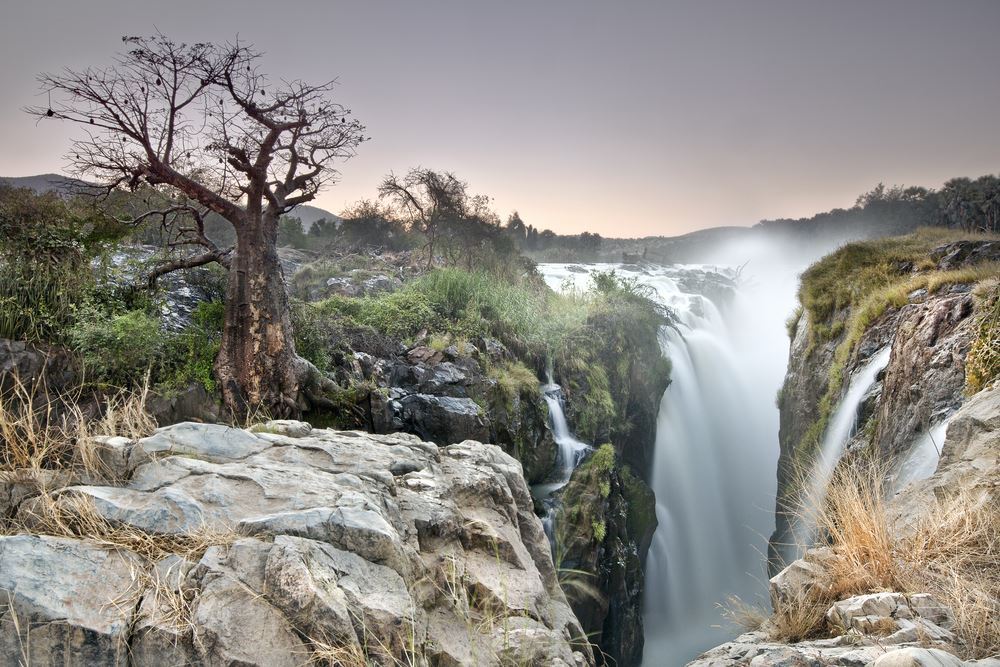
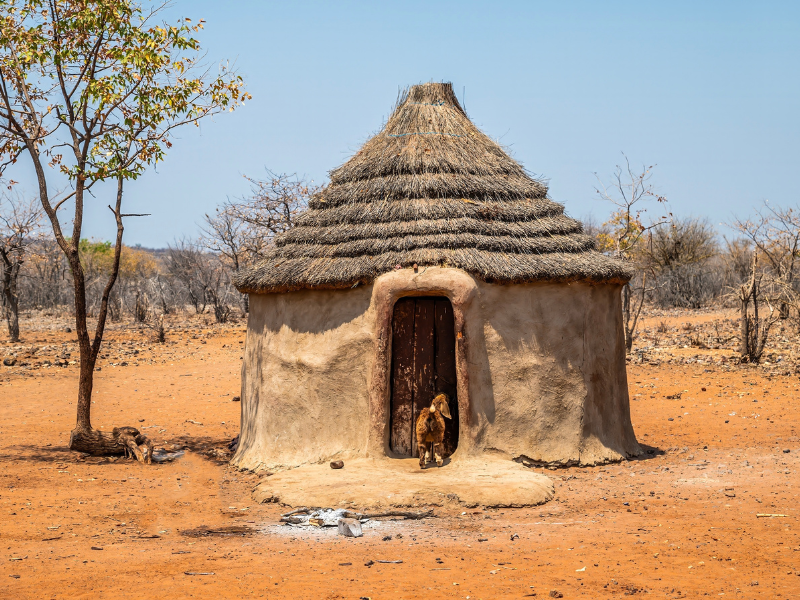
breakfast, departure to Epupa Falls, The route that leads to these remote waterfalls of the Kunene River is on a dirt road and is an adventure worth experiencing. A local guide will join the group: stops are planned in Himba villages to get closer to this fascinating culture. The landscape is unspoiled and picturesque, with palm trees and baobabs on the river banks., accommodation Mainstay Suites Casper, dinner.
Day 8 — Epupa Falls → Opuwo
400 km – about 6 hours
breakfast, time at leisure to relax or to take an optional walk, accommodation Mainstay Suites Casper, dinner.
Day 9 — Opuwo → Etosha National Park
130 km – about 2 hours
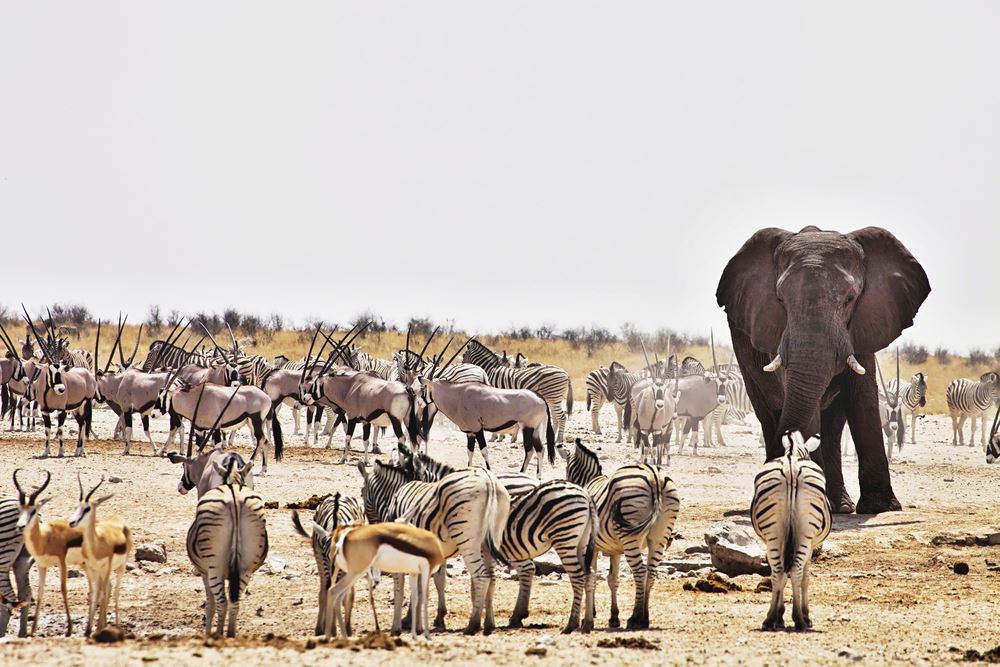
breakfast, early morning departure to, afternoon photosafari with private truck, Etosha is Namibia's most famous national park. Covering an area of more than 22,000 square km, it’s a boundless, verdant savannah interspersed with bush. At its heart is the Etosha Pan – the largest salt pan in Africa, a landmark visible from outer space. The locals call it “The Place of Mirages”. The game drives take place along the routes connecting the many watering holes where the animals come to drink. You will have the chance to catch sight of elephants, giraffes and antelopes and, if you are lucky enough, even some large predators., Okaukuejo is located 17 km from the southern entrance of the park, Anderson Gate. Okaukuejo is the oldest tourist camp in Etosha and it also functions as the administrative centre of the park. Okaukuejo is also home to the Etosha Ecological Institute. It is situated at the western end of the Etosha Pan. Facilities include a restaurant, bar, shop, swimming pool, kiosk and camp sites.
The main attraction of this camp is that it overlooks a permanent waterhole which is floodlit at night. Here a wide diversity of wildlife congregate and interact from lion to rhino to elephant and antelope. The spectacle starts at dawn, with animals coming in large numbers to quench their thirst. The activity continues throughout the day until late at night. In the early evenings, it is not uncommon to have black rhino, elephant and lion all drinking at the same time., accommodation Mainstay Suites Casper, dinner.
Day 10 — Etosha National Park
100 km – about 1:30 hours
breakfast, accommodation, dinner.
Day 11 — Etosha National Park
300 km – about 3,5 hours
breakfast, Okaukuejo is located 17 km from the southern entrance of the park, Anderson Gate. Okaukuejo is the oldest tourist camp in Etosha and it also functions as the administrative centre of the park. Okaukuejo is also home to the Etosha Ecological Institute. It is situated at the western end of the Etosha Pan. Facilities include a restaurant, bar, shop, swimming pool, kiosk and camp sites.
The main attraction of this camp is that it overlooks a permanent waterhole which is floodlit at night. Here a wide diversity of wildlife congregate and interact from lion to rhino to elephant and antelope. The spectacle starts at dawn, with animals coming in large numbers to quench their thirst. The activity continues throughout the day until late at night. In the early evenings, it is not uncommon to have black rhino, elephant and lion all drinking at the same time., Full day game drive in truck, accommodation Mainstay Suites Casper, dinner.
Day 12 — Etosha National Park → Windhoek
300 km – about 3,5 hours
breakfast, time for a last safari at the break of dawn, departure to, Craft market stop en-route, walk through Windhoek with your guide, Dinner at leisure, accommodation Hilton Garden Inn Las Vegas Strip South,
Day 13 — Windhoek
Breakfast, transfer to the airport, end of the tour,
Notes
- BAGGAGE: One medium-size baggage (max. 20 kg) per person is allowed. Storage room is extremely limited on Japanese trains. In the event of your luggage being shipped separately to your final destination, you are suggested to bring along a carry-on baggage with any personal belonging you might need during the trip (including toiletries for the nights).
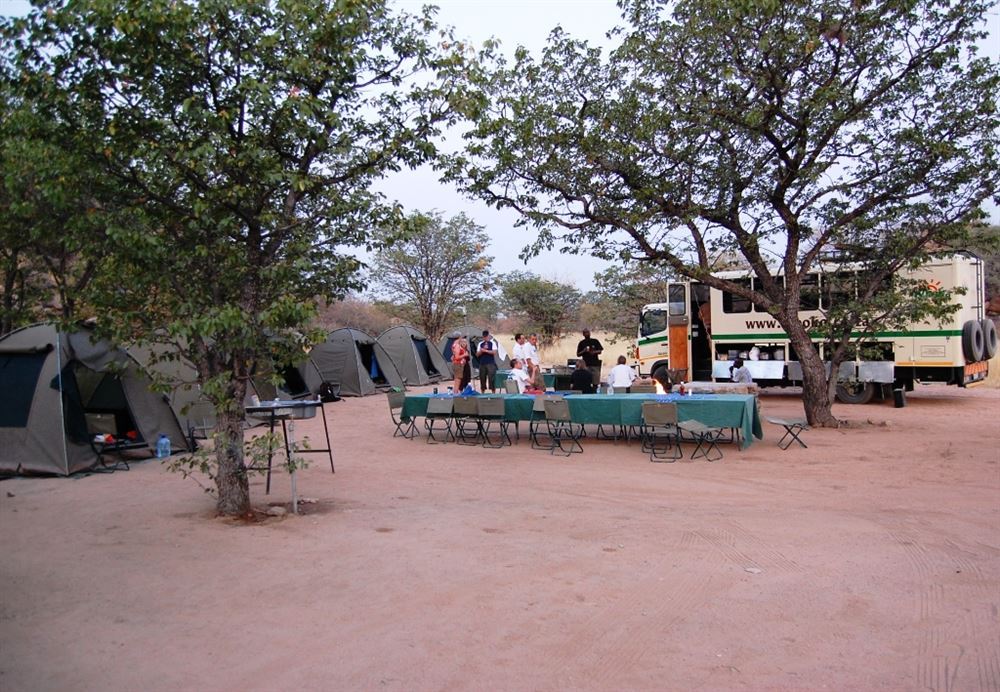
- MOBILE TENT FIELD: wide and spacious tents for 2 people (2.4m x 2.4m x 1.9m) equipped with camp beds, sleeping mats, sleeping bags, and small pillows; shared toilet facilities with toilets, showers, and sinks in the equipped camping areas; shared temporary toilet and shower in non-equipped fields.
- TRAVEL DOCUMENTS: before the start of the tour, all the participants must make sure they possess the required documents to enter the destination countries, and that such documents are comprehensive and valid.
- OPTIONAL EXCURSIONS: locally, several optional activities will be proposed, operated not directly by the tour organizer - Kiboko - but by third-party operators. Some of these activities are adventurous and involve an element of risk: do not participate if you do not feel confident in facing them. During the trip, you will receive a detailed description of each activity and you can evaluate the ones that are most suitable for you. The prices indicated in the day-by-day itinerary are purely indicative. Park entrances are not included.
- SMOKING: smoking is not allowed on means of transportation, in tents, in rooms, and according to the guide's instructions.
- AGE: minimum age of 7 years for Lodge Safaris, 10 years for Camping Safaris, but not recommended for children under 12 years old. The average age of participants is 40+ years. Participants who are 65 years old and above are required to provide a medical certificate of good health.
- HOTEL / ITINERARIO, MODIFICHE: La societĂ organizzatrice si riserva il diritto di modificare l'itinerario e/o le sistemazioni previste, se richiesto da circostanze impreviste e se necessario per la sicurezza e il normale proseguimento del viaggio
- HOTEL, CHECK-IN: rooms are usually assigned starting from 3pm. Earlier check-in is at the hotel’s discretion. If you request earlier assignation, you must book an extra night at the beginning of your stay.
- INTOLERANCES AND SPECIAL DIETARY REGIMES: food intolerances (allergies, celiac disease, etc.) and special dietary regimes (vegan, etc.) must be communicated at the time of booking. Special menus or treatments are not provided or guaranteed, but we will do our best to accommodate the needs of participants. Notifications made after arrival will not be taken into consideration.
- LANGUAGE / GUIDE: tours have English-speaking driver / guide; for guaranteed departures in Italian, a translator is added; safaris guided by park rangers are always in English.
Starts from
13 days / 10 nights – from Windhoek to Windhoek,
Meals
Key: B breakfast, L lunch, D dinner,
Price includes
Local driver/guide in English with interpreter in Italian, accommodation in equipped mobile tent camp anywhere, except at the Windhoek, in a hotel., camping equipment with cot, mattress, sleeping bag, pillow, private transportation with a special overland truck with air conditioning, meals: 11 breakfasts, 9 dinners,
Price does not include
Administration fees and “no-risk” coverage, trip cancellation, medical expense & baggage coverage, meals that have not been specified; beverage; any extra, tips, air travel and taxes, everything not expressly mentioned in "The fee includes", entrance to the parks $ Rand o Nad 2500 per persona to be given in cash to the local guide at the beginning of the tour,
Important notes
Entrance to the parks $ 3000 to be given in cash to the local guide at the beginning of the tour, With effect from 01 April 2025, Namibia has imposed a visa fee on Italian visitors.
The cost will be NAD 1600.00 (approximately €83.00) and must be applied for online, strictly prior to departure, at the following link https://eservices.mhaiss.gov.na/visaonarrival.
Tourists must present on arrival both the entry visa and fill in the Arrival Form. We recommend that you obtain the visa and print out the Arrival Form before departure.
Translated with DeepL.com (free version), no vaccination is required. The climate in Namibia is very dry, and the antimalarial prophylaxis is only recommended to travellers visiting the northern part of the country (for example, Caprivi and Kaokoland) during the rainy season – from November to March., ***CLIMATE***, January-March in Namibia and Botswana is the rainy season, characterized by hot and humid weather. Some days are clear and sunny, while others are gray with afternoon thunderstorms., April-June, the rains are over! Everything is fresh and new with clear skies; moderate daytime temperatures, and the wildlife begins to gather around permanent water holes, making it easier to spot them., July-September: dry, with clear days and an average daytime temperature of 25°C, nighttime temperatures between 0 and 10°C; animal sightings are excellent, migratory birds start arriving in August. The best time for a safari!, October: the driest period of the year with daytime temperatures of 30°C. An excellent time for spotting the Big Five., November-December: hot days with the first afternoon thunderstorms; it is the weaning period and the sighting is good; many migratory birds.,
Cancellation policies