Giorno 3 — Okonjima Nature Reserve → Etosha National Park
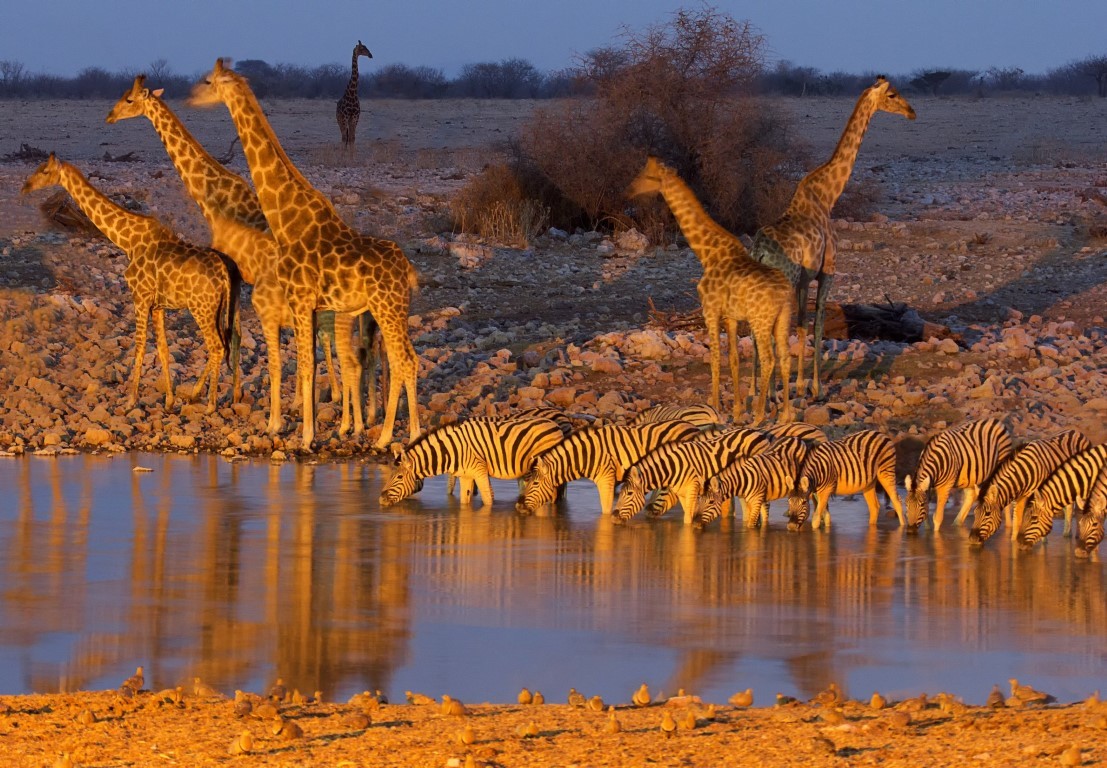
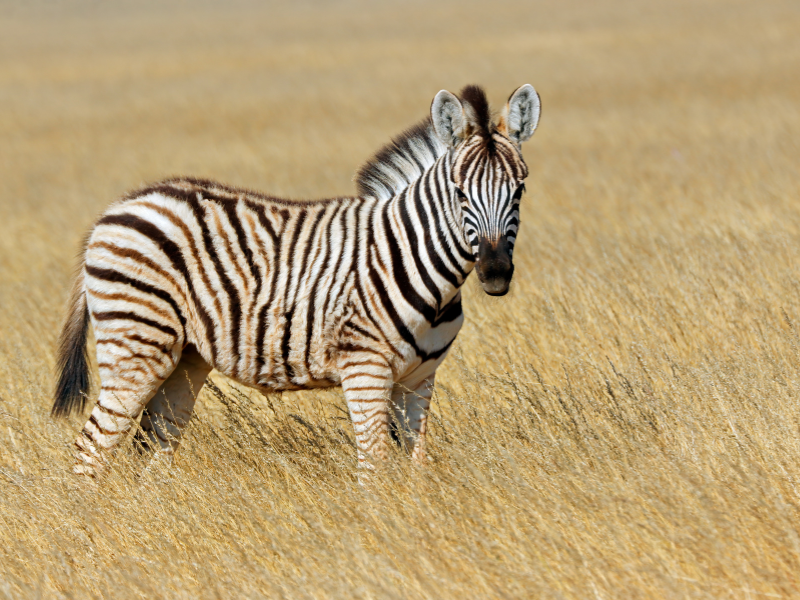
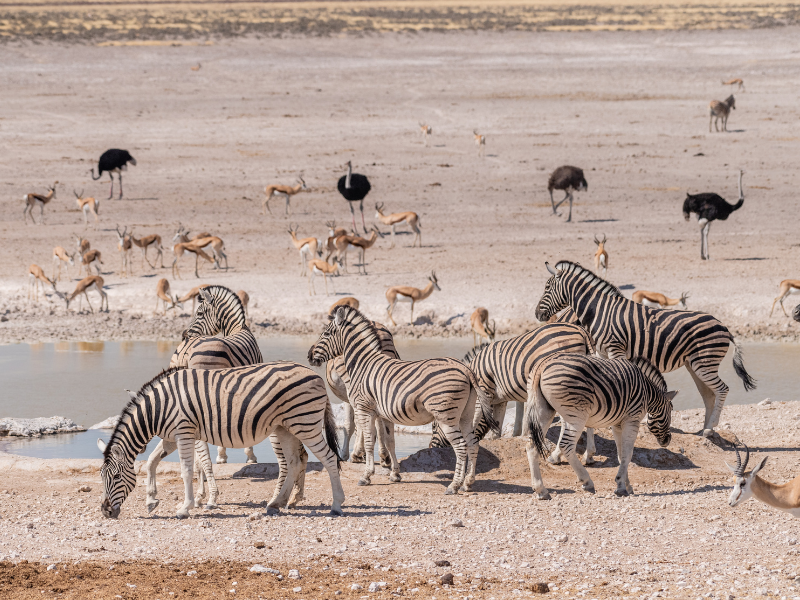
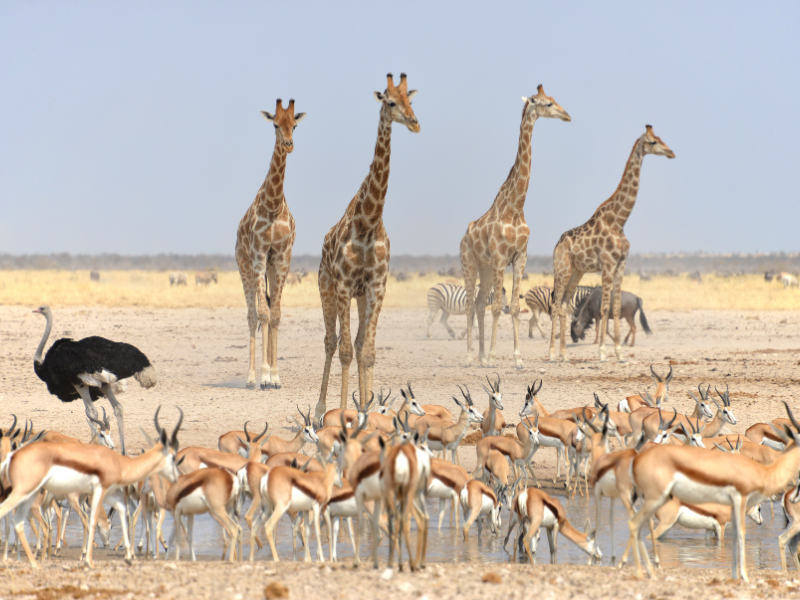
Etosha National Park is one of the great wildlife sanctuaries of southern Africa and Namibia's premier nature reserve, stretching across more than 22,000 square kilometres around a vast white salt pan — the Etosha pan — visible even from space. The name Etosha means 'great white place' in the Ovambo language, perfectly describing this ancient dried lake bed that, in the dry season, becomes the focal point around which the park's entire wildlife concentrates. Elephants, lions, leopards, cheetahs, wildebeest, zebras, oryx and the extremely rare black rhinoceros approach the waterholes in the morning and evening hours, making game drives here among the most productive on the continent. The park is divided into three main areas accessible from the official camps of Okaukuejo, Halali and Namutoni, each with a floodlit waterhole where animals can be watched at night from comfortable viewing terraces. Okaukuejo houses the park headquarters and an iconic waterhole frequented by black rhinos with remarkable regularity. Namutoni, at the eastern end, features Fort Namutoni, a restored former German colonial fortress dating from 1902, converted into a lodge. The vegetation alternates between mopane woodlands, open grasslands and salt flats along the edges of the pan, creating landscapes of stark, almost lunar beauty. The best season for wildlife is June to October, when rainfall is absent and animals gather at the waterholes. Etosha is accessible by private car or on organised safaris from Windhoek or Swakopmund, and is an unmissable experience for anyone visiting Namibia.
Auto
Giorno 5 — Etosha National Park → Zambezi Region (former Caprivi Strip)
The Zambezi Region, known until 2013 as the Caprivi Strip, is an elongated corridor of green and lush land in the far north-east of Namibia, wedged between Angola, Zambia, Botswana and Zimbabwe along the Okavango, Kwando, Linyanti and Zambezi rivers. It is Namibia's wettest and most forested region, with landscapes of floodplains, wetlands and teak forests that contrast sharply with the desert character of the rest of the country. The rivers host hippos, crocodiles and an extraordinary variety of water birds, while the reserves of Bwabwata, Mudumu and Nkasa Rupara ensure sightings of elephants, buffalo and leopards. The region is a preferred gateway to Victoria Falls in Zimbabwe and the Okavango Delta in Botswana, and many southern African safari itineraries pass through or include it. Kasane in Botswana and Livingstone in Zambia are reachable in a few hours, making the Zambezi Region a natural hub for cross-border safaris.
Auto
Giorno 7 — Zambezi Region (former Caprivi Strip) → Chobe National Park
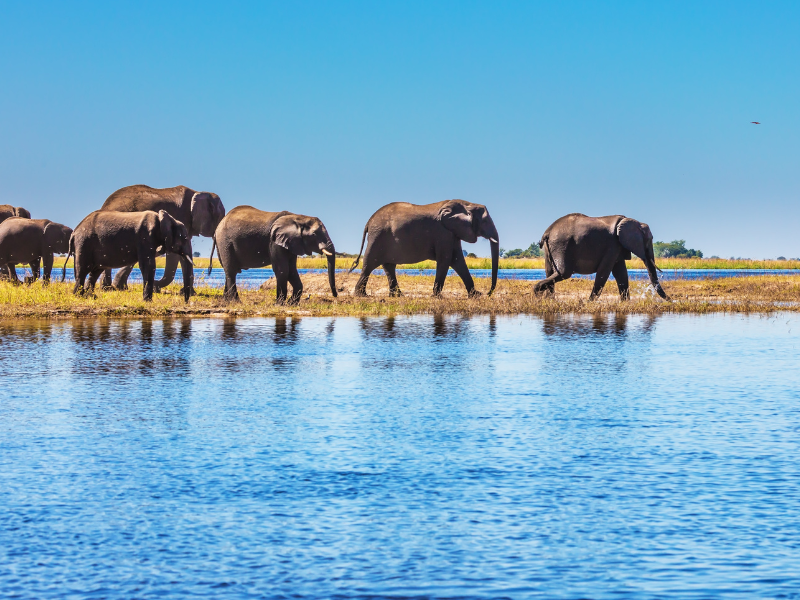
Chobe National Park was Botswana's first national park, established in 1967, and one of southern Africa's most celebrated for its continent-leading elephant population — estimated at over 120,000. The park encompasses diverse habitats, from the Chobe River floodplains in the north to the arid Savute area in the centre. Lions, leopards, cheetahs, wild dogs, buffalo and more than 450 bird species populate this exceptional ecosystem. Game drives and boat safaris allow visitors to explore contrasting environments in a single stay: Chobe is an unmissable stop in Botswana.
Auto
Giorno 9 — Chobe National Park → Victoria Falls
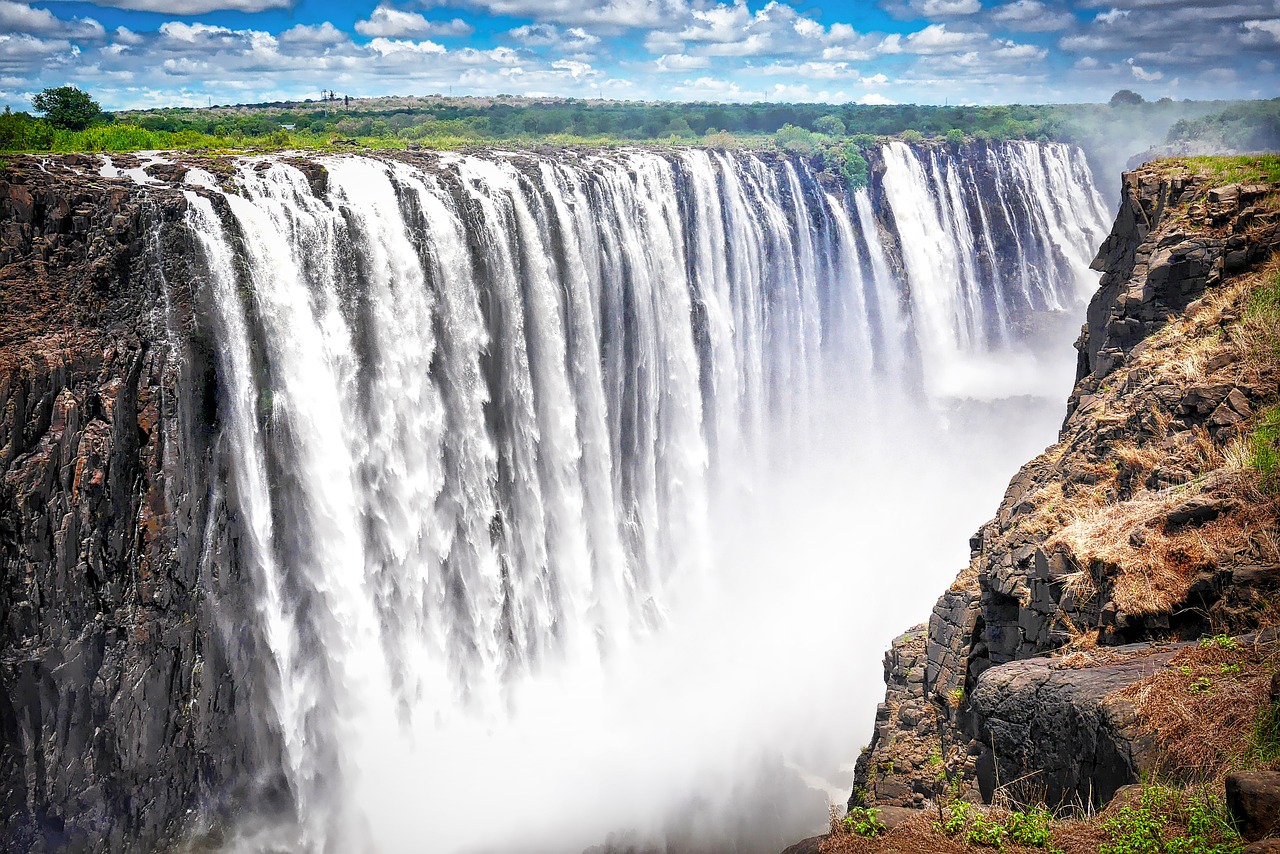
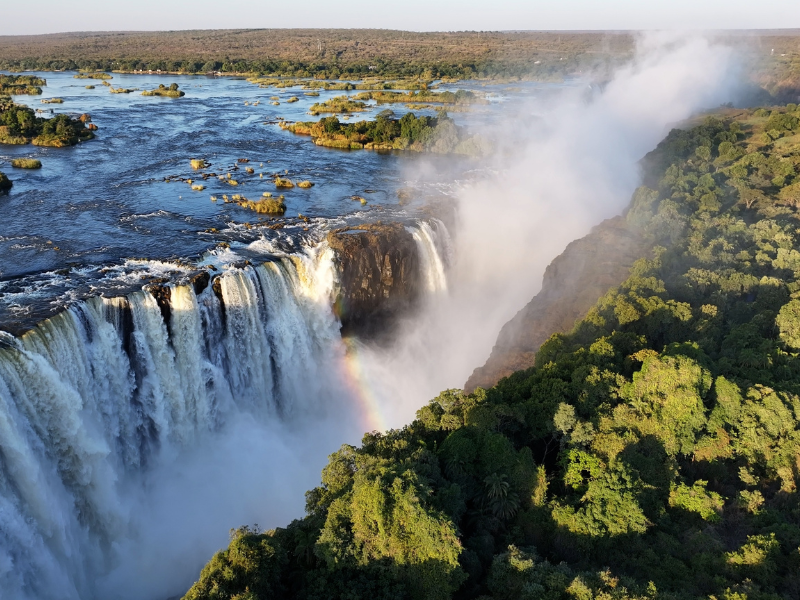
Victoria Falls rises on the banks of the Zambezi, beside one of the most spectacular waterfalls on Earth, where the river plunges over a hundred metres and throws up a curtain of spray visible for miles — the roar that local peoples call 'Mosi-oa-Tunya', the smoke that thunders. A UNESCO World Heritage Site, the falls are admired from the trails of Victoria Falls National Park, amid hanging rainbows and rainforest fed by perpetual mist. The town that shares the name of the falls is the beating heart of African adventure: sunset cruises on the Zambezi, panoramic helicopter flights, white-water rafting through the gorge and safaris in the surrounding reserves all begin here. The famous Victoria Falls Bridge, suspended over the chasm, links Zimbabwe to Zambia and hosts daring bungee jumps. Colonial-era lodges still carry the atmosphere of the great explorers, while elephants and antelope wander freely nearby. Victoria Falls is the perfect gateway to an Africa of water, wildlife and wonder, where nature reveals its full power.
_20260615154734.png)
_20260615154735.png)
_20260615154735.png)
_20260615155145.png)
_20260225163328.png)
_20260225163328.png)
_20260225163328.png)
_20260225163328.png)