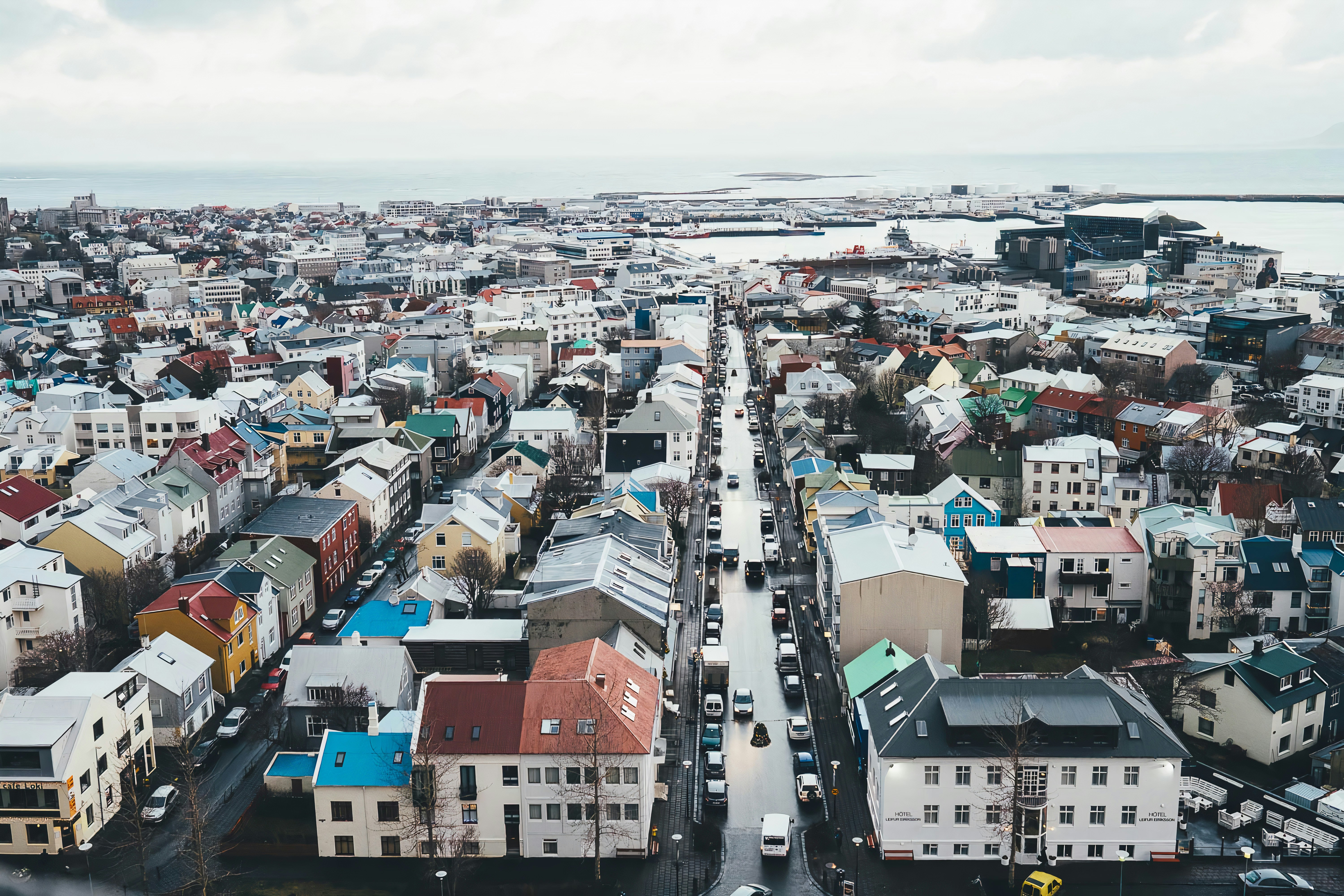
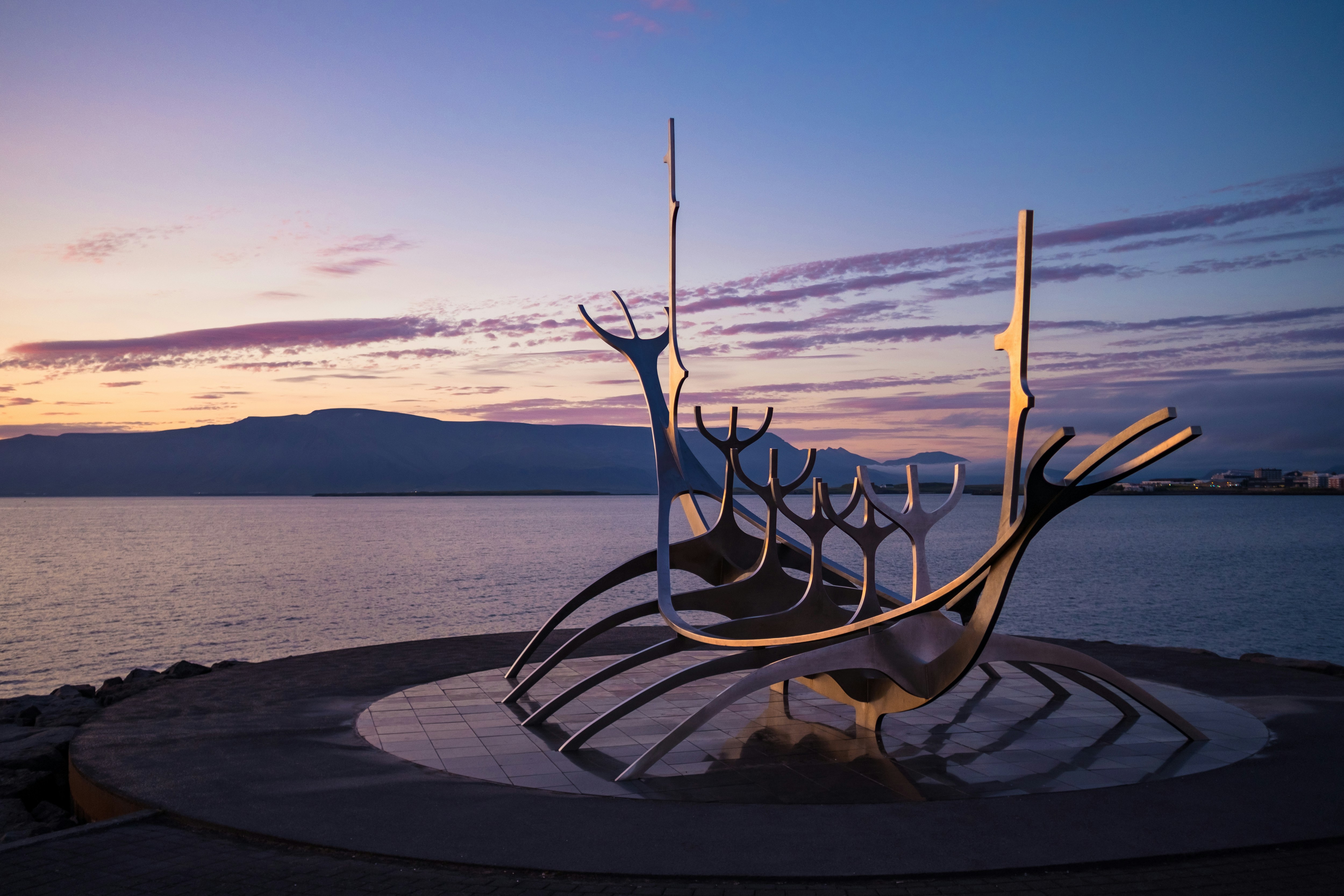
Reykjavík is the world''s northernmost capital, a compact and colourful city spread between Faxaflói Bay and the snow-streaked profile of Mount Esja. The heart of city life beats along Laugavegur, the main shopping street, and through the lanes of the Old Town, where houses clad in corrugated iron painted red, yellow and turquoise crowd around Lake Tjörnin, alive with waterbirds. The skyline is dominated by Hallgrímskirkja, the Lutheran church with expressionist lines inspired by basalt columns, whose tower offers sweeping views over rooftops, sea and mountains. On the waterfront the Harpa concert hall and conference centre glitters behind a honeycomb glass façade that catches the northern light, while a little further on the Sólfar sculpture (the “Sun Voyager”) traces its steel skeleton against the fjord. Culture carries a weight out of all proportion to the city''s size: the National Museum of Iceland tells eleven centuries of history from the Vikings onward, the Reykjavík Art Museum and the studio-house of sculptor Einar Jónsson round out the picture, while live-music venues and famous cafés come alive on summer evenings, when the sun never sets. Reykjavík also runs on warm geothermal water: open-air pools such as Laugardalslaug are social institutions, and the geothermal beach at Nauthólsvík allows bathing even in winter. The city is the ideal base for the Golden Circle — Þingvellir, Geysir and the Gullfoss waterfall — and for trips in search of the northern lights or whales out in the bay. Between Nordic design, a cuisine that reinvents fish, lamb and foraged ingredients, and an outsized creative energy, Reykjavík is a vibrant gateway to the whole of Iceland.
Auto
Giorno 2 — Reykjavík → Vesturland
Vesturland is Iceland's great western region, a mosaic of fjords, volcanoes and peninsulas reaching into the Atlantic between Reykjavik and the remote Westfjords. It is a land of sharp contrasts: the Snaefellsnes peninsula, crowned by the glacier-volcano Snaefellsjokull, is often called "Iceland in miniature" for the variety of landscapes packed into a few kilometres, from black beaches to lava fields, from mossy plains to fishing villages. Inland flow salmon-rich rivers and green valleys steeped in the old sagas, while the Hraunfossar falls seep straight out of a lava field. The coasts offer sightings of seals and seabirds, and on clear winter nights the sky flares with the northern lights. An ideal region for anyone seeking Icelandic nature in all its forms, just a few hours from the capital.