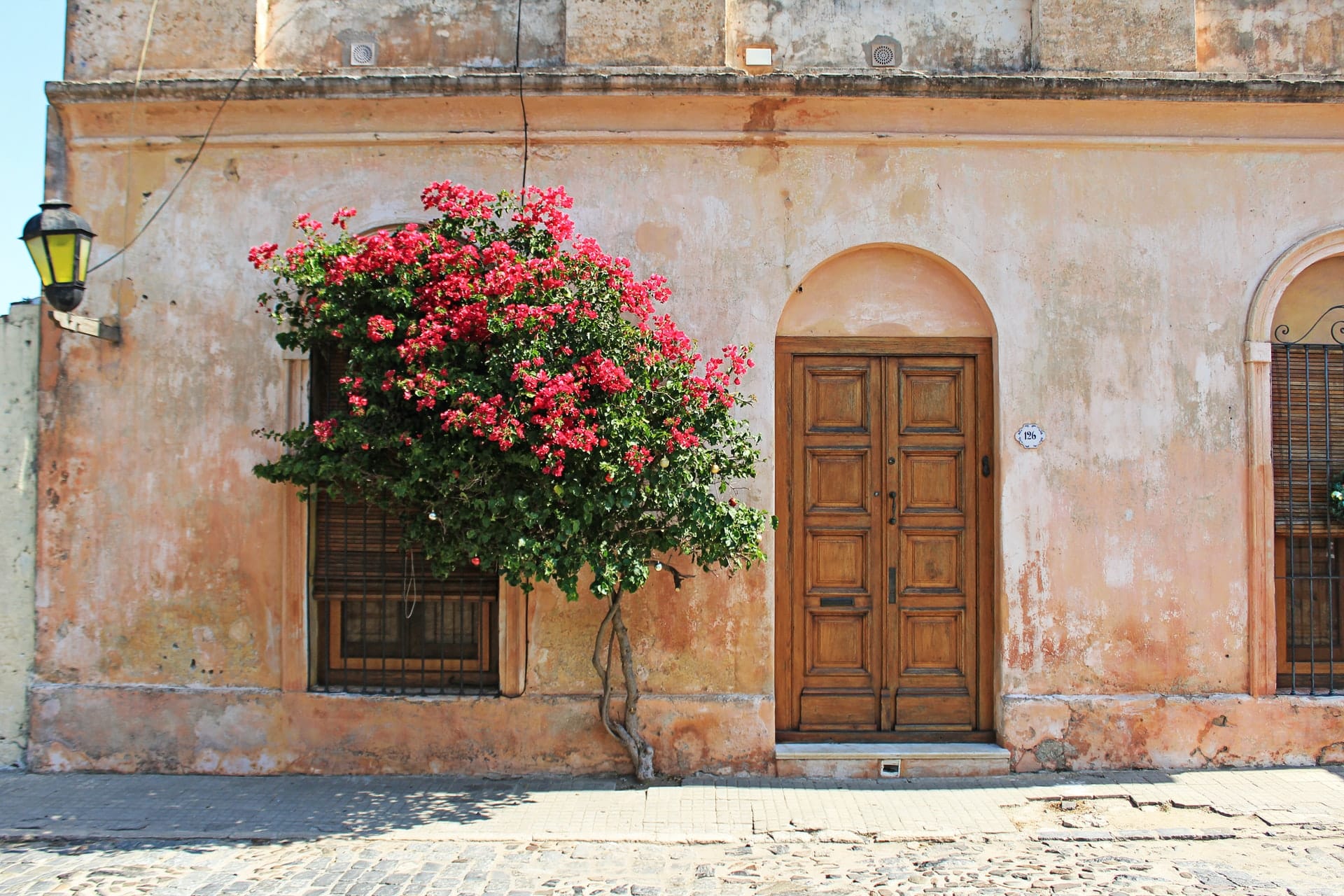
Colonia del Sacramento guards on the shore of the Río de la Plata the oldest urban settlement in Uruguay, founded by the Portuguese in 1680 and long disputed with the Spanish crown. Its Barrio Histórico, inscribed on the UNESCO World Heritage list, is a maze of cobbled lanes where the two colonial styles intertwine: the Calle de los Suspiros, paved with a central spine, slopes down to the water between low, tile-roofed houses. The 19th-century lighthouse, a few steps up, offers a sweeping view over the Citadel Gate, the shaded Plaza Mayor and the remnants of the walls. At sunset the café tables fill and golden light catches the whitewashed walls. Easily reached by ferry from Buenos Aires, Colonia invites a slow pause of strolls, antique shops and bicycle rides along the shore.
Auto
Giorno 2 — Colonia del Sacramento → Montevideo
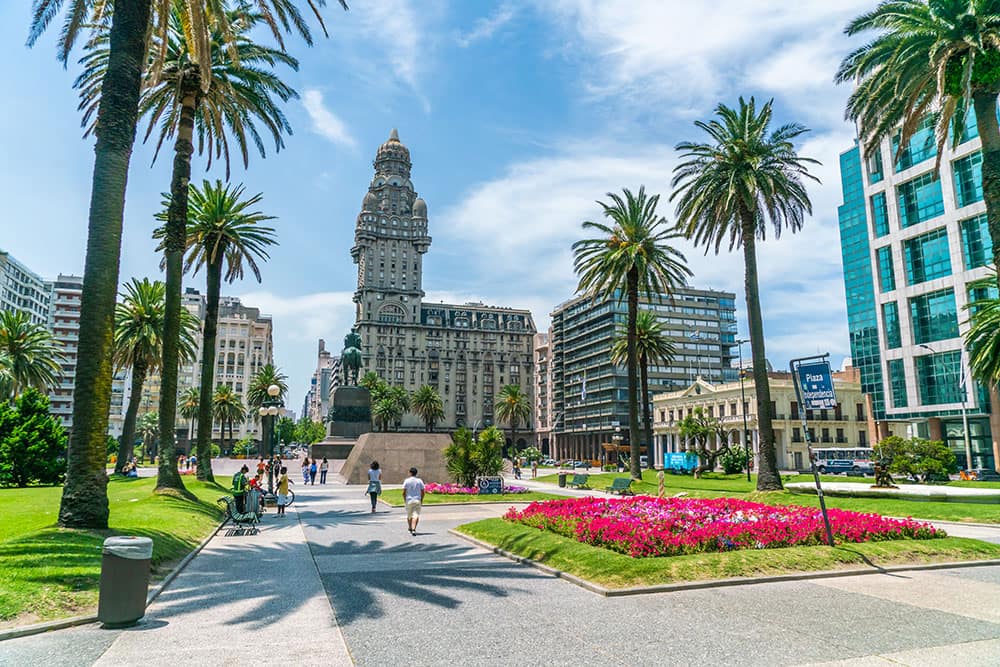
Montevideo stretches along the northern shore of the Río de la Plata and is the capital and beating heart of Uruguayan life. The Ciudad Vieja preserves its colonial layout around Plaza Matriz, with the metropolitan cathedral and eclectic early-20th-century palaces; just beyond, Plaza Independencia is dominated by the mausoleum of José Artigas and the Palacio Salvo, an art-déco skyscraper long the tallest in South America. The Mercado del Puerto gathers beneath its iron framework the parrillas where asado is enjoyed, while the Teatro Solís remains the temple of music and theatre. Yet the city is lived above all along its Rambla, a waterfront of more than twenty kilometres skirting urban beaches such as Pocitos and Ramírez, walked each afternoon by joggers, anglers and those sipping mate from a flask tucked under the arm. The candombe drums, an Afro-Uruguayan legacy, set the rhythm of evenings in the Sur and Palermo districts. Montevideo thus blends 19th-century elegance, the culture of tango and football, and an unhurried pace of life, facing the silvery water of the great estuary.
Auto
Giorno 3 — Montevideo → Punta del Este
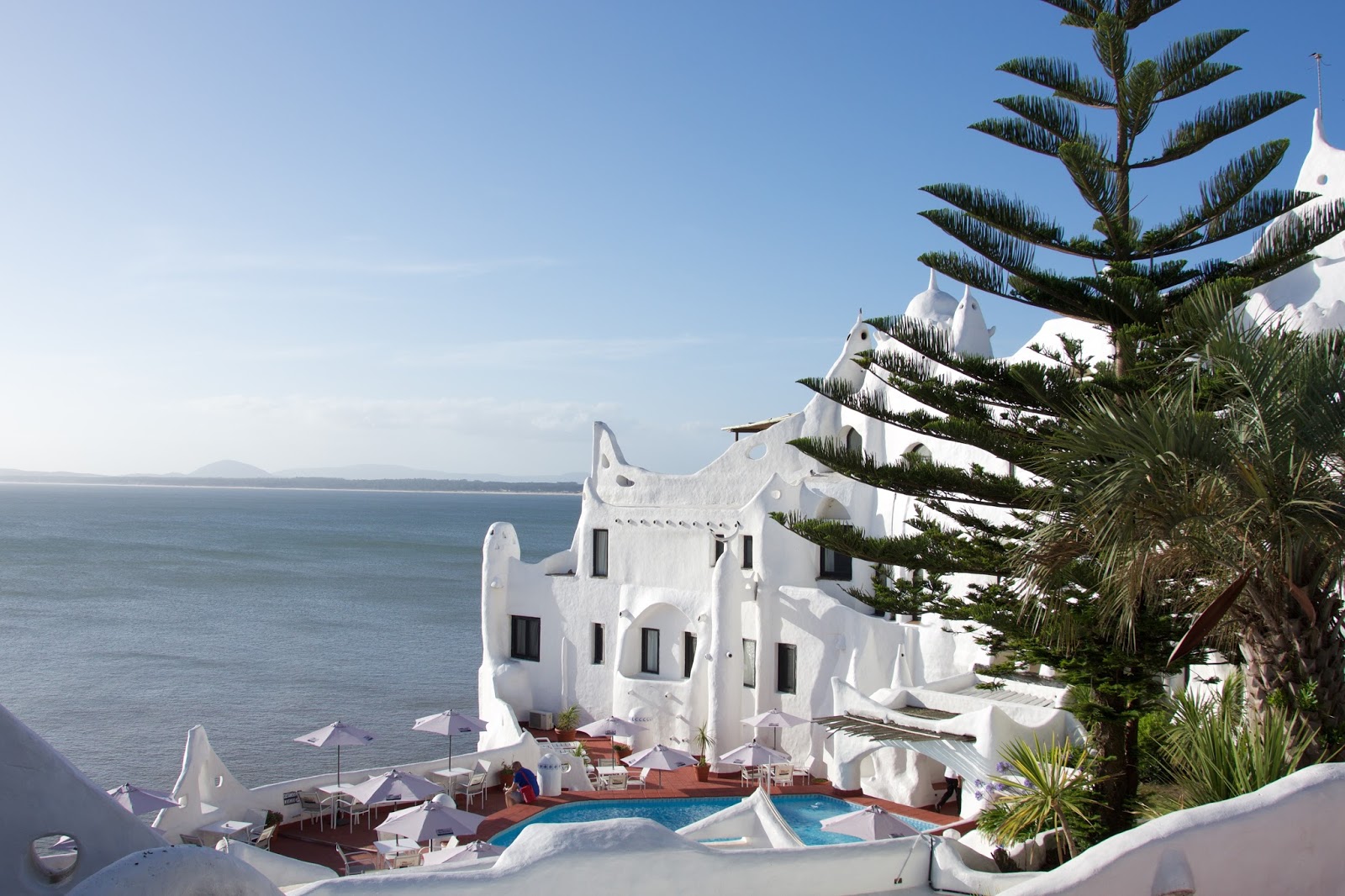
Punta del Este marks the point where the Río de la Plata gives way to the Atlantic, and it is the most fashionable of Uruguay's seaside resorts. The peninsula divides two beaches of opposite character: Playa Mansa, calm and sheltered on the river side, and Playa Brava, exposed to the ocean swell and famous for «La Mano», the concrete fingers rising from the sand, a sculpture by Mario Irarrázabal that has become the city's emblem. Yachts and seafood restaurants line the marina, while a 19th-century lighthouse watches over the point. A few kilometres away, the village of Punta Ballena is home to Casapueblo, the white, sculptural house-museum of Carlos Páez Vilaró, where the «ceremony of the sun» is held at sunset. High season, from December to February, brings nightlife, polo and an international crowd; out of season, broad beaches, pine groves and clear Atlantic light remain. Excursions set out from here towards José Ignacio and the estancia hinterland.