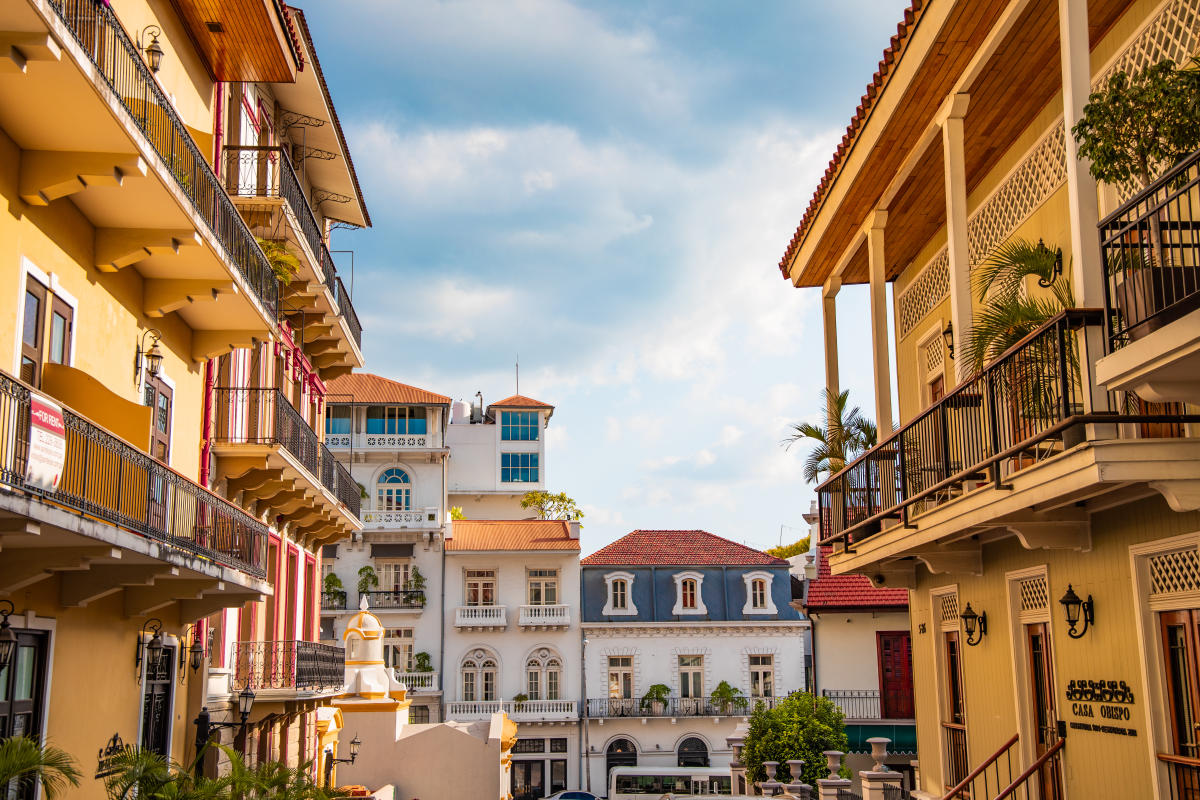
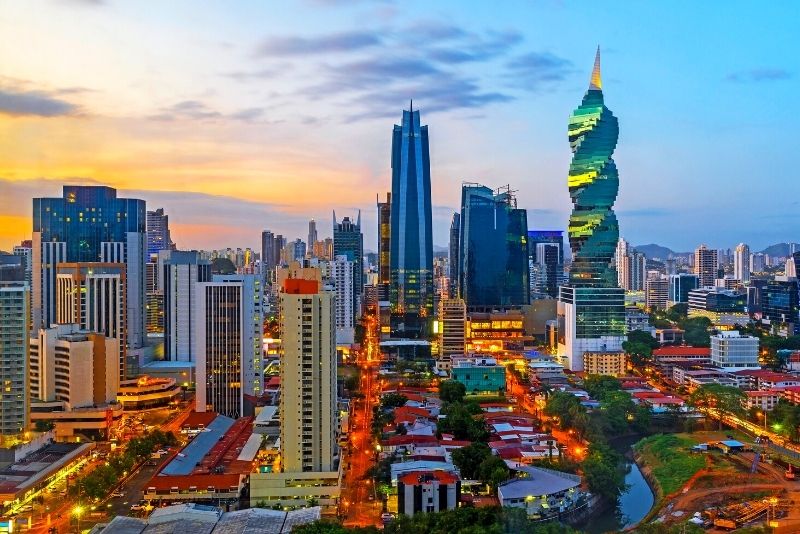
Panama City faces the Pacific Ocean with the skyline of a modern metropolis, and behind it five centuries of history take shape in the Casco Viejo, the colonial old town declared a UNESCO World Heritage Site. Founded by the Spanish in 1519 and rebuilt in 1673 on its current peninsula, the city is today Central America's most cosmopolitan capital, a crossroads of cultures, trade and air routes that make it the ideal starting point for any Panamanian itinerary.
The Casco Viejo concentrates the best of colonial architecture: the Plaza de la Independencia with the Catedral Metropolitana, the Palacio de las Garzas (the presidential residence), the church of San José with its celebrated baroque golden altar, and cobblestone lanes where bars, restaurants and art galleries animate buildings under restoration. From the Las Bóvedas bastion viewpoint the eye sweeps over the Bahía de Panamá and, on clear days, the distant outline of the Puente de las Américas.
A few minutes by taxi stands the country's true icon: the Panama Canal. The Miraflores Locks, with their museum and panoramic terrace, allow visitors to watch in real time the passage of container ships, tankers and cruise liners crossing the 77-kilometre artificial waterway, the most famous in the world. The newer Agua Clara Locks on the Atlantic side offer the same spectacle on an even larger scale.
The capital's cuisine blends Afro-Caribbean, Asian and Latin American flavours: ceviche de corvina with ají chombo, sancocho de gallina, patacones, and the fusion restaurants of Marbella and the Cinta Costera waterfront make a culinary tour an essential part of any visit. Panama City is also a convenient base for excursions to the Las Perlas islands, Soberanía National Park and Emberá communities in the Darién jungle.