Costa Rica: from Tortuguero to Vulcano Arenal — NAAR
Itinerary
Giorno 1 — San Jose
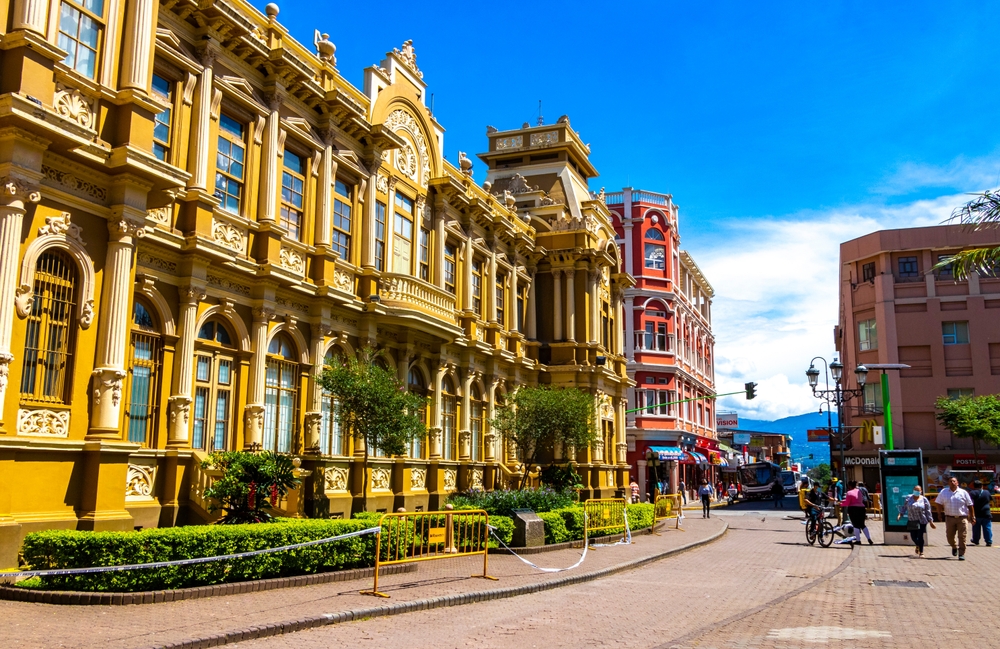
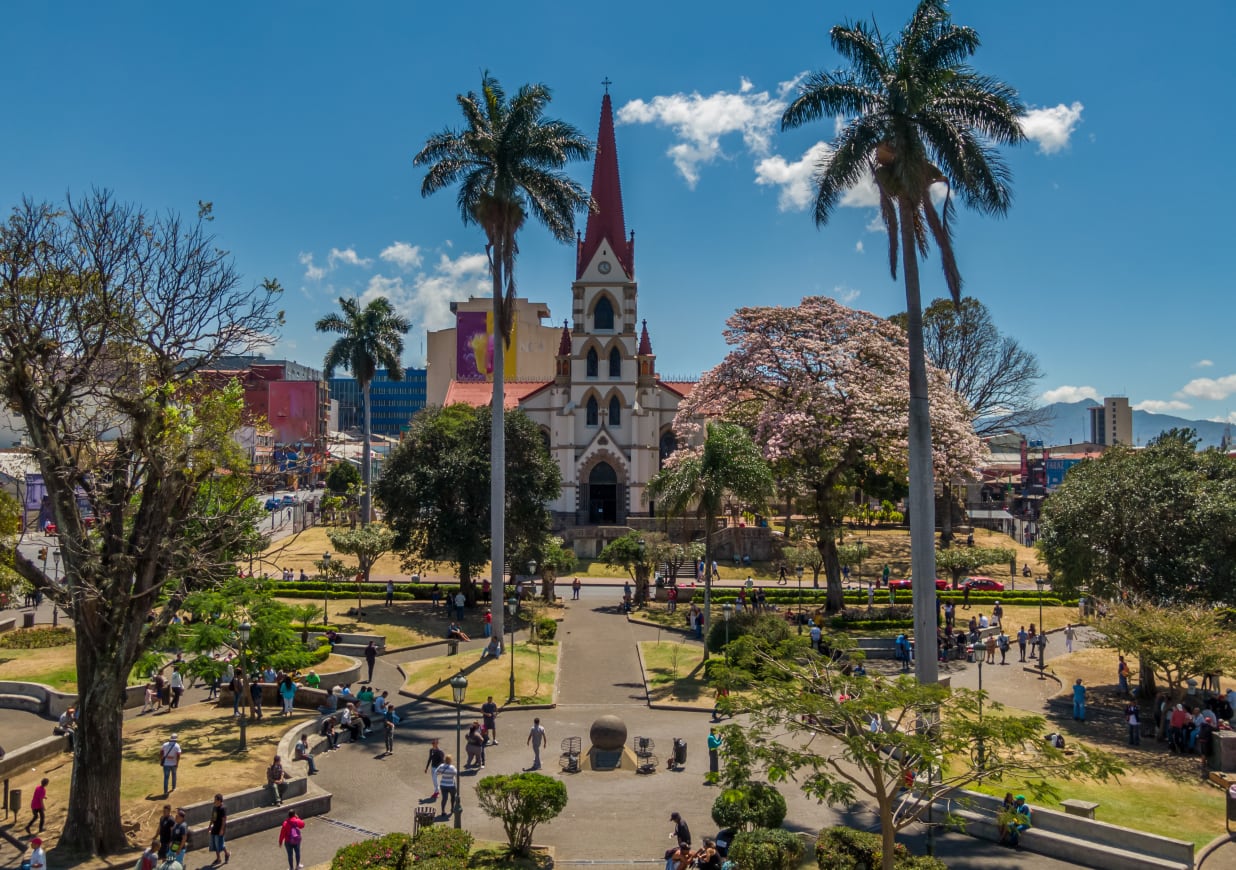
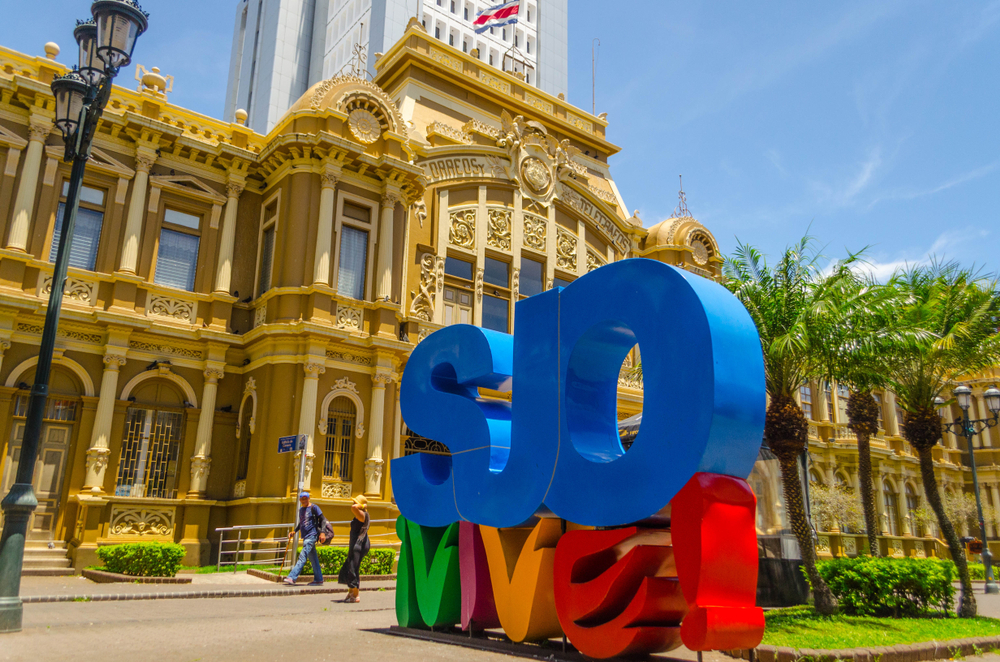
San José is the starting point of almost every journey through Costa Rica: a capital set at over 1,100 metres in the fertile Central Valley, ringed by an amphitheatre of green mountains and volcanoes. The city trades less on monumental beauty than on the lively, authentic atmosphere of tico life. Its historic core revolves around the Teatro Nacional, a late-nineteenth-century neoclassical gem with marble interiors and frescoes, facing the Plaza de la Cultura. A few steps away stand the Museo del Oro Precolombino, home to a remarkable collection of gold artefacts from indigenous cultures, and the Museo Nacional, housed in the former Bellavista barracks. The Museo del Jade displays the world’s largest collection of pre-Columbian jade, while the Mercado Central teems with stalls, sodas and the scents of coffee and tropical fruit. The pedestrian Avenida Central gathers the commercial bustle, and the neighbourhoods of Barrio Amón and Escalante, with their historic houses, cafés and restaurants, tell the story of a more contemporary, creative San José. The city is an easy base for excursions to the Poás and Irazú volcanoes, the coffee plantations and the valley villages. San José is an urban gateway to the country: practical, welcoming and best discovered one neighbourhood at a time before plunging into nature.
Traghetto
Giorno 3 — San Jose → Tortuguero
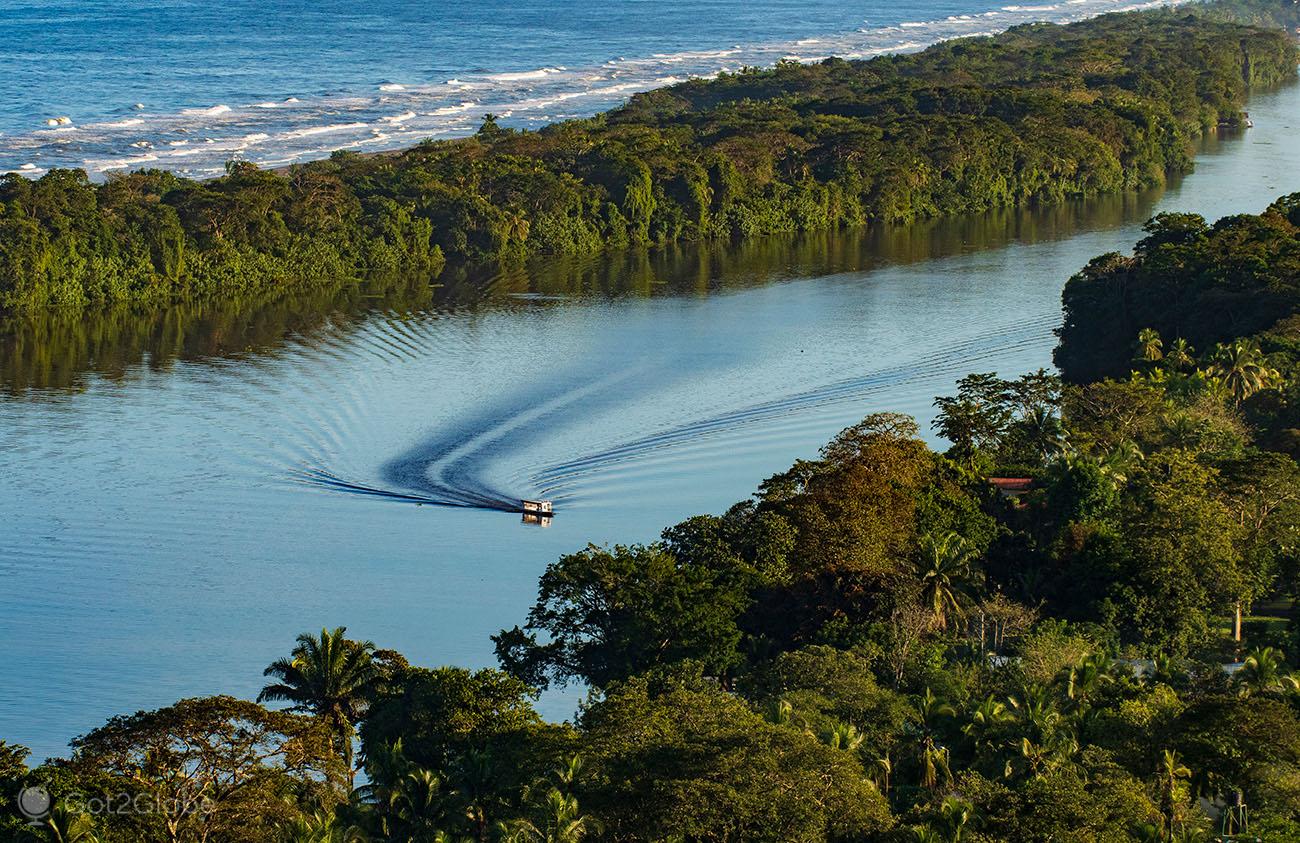
Tortuguero is a world apart: a maze of canals, lagoons and rainforest along the north-eastern Caribbean coast, reachable only by boat or small plane. Nicknamed the “Costa Rican Amazon,” this network of waterways is explored by canoe or launch, gliding among the mangroves where caimans, sloths, howler monkeys, toucans and a remarkable variety of water birds appear at every bend. The Parque Nacional Tortuguero protects one of the country’s richest environments and owes its name to the phenomenon that made it famous: between July and October the black-sand beaches become the stage for the nesting of green turtles, which climb the sand to lay their eggs in one of the most moving natural spectacles of the Caribbean. The small village of the same name, with no roads, lives on fishing and responsible tourism. Between dawn excursions, walks through the humid forest and a silence broken only by animal calls, Tortuguero offers a total immersion in Costa Rica’s wild nature.
Auto
Giorno 5 — Tortuguero → Vulcano Arenal
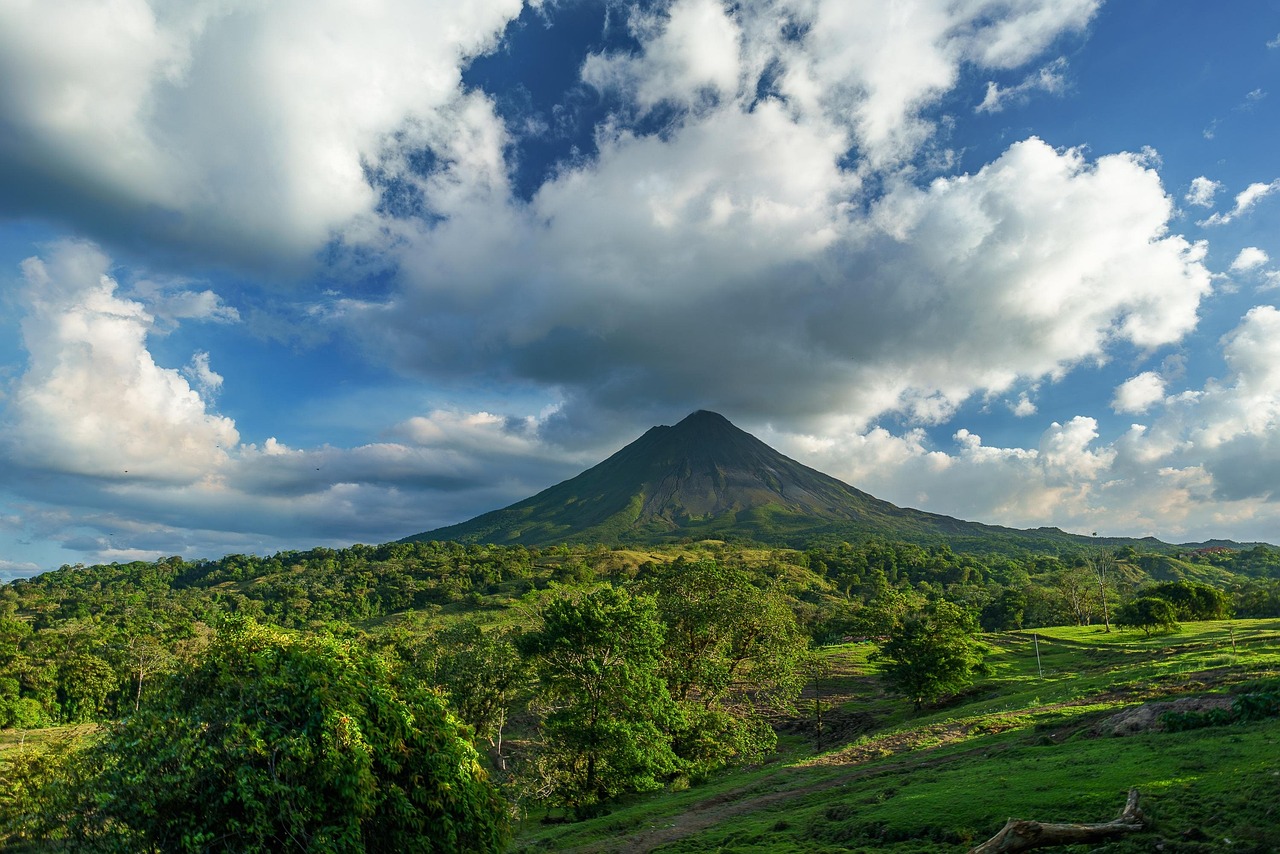
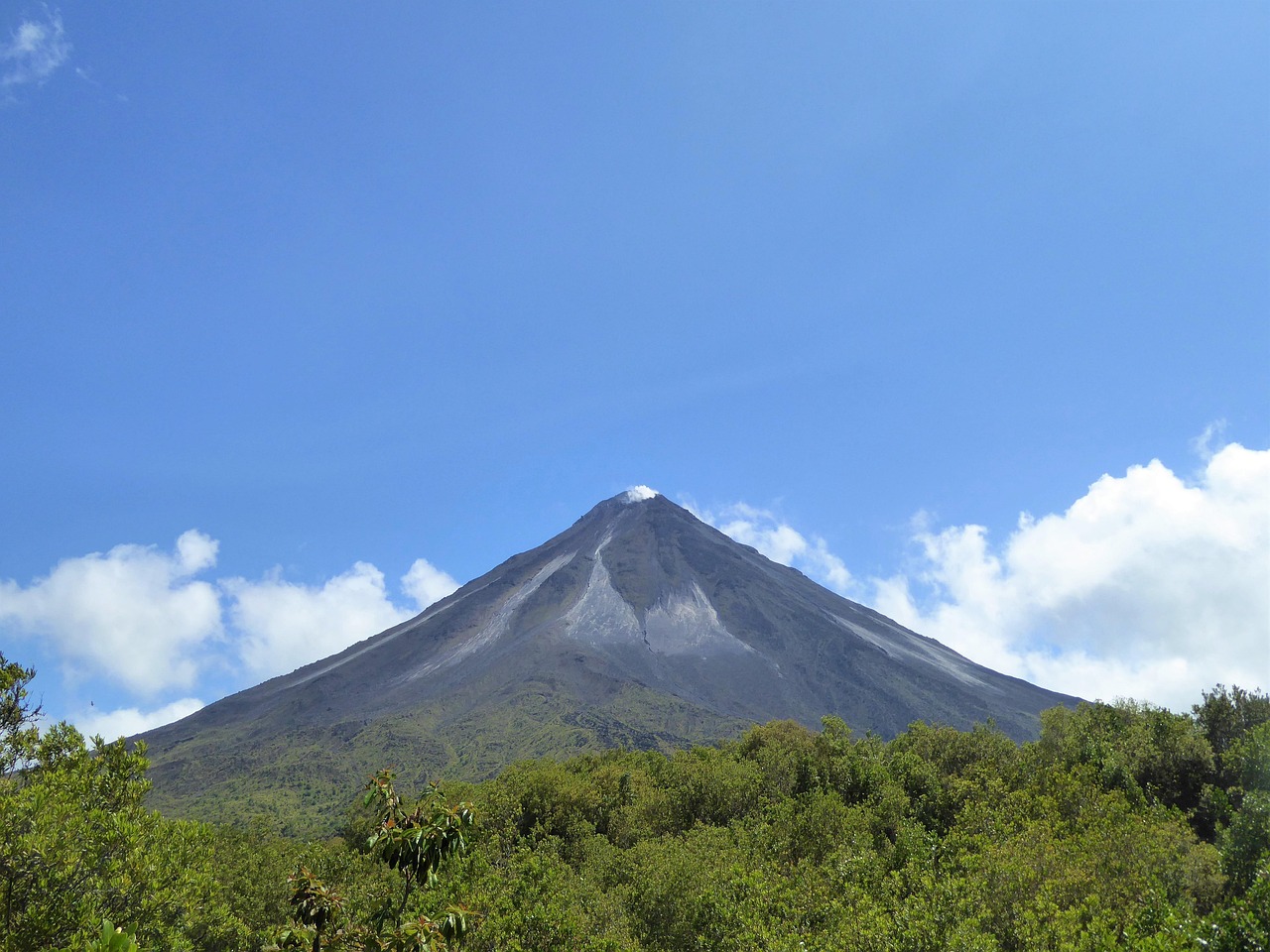
A near-geometric cone rising more than 1,600 metres above the northern lowlands, the Volcán Arenal traces the perfect silhouette many people picture when they think of Costa Rica, mirrored in the lake that shares its name. For decades it was one of the country’s most active volcanoes, with glowing lava visible at night; today it has entered a resting phase, yet it remains the heart of one of the most beloved stops on any Costa Rican itinerary. All around stretches the Parque Nacional Volcán Arenal, where trails cross old lava flows now reclaimed by forest and open onto viewpoints framing the cone. The region’s true soul, though, lies in its hot springs: water heated by the volcanic subsoil feeds dozens of natural pools and thermal resorts — from Tabacón to simpler baths — where you can unwind at dusk with the volcano as a backdrop. The days fill easily: hanging bridges through the rainforest canopy, rafting down the Río Balsa or the Sarapiquí, ziplines above the treetops, horseback rides and a walk to the La Fortuna waterfall, which plunges over seventy metres into an emerald pool. Wildlife is generous: sloths, toucans, capuchin monkeys and hundreds of bird species inhabit the woods. The nearby town of La Fortuna serves as a base, with tico restaurants, family sodas and outfitters for every activity. Arenal is the perfect distillation of the Costa Rican experience: powerful nature, warm water rising from the earth and adventure within easy reach.