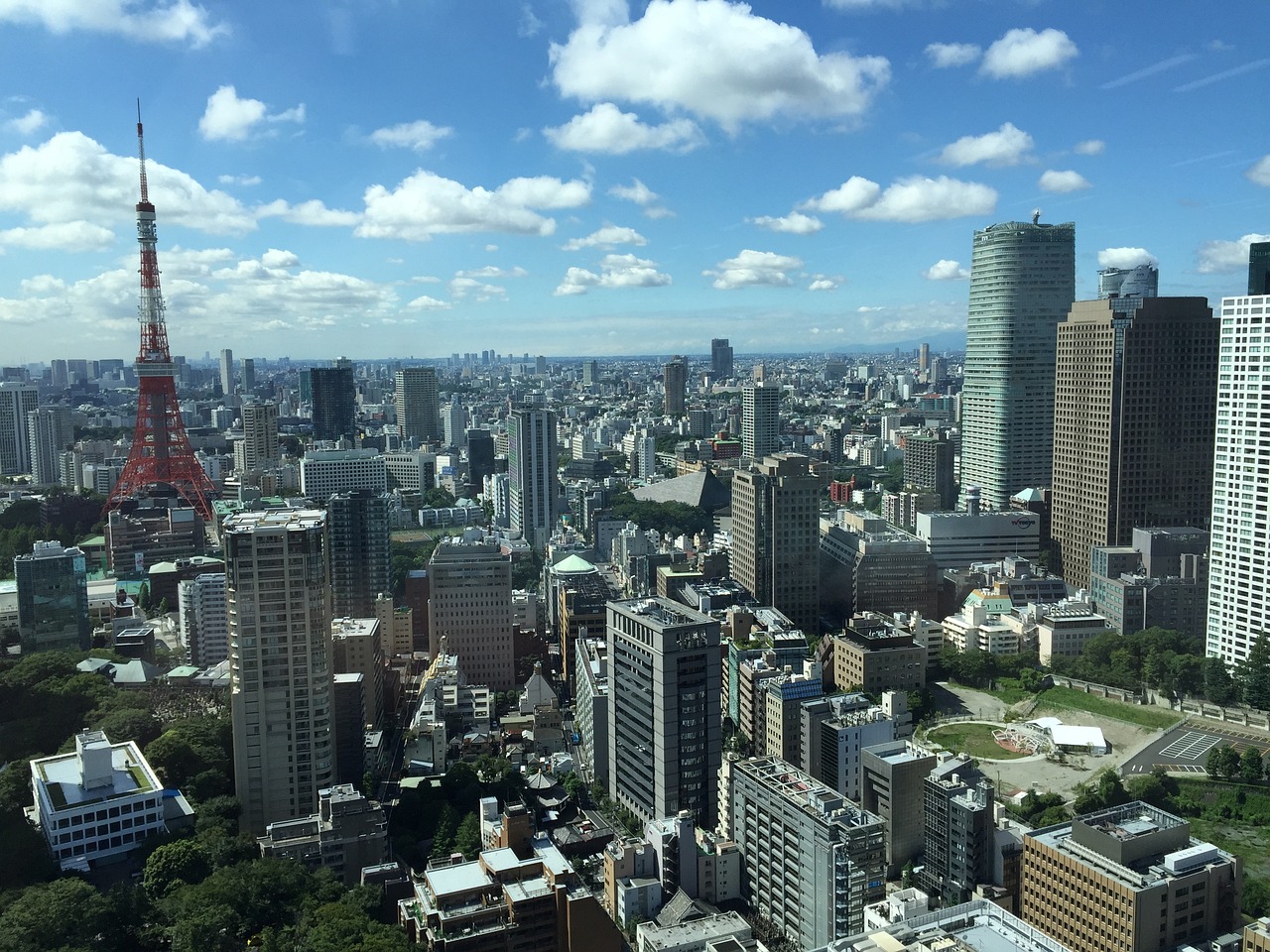
Tokyo spreads across a vast plain overlooking its namesake bay, where Japan's imperial heritage coexists with the pulse of the planet's most populous metropolis. The city's symbolic heart is the Imperial Palace (Kōkyo), ringed by broad moats and gardens, the Emperor's residence on the site of the former Edo Castle from which the city takes its historic name. Nearby, the Marunouchi district lines up glass skyscrapers and the red-brick Tokyo Station, while Ginza unfolds gleaming storefronts, boutiques and refined tea salons.
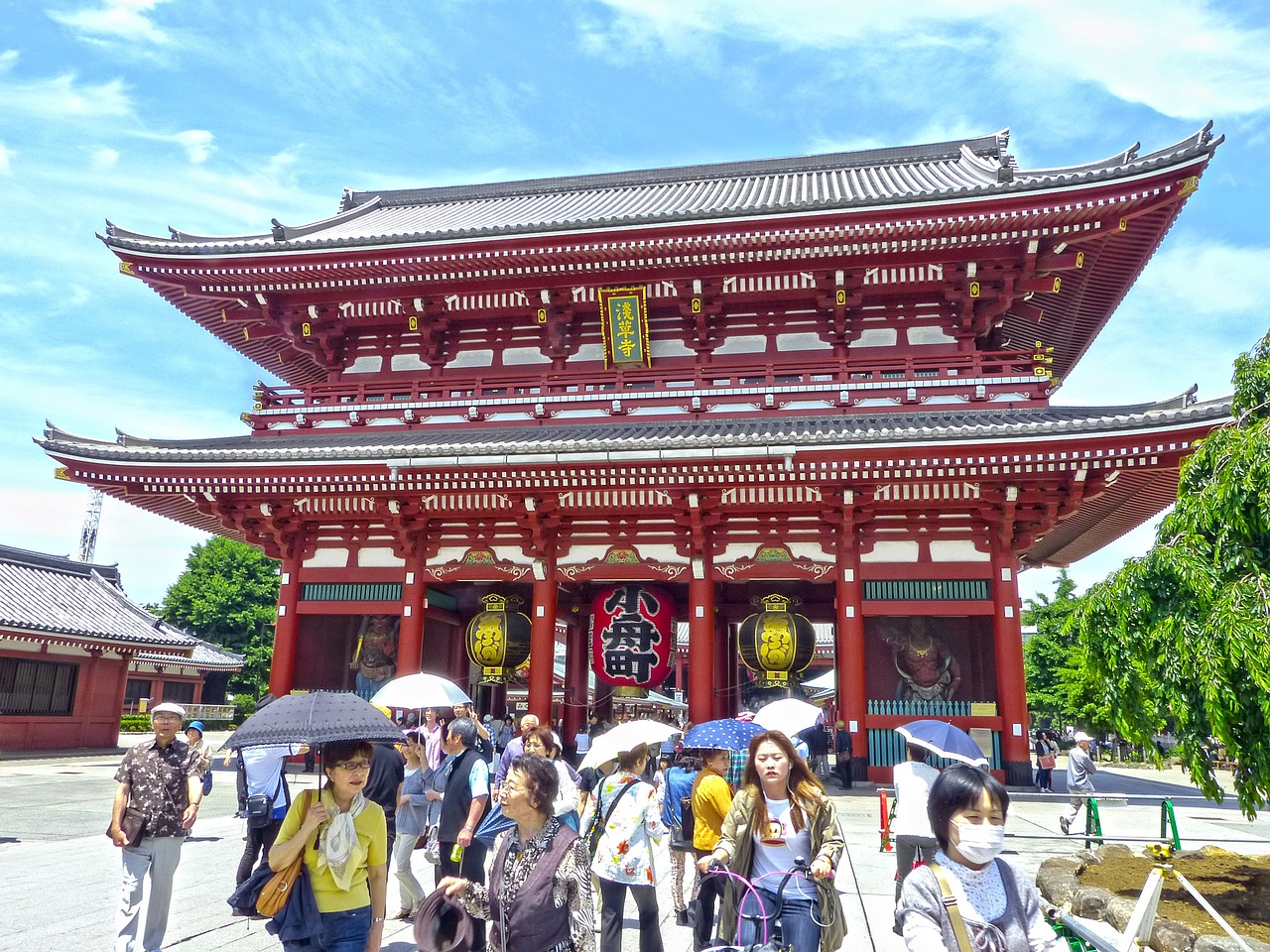
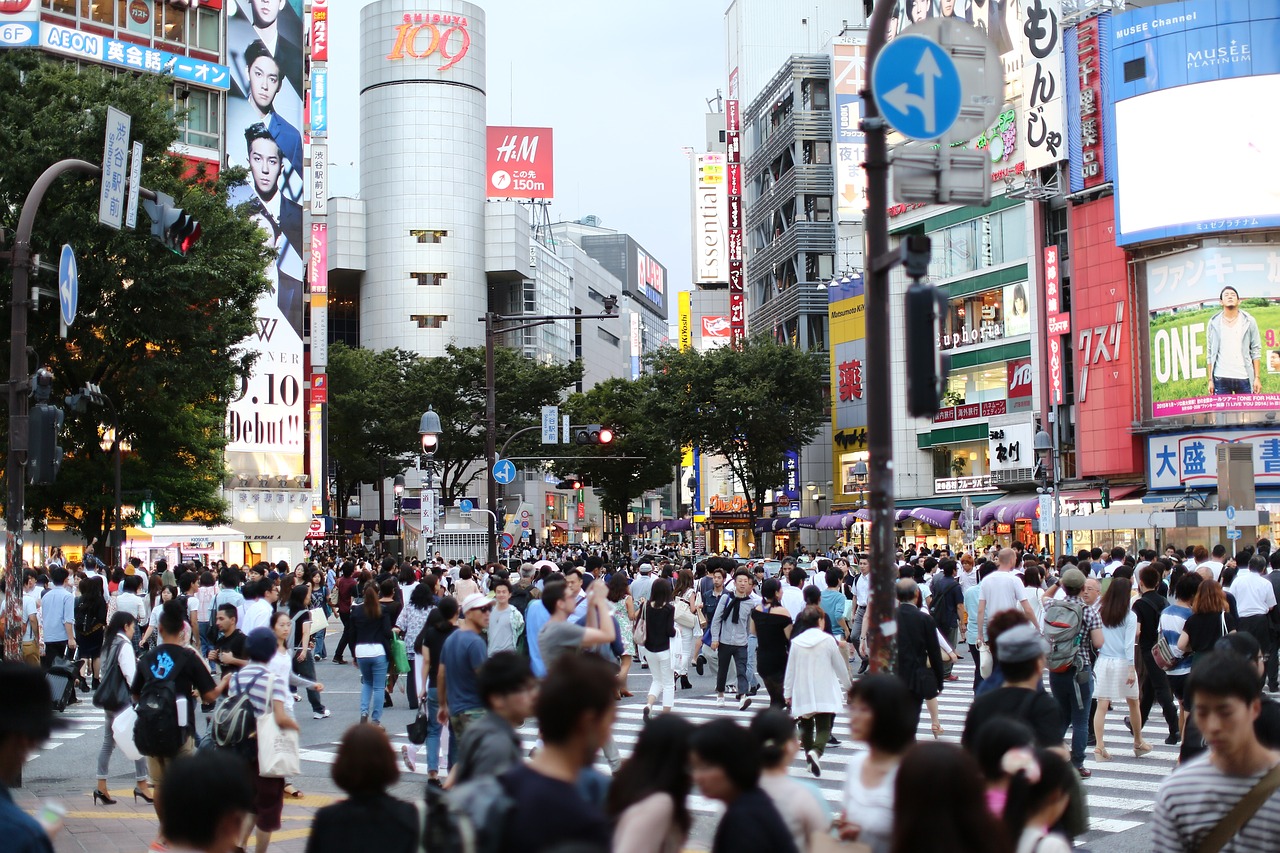
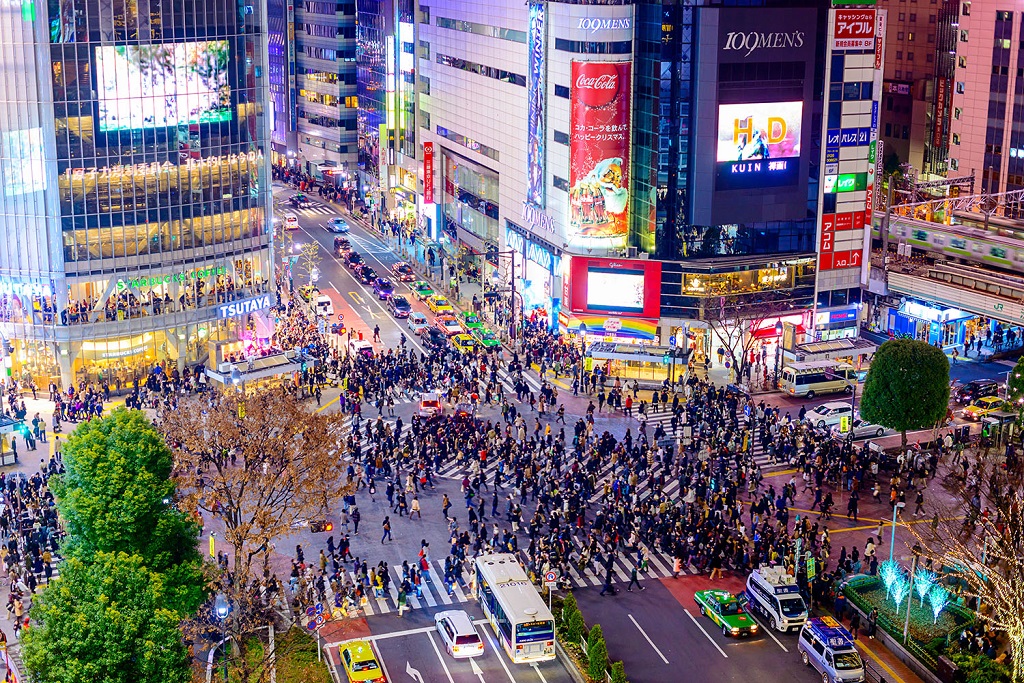
To the north, the Asakusa district guards the Sensō-ji temple, the city's oldest, fronted by the famous Kaminarimon gate with its huge red lantern and by Nakamise street, crowded with traditional shops. Across the Sumida River rises the Tokyo Skytree, while pleasure boats glide down to the Hama-rikyū gardens. The city's contemporary face erupts at Shibuya, with the busiest pedestrian crossing in the world, and at Shinjuku, amid skyscrapers, nightlife and the alleys of Golden Gai. Harajuku and Omotesandō avenue set youth-fashion trends, while Akihabara is the realm of electronics and pop culture. For quiet moments there are the Meiji-jingū shrine, set within a sacred wood, and the wide spaces of Ueno Park, with its museums and spring cherry blossoms.
Gastronomy is a chapter of its own: from the sushi counters around the old Tsukiji market to izakaya taverns, from steaming ramen to refined Michelin-starred dining rooms, Tokyo boasts one of the most celebrated culinary scenes in the world. The city is also the starting point for unforgettable excursions to the Nikkō shrine, the hot springs of Hakone and, on clear days, the unmistakable silhouette of Mount Fuji. Age-old tradition and luminous future intertwine at every corner: Tokyo is a city that never stops surprising, to be experienced day and night, between ancient rituals and inexhaustible energy.
Treno
Giorno 4 — Tokyo → Kanazawa
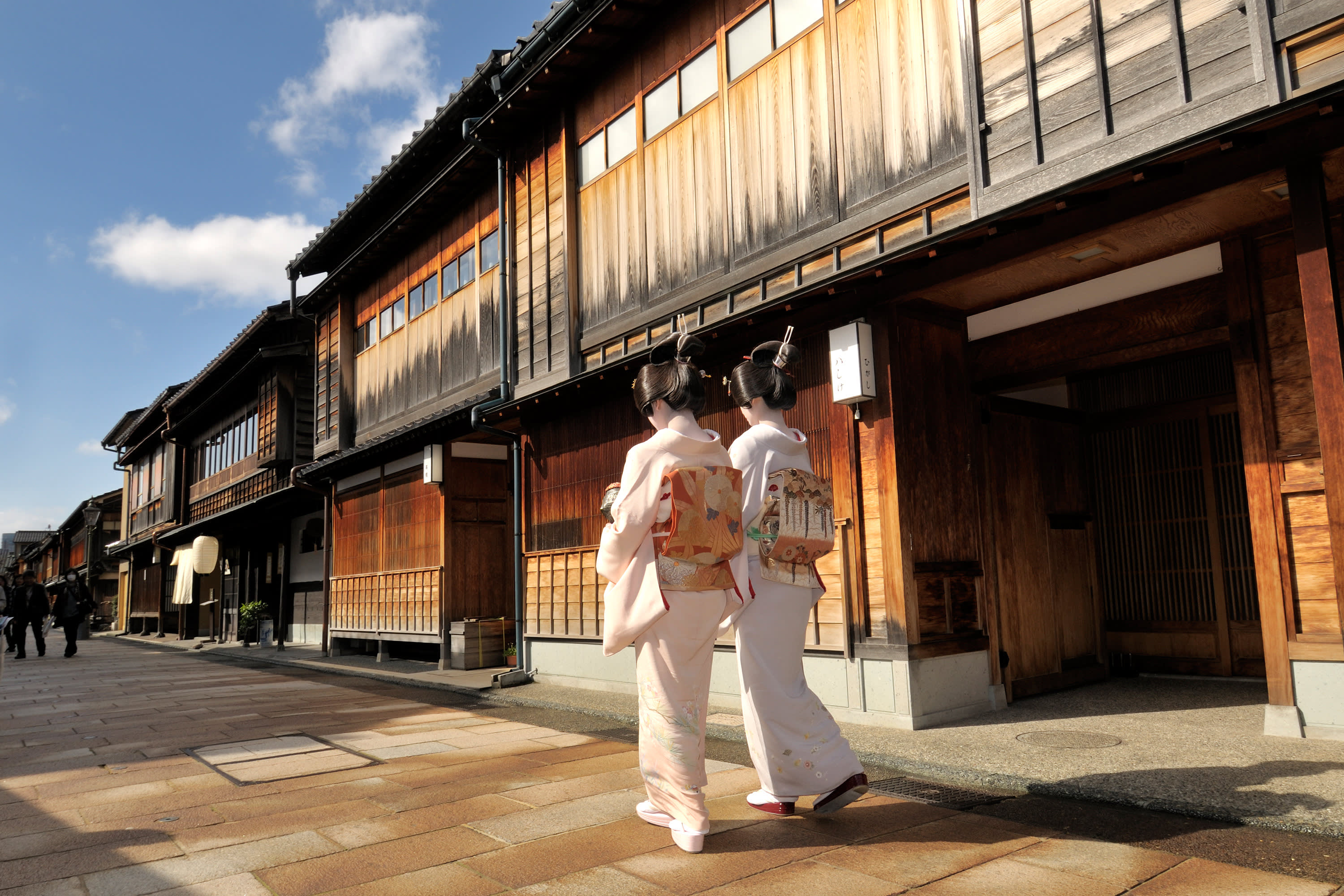
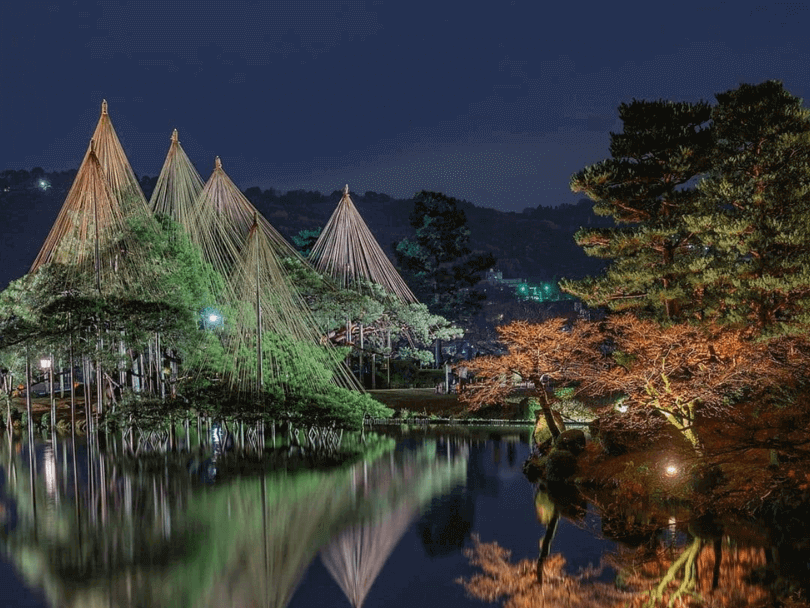
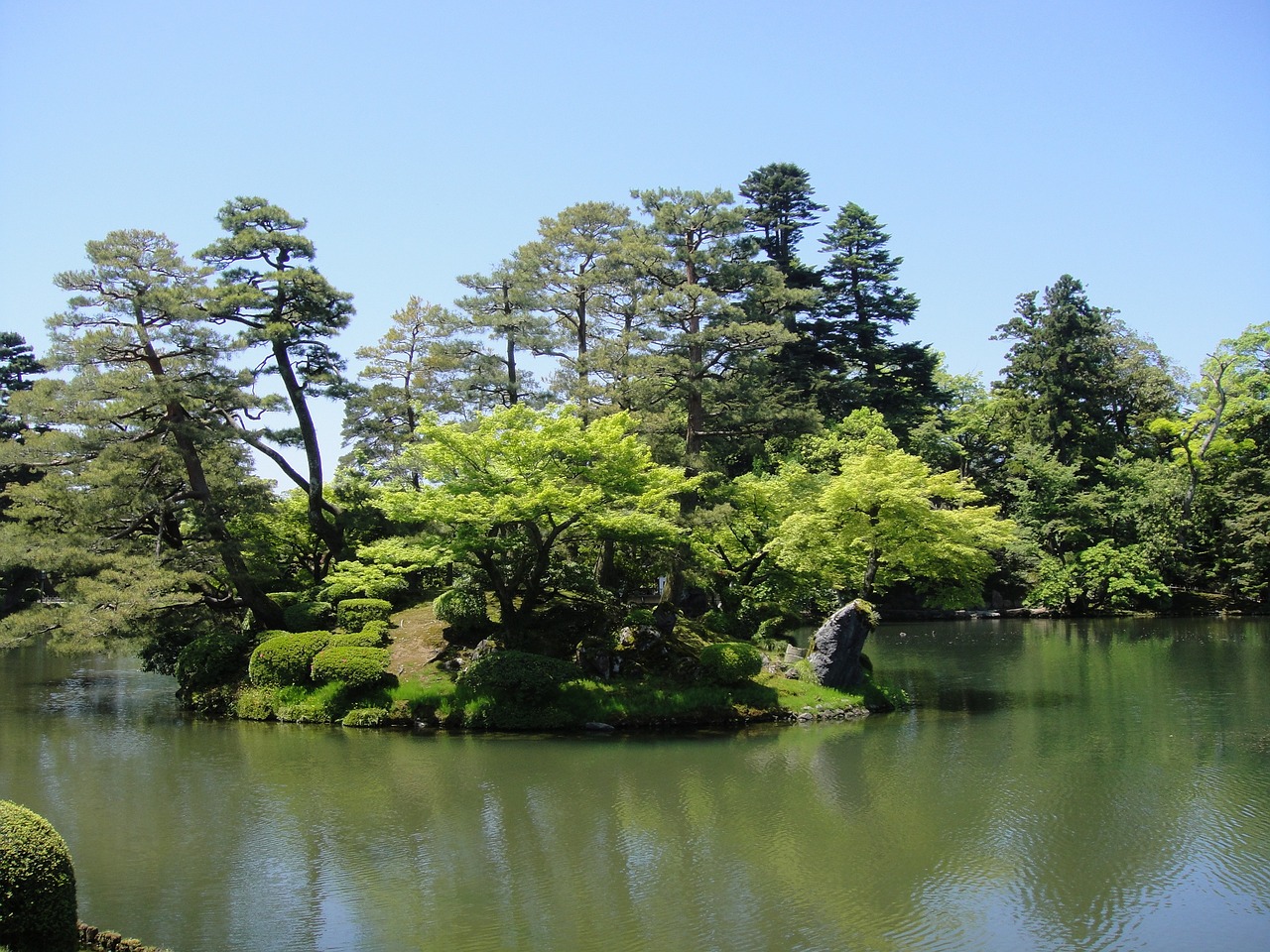
Kanazawa preserves one of Japan's best-kept historic centres, spared from wartime bombing and faithful to the elegance of its feudal past. At its heart lies Kenroku-en, ranked among the country's three finest gardens, where ponds, stone bridges and maples form a landscape that shifts with the seasons. Beside it stands Kanazawa Castle, while the Higashi Chaya district retains the dark-timbered tea houses where geisha once entertained merchants. In the Nagamachi samurai quarter you wander past earthen walls and old residences. Kanazawa is also the capital of gold leaf — applied even to ice cream — and a city of fish markets such as Ōmichō, where crab and seafood from the Sea of Japan arrive each morning. A destination weaving refined craftsmanship, seafood cuisine and a timeless atmosphere.
Treno
Giorno 6 — Kanazawa → Kyoto
Kyoto holds the most authentic soul of Japan: imperial capital for more than a thousand years, it preserves a heritage of temples, gardens and traditions that make it one of the most captivating cities in the world. Spared the bombing of the last war, it gathers within its streets more than a thousand shrines and temples, many inscribed on the UNESCO World Heritage list.
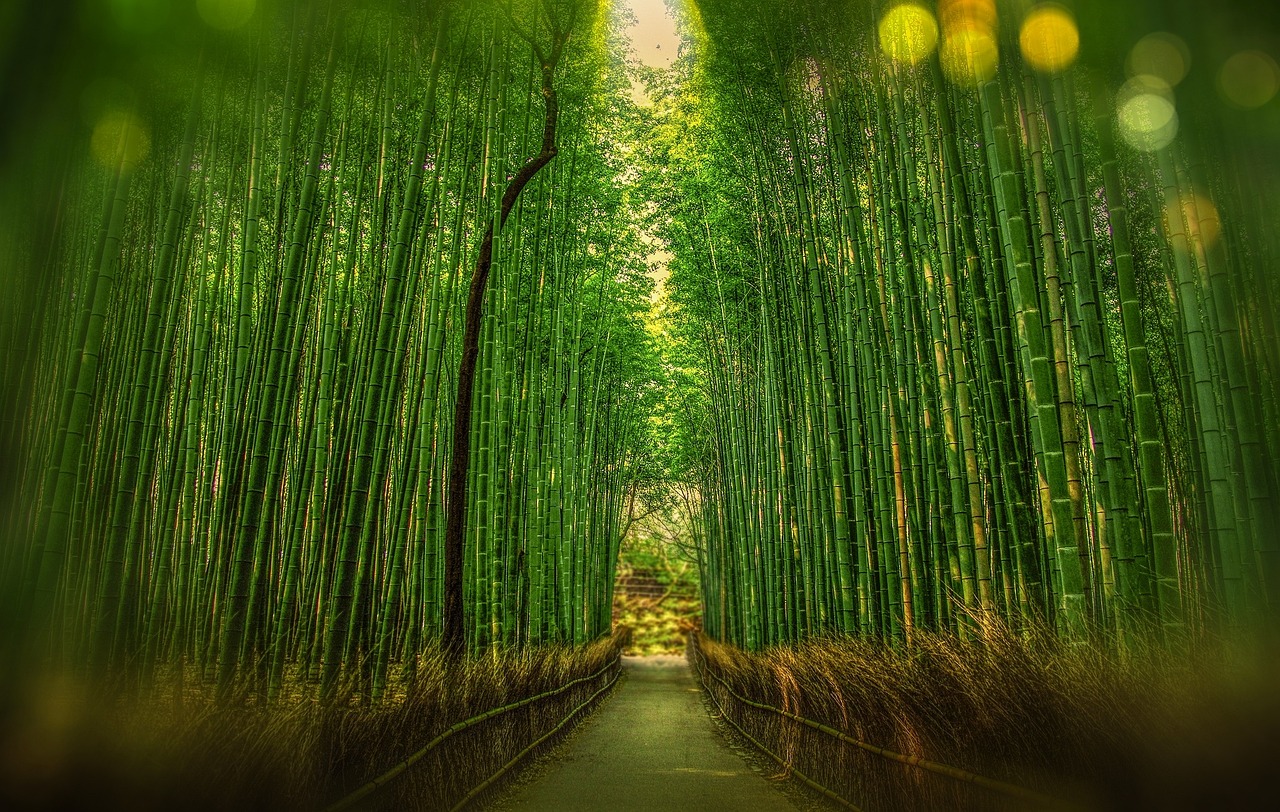
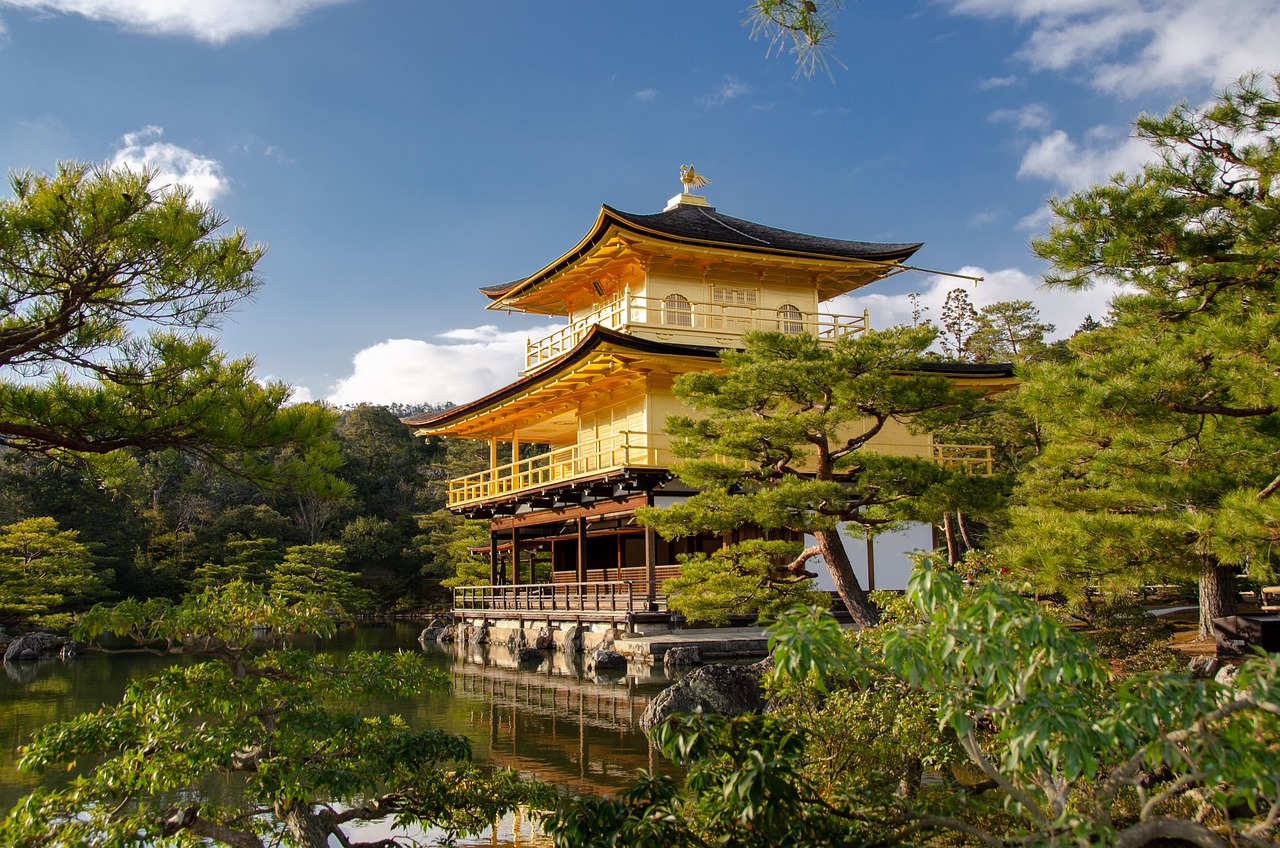
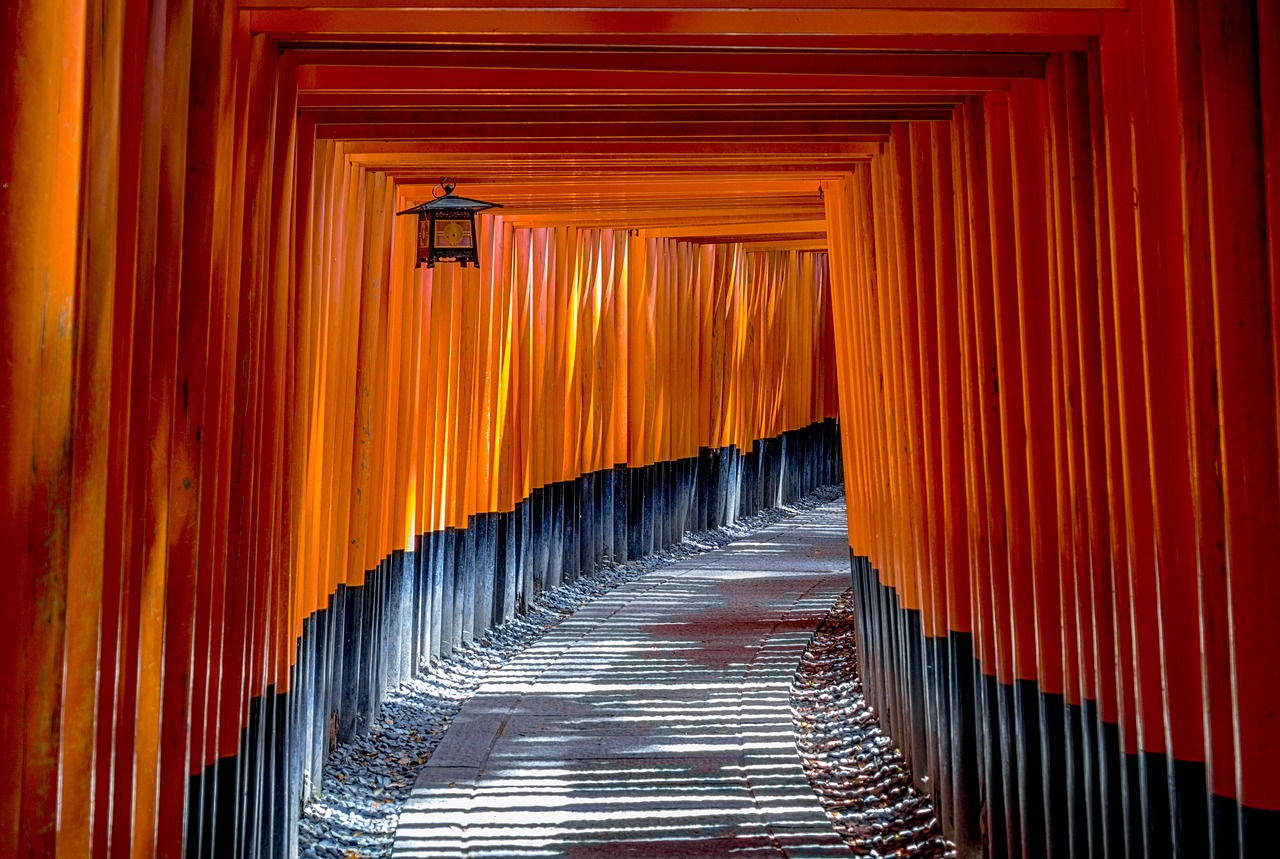
The visit comes to life in the Higashiyama district, where the cobbled lanes of Ninenzaka and Sannenzaka climb towards Kiyomizu-dera, a wooden temple suspended on a panoramic terrace overlooking the city. Nearby, Gion is the heart of the geisha world: at dusk, along the wooden teahouses of Hanamikoji, one may glimpse a maiko wrapped in her kimono. To the northwest gleams Kinkaku-ji, the famous Golden Pavilion mirrored in its pond, while Ryoan-ji holds the most enigmatic of Zen rock gardens. Fushimi Inari Taisha enchants with its thousands of vermilion torii gates winding up the sacred mountain, and the Arashiyama bamboo grove, on the western edge, offers a walk through a suspended world, beside the Togetsukyo bridge and the hillside temples.
Kyoto is also a refined culture of taste: kaiseki cuisine, ceremonial matcha tea, wagashi sweets and the stalls of Nishiki Market, nicknamed "Kyoto's kitchen". The cherry blossoms in spring and the crimson maples in autumn turn the city into a living painting. A city of temples and silences, of artisans and ceremonies, Kyoto reveals itself slowly, to those who know how to walk with attentive eyes and a patient step.
Altro
Giorno 9 — Kyoto → Osaka
Osaka pulses with an unmistakable energy: Japan's second metropolis and the country's gastronomic capital, it is a frank, lively and generous city, where dazzling modernity coexists with the warmth of a merchant tradition centuries old. Set on the bay that shares its name, it has always been a crossroads of trade and the gateway to the heart of the Kansai region.
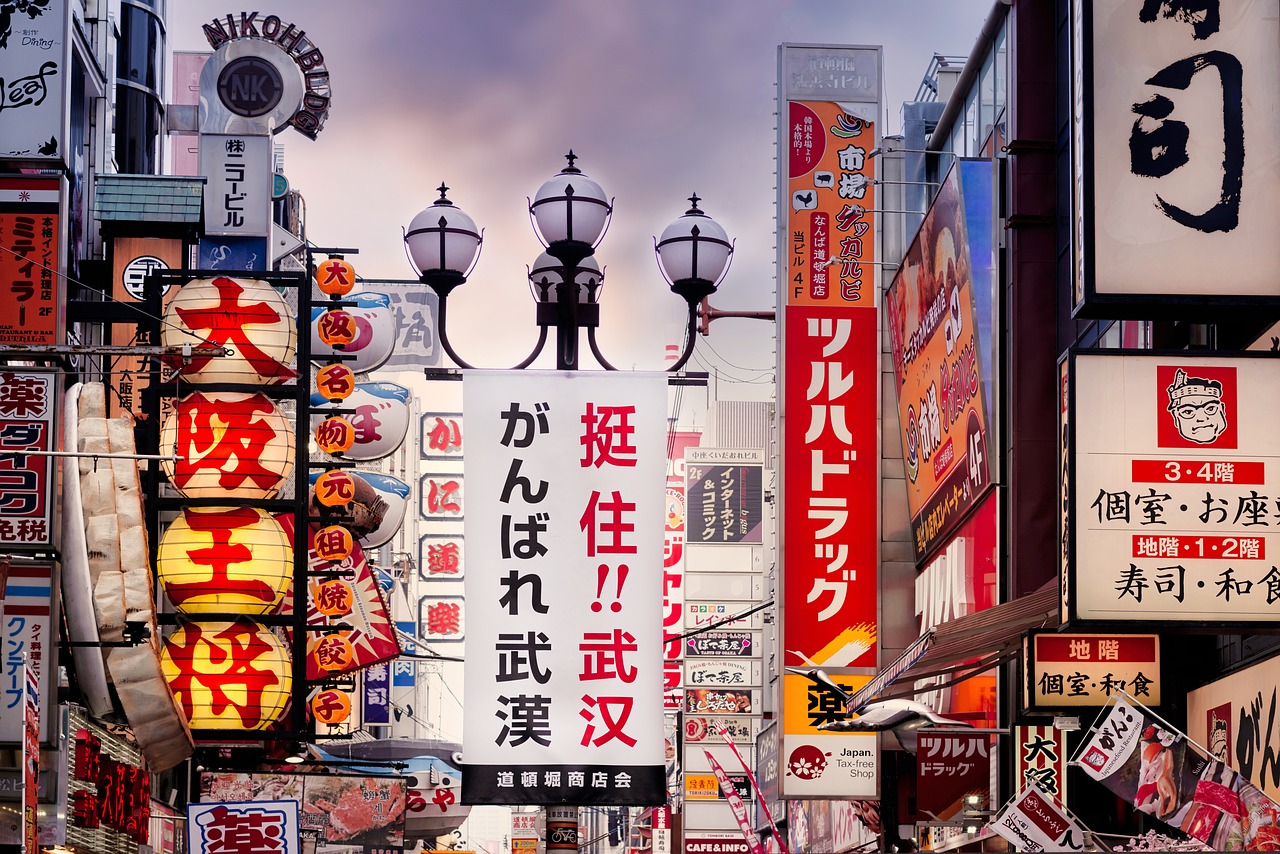
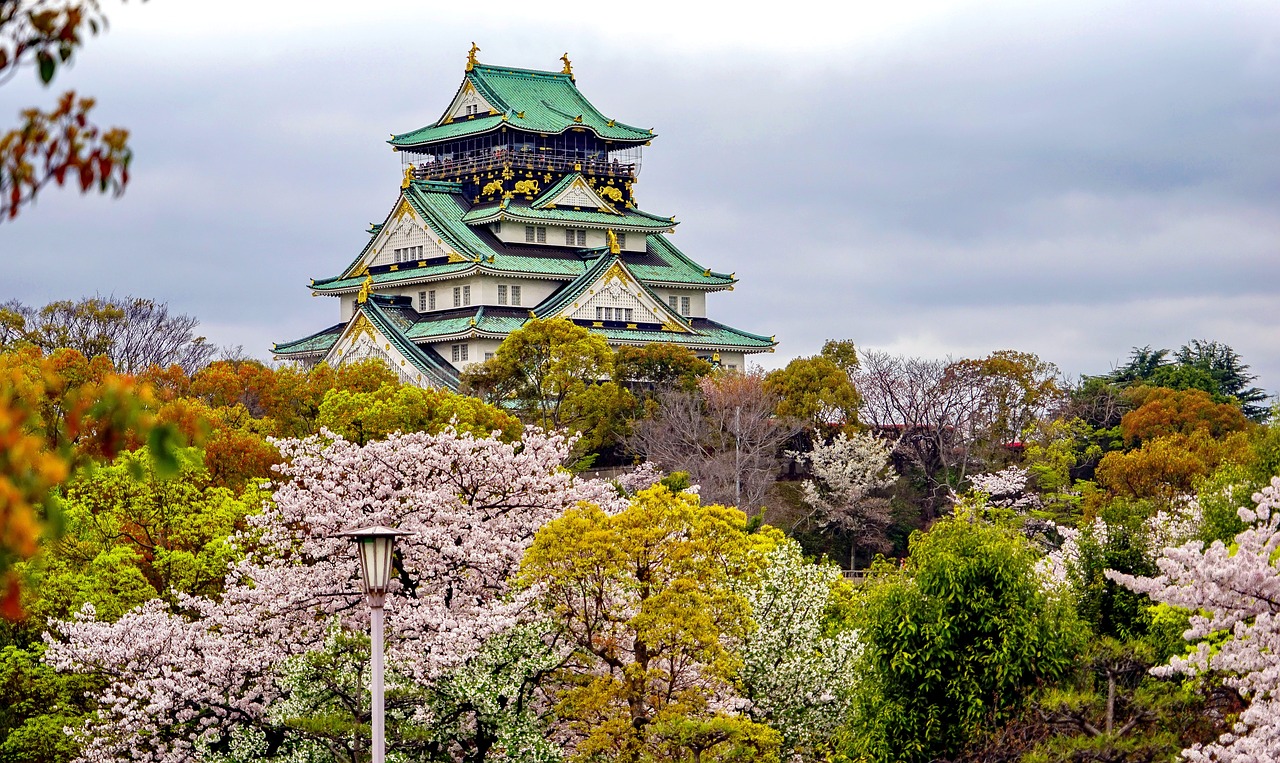
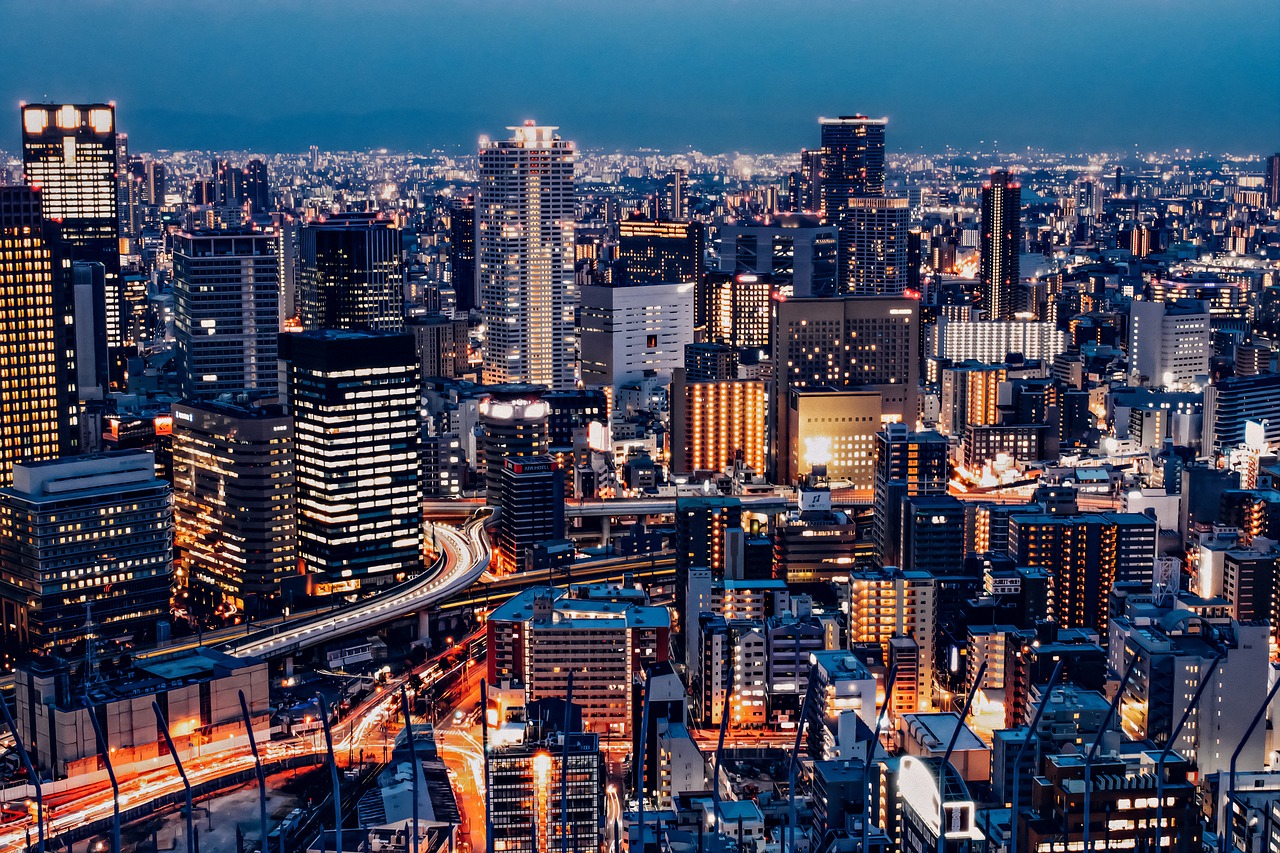
The city's symbol is Osaka Castle, an imposing reconstructed fortress that dominates a vast park, spectacular during the cherry blossom season. But it is after dusk that Osaka shines: in the Dotonbori district, along the canal, neon signs reflect on the water and the famous Glico running-man billboard has become an icon. Here comes alive the philosophy of kuidaore, "to eat until you drop": stalls serve takoyaki (octopus balls), okonomiyaki (savoury pancake) and kushikatsu skewers, in a riot of aromas and voices. Nearby, the lively Shinsekai with its Tsutenkaku tower evokes the retro Osaka of the early twentieth century, while the Namba district reigns as the realm of shopping and entertainment. For quieter moments, Shitenno-ji, among Japan's oldest Buddhist temples, and the modern skyscrapers of Umeda with their panoramic terraces offer opposite yet equally fascinating views.
Osaka is also an ideal base for excursions: Kyoto, Nara with its deer and Great Buddha, and the sanctuary of Koyasan are all within easy reach. A city with an open heart and a quick wit, Osaka wins over those seeking the most authentic and convivial Japan, to be savoured at the table and along its illuminated streets.
Treno
Giorno 10 — Osaka → Okayama
Okayama lies in western Japan and is known above all for Korakuen, one of the country's three finest landscape gardens, where ponds, streams and artificial hills are arranged in full view of Okayama Castle, nicknamed the "Crow Castle" for its black walls. The city is tied to the legend of Momotaro, the hero born from a peach, celebrated in statues and traditional sweets. From here, excursions reach nearby Kurashiki, with its picturesque canal quarter and elegant historic storehouses, and the islands of the Seto Inland Sea, accessible along the scenic Shimanami Kaido cycling route. A mild climate and seafood cuisine make Okayama a pleasant and authentic base.
Treno
Giorno 12 — Okayama → Hiroshima
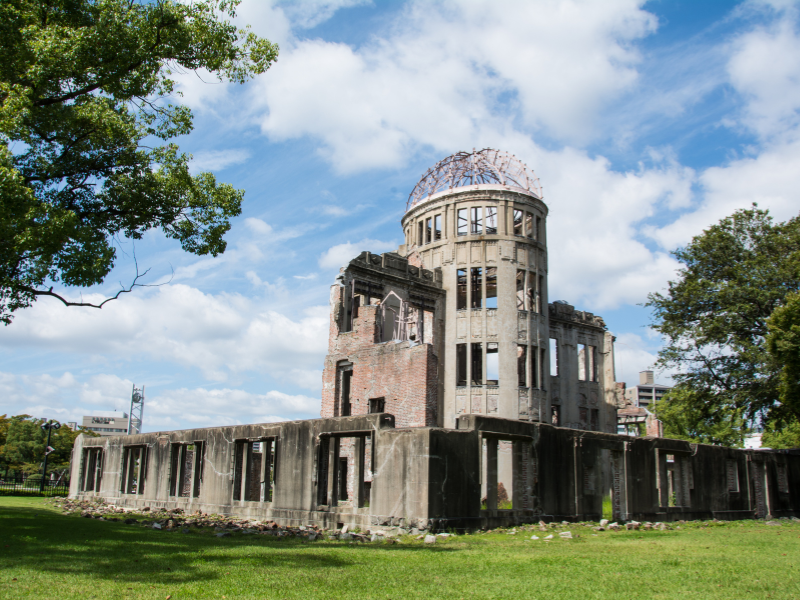
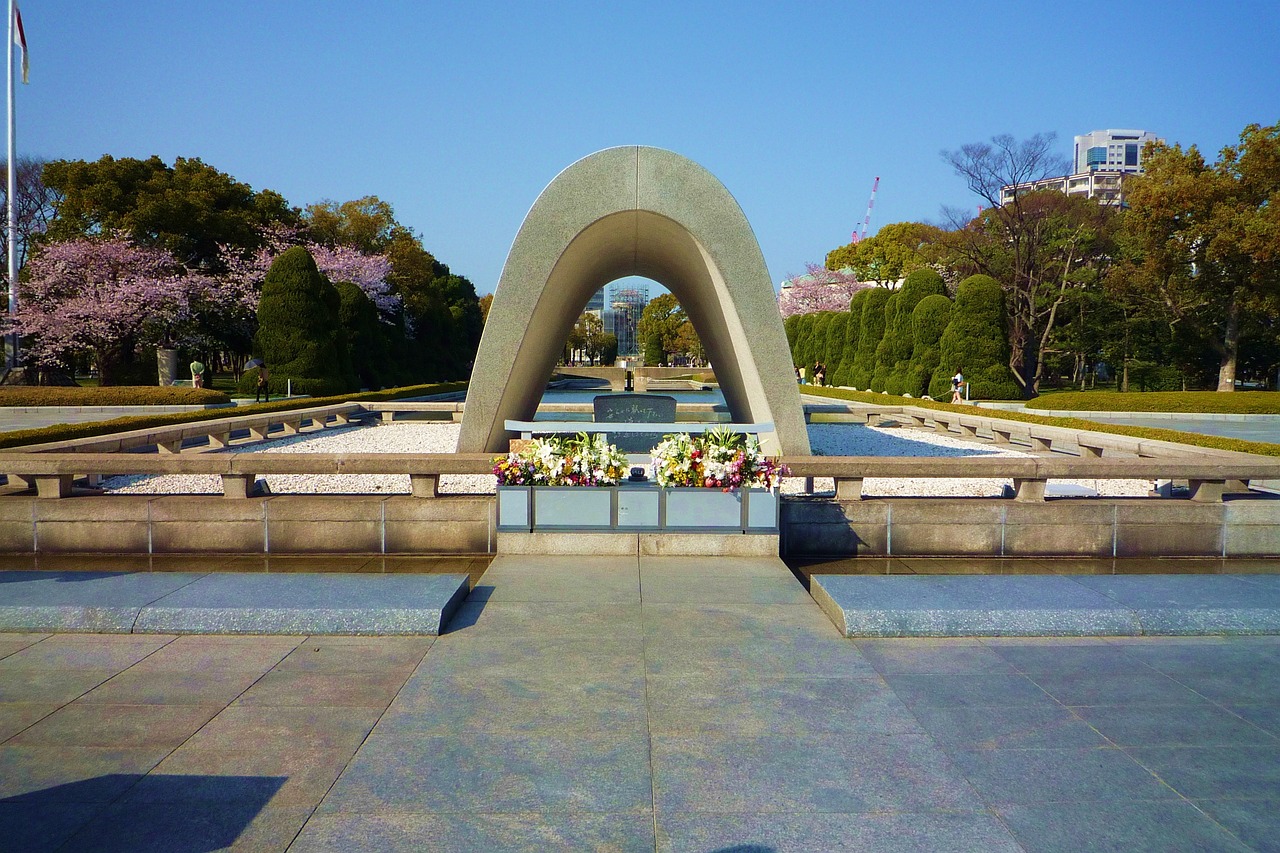
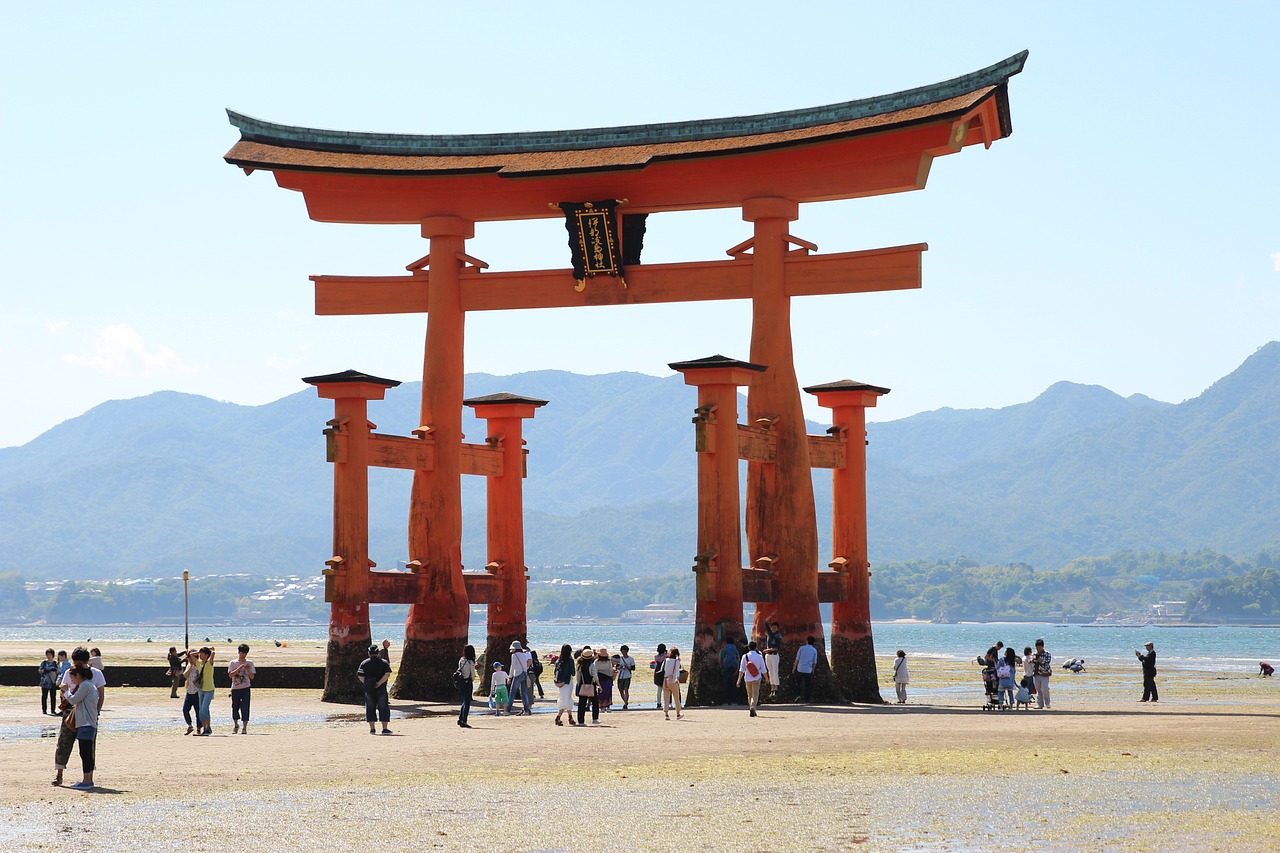
Hiroshima is reborn today as a vibrant, luminous city, a universal symbol of peace after the tragedy of 1945. The Peace Memorial Park preserves its memory around the Atomic Bomb Dome, a UNESCO World Heritage Site, and a museum that recounts with restraint both catastrophe and hope. Rebuilt along its six rivers, the city offers tree-lined boulevards, its castle and the Shukkei-en garden. Its cuisine is famous for the local style of okonomiyaki, a layered pancake of noodles and cabbage. A short trip away lies the island of Miyajima, where the red torii of Itsukushima Shrine — also UNESCO-listed — appears to float on the water at high tide. Hiroshima unites the power of memory with the warmth of a city looking to the future.
Traghetto
Giorno 13 — Hiroshima → Miyajima
A UNESCO World Heritage Site venerated for centuries as a sacred island, Miyajima rests in the waters of the Seto Inland Sea, a short ferry crossing from Hiroshima. Its emblematic image is the great vermilion torii of the Itsukushima shrine which, at high tide, appears to float on the sea, offering one of Japan’s most celebrated views. The shrine itself, built on stilts and linked by walkways, reveals itself differently with every tide. Beyond the village one climbs, by ropeway or on foot through the forests, to the summit of Mount Misen, where panoramas over the surrounding islands reward the ascent and gentle deer accompany visitors. Along the village lanes one savours grilled oysters, the local speciality, and momiji manju, maple-leaf-shaped sweets. In autumn Momijidani-koen blazes with vivid reds. Miyajima enchants in the silence of dawn, when the torii emerges from the mist.
_20260505144824.png)
_20260505144824.png)