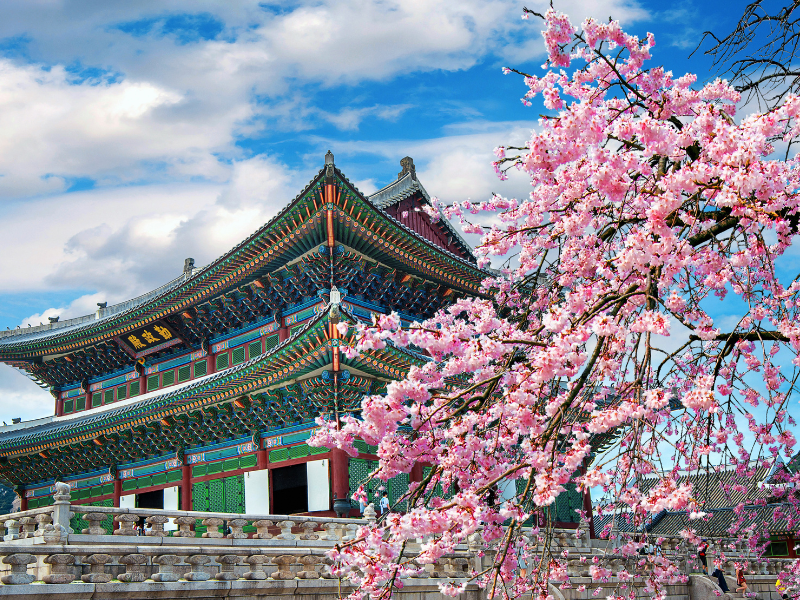
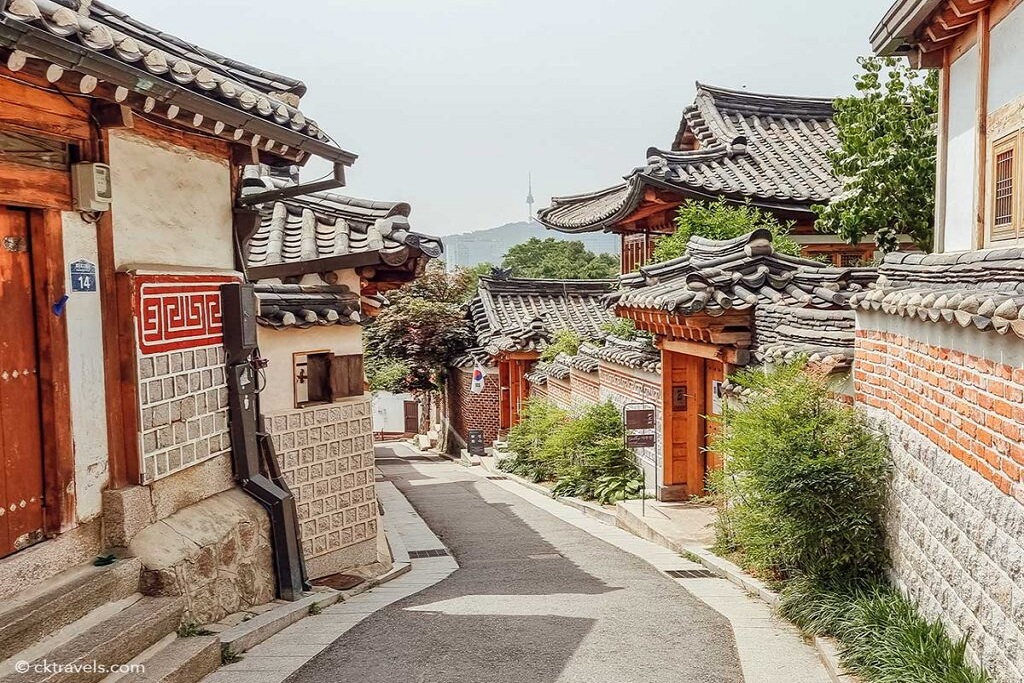
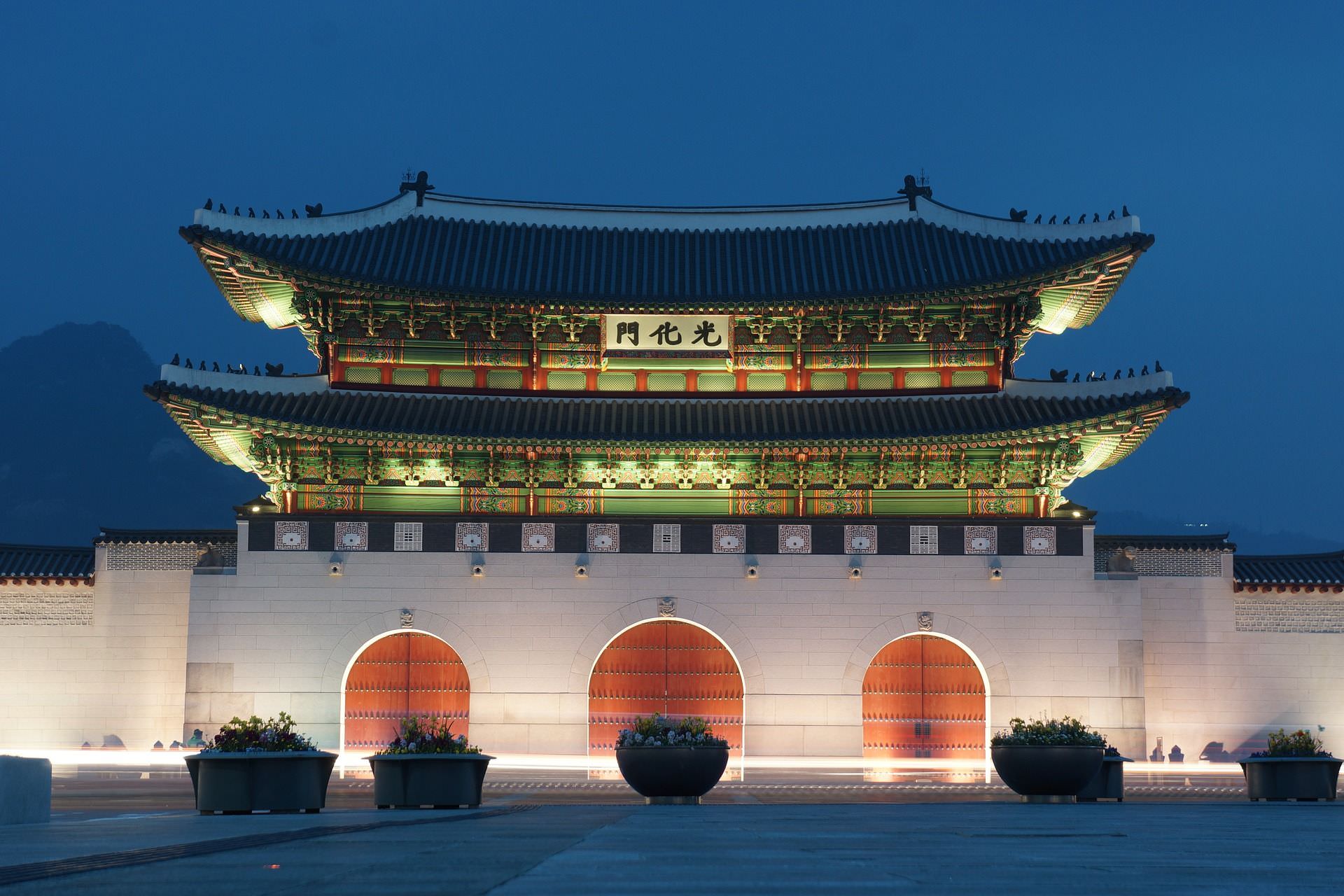
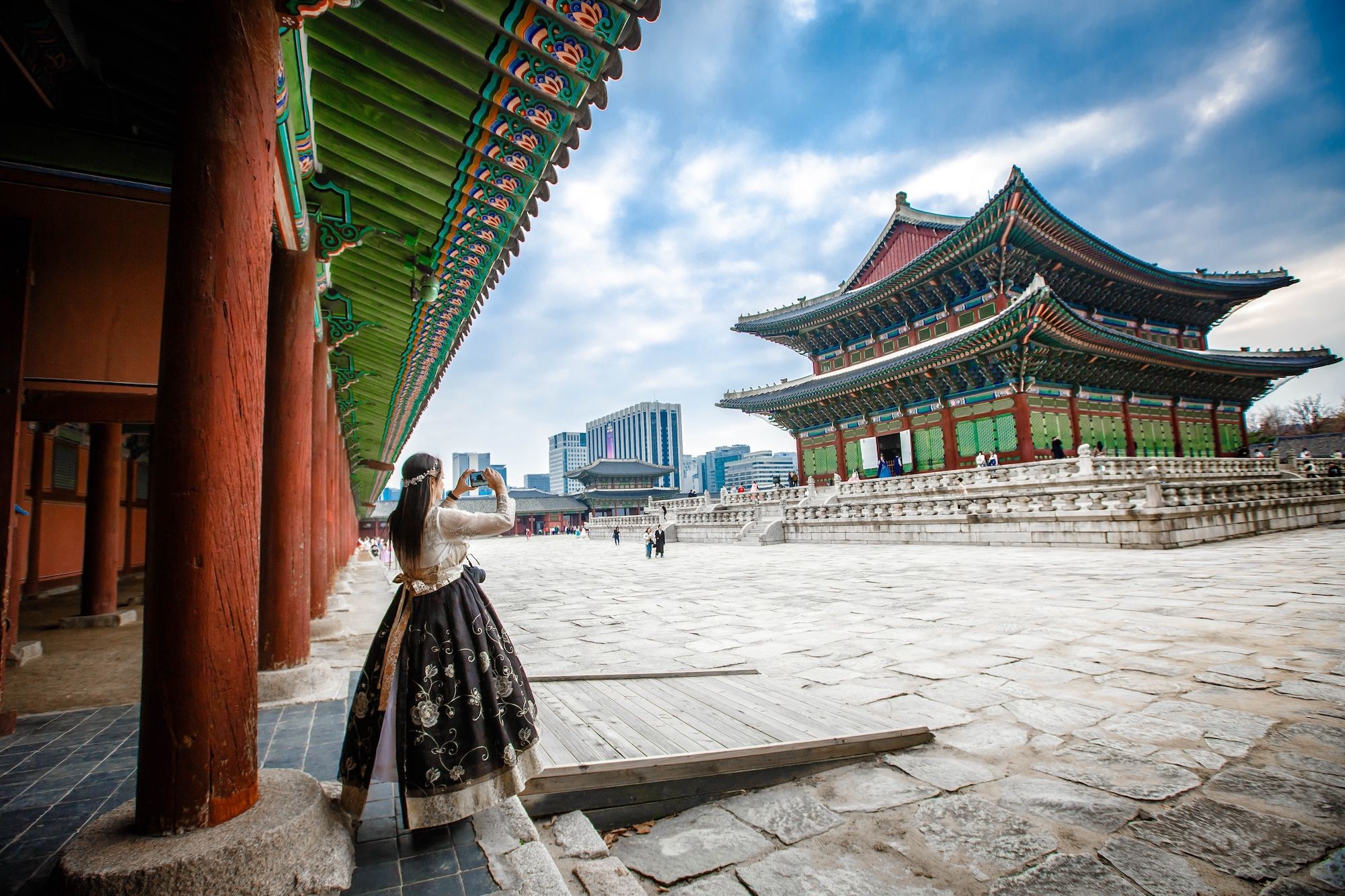
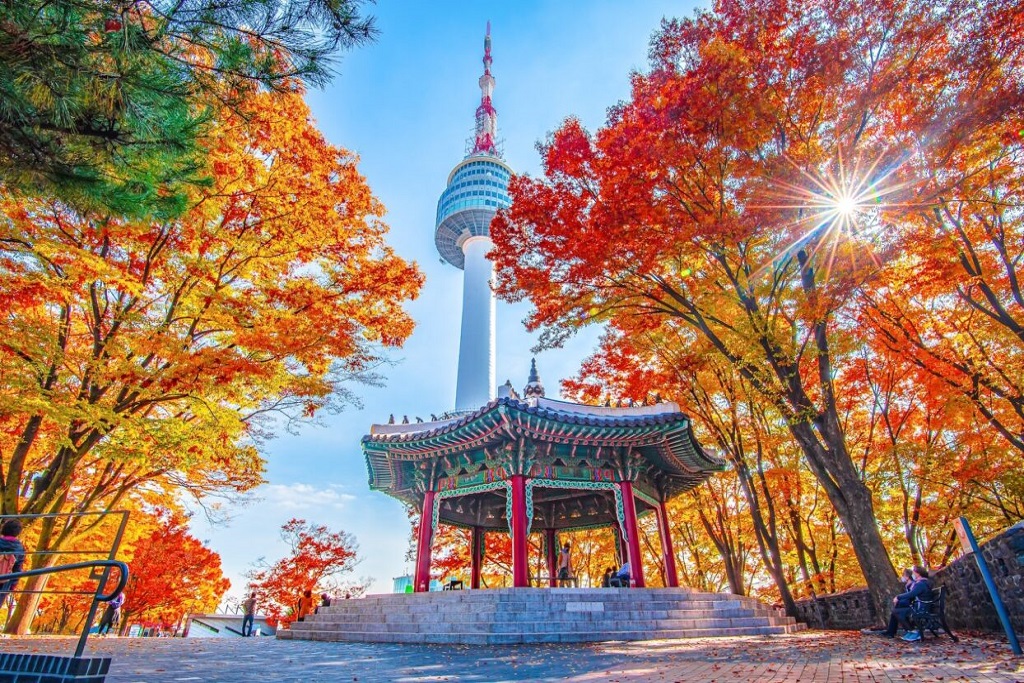
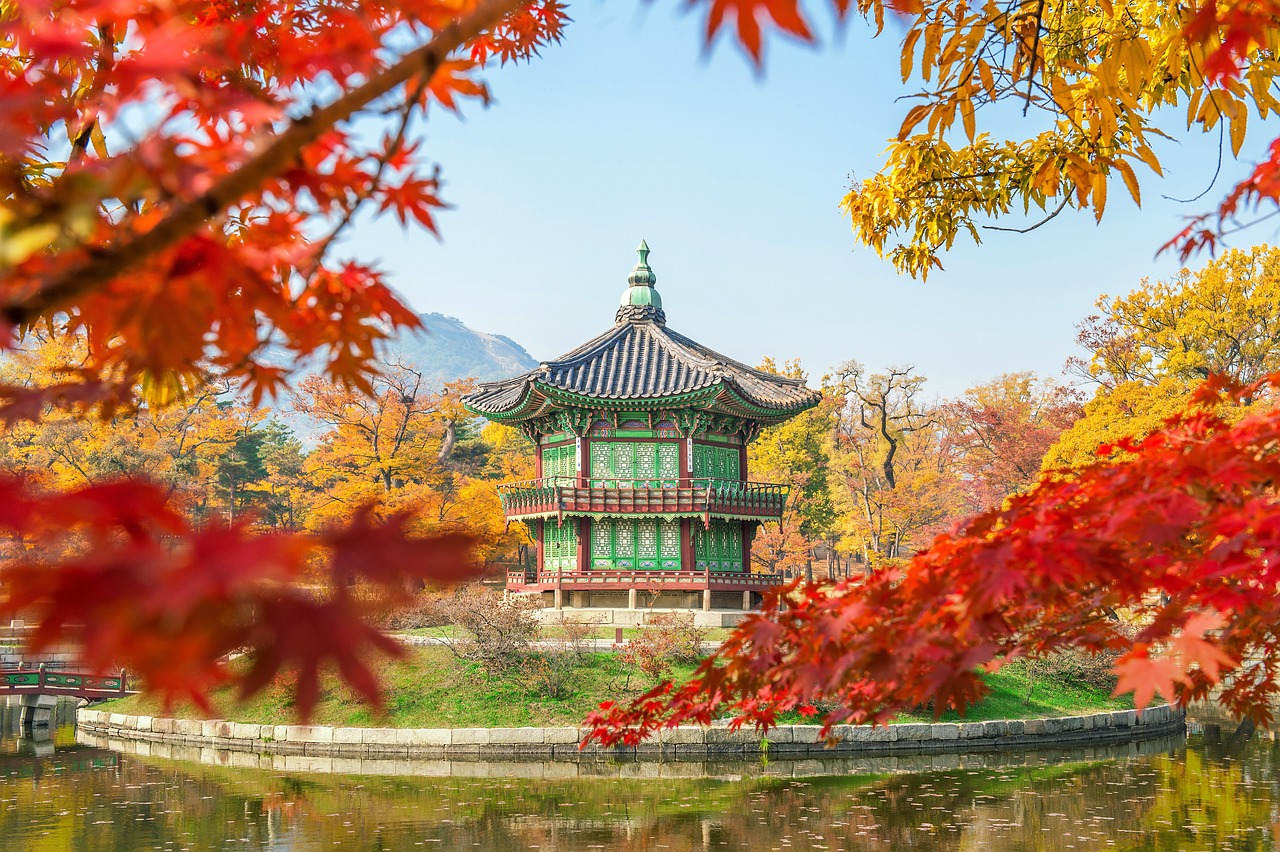
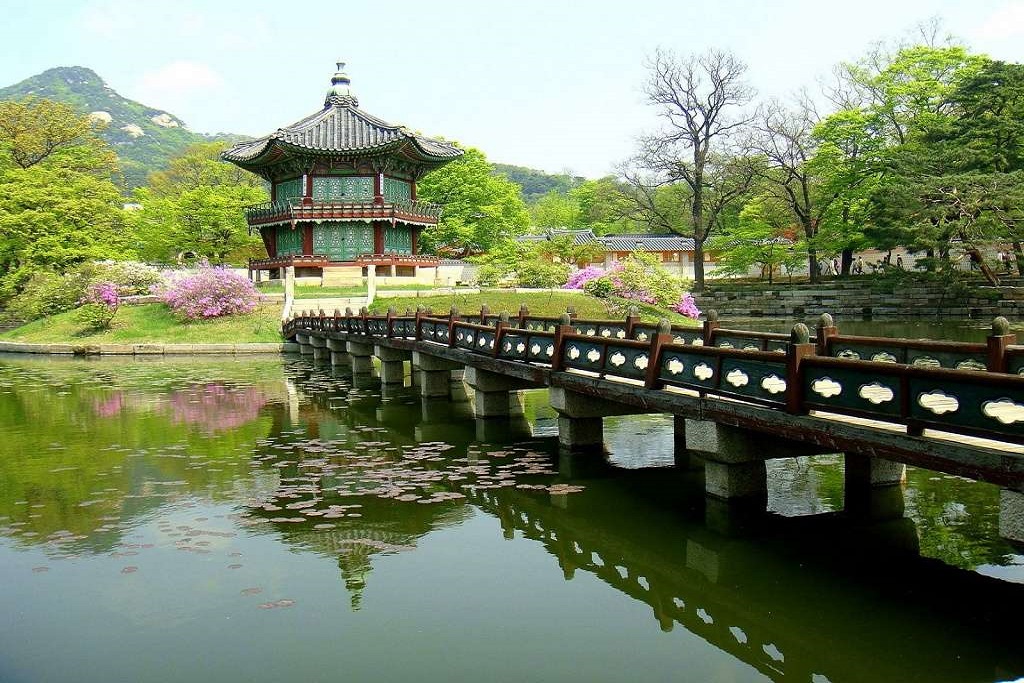
Seoul packs four decades of Korean history and the energy of a city that never sleeps into a single metropolis, spread along the banks of the Han River between wooded hills and towers of glass. Its monumental heart is Gyeongbokgung, the great royal palace of the Joseon dynasty, with the Gyeonghoeru pavilion mirrored in its pond and the changing of the guard performed daily before the Gwanghwamun gate; nearby rise Changdeokgung, a UNESCO World Heritage palace famed for its Secret Garden (Huwon), and the royal shrine of Jongmyo, also UNESCO-listed, which guards the ancestral tablets of the kings. Between the two palaces climbs the Bukchon Hanok village, a maze of traditional curved-roof houses (hanok), while nearby Insadong street lines up shops of tea, paper and ceramics. To the north the Bukhansan fortress offers scenic trails among granite crags; to the south the Namsan hill is crowned by the N Seoul Tower, a privileged viewpoint over the city's ocean of lights. Each district has its own soul: Myeongdong is the realm of shopping and street food, Hongdae pulses with indie music and student bars, Gangnam parades luxury and modernity across the river, and the Cheonggyecheon stream restored through the urban fabric offers a riverside walk in the centre. Seoul's table is a chapter of its own: Korean barbecue, bibimbap, steaming soups and night markets such as Gwangjang, where you can taste bindaetteok and tteokbokki. Gateway to the country, Seoul is the ideal starting point for the Demilitarized Zone (DMZ) on the northern border and for the ancient capitals of the centre. Past and future coexist here on every block, and it is precisely this contrast that makes the city unforgettable.
_20260518192315.png)