Giorno 2 — Windhoek → Kalahari Desert
Shortly after departing Windhoek, wide open plains and gently rolling hills set the tone for your journey south towards the Kalahari. The landscape quickly becomes more expansive and remote, with grassy stretches, scattered acacia trees, and a sense of tranquility.
A convenient stop can be made in Rehoboth, a small town with an interesting history and a good place for a short break. Continuing further, the scenery gradually turns drier, hinting at the approaching Kalahari environment.
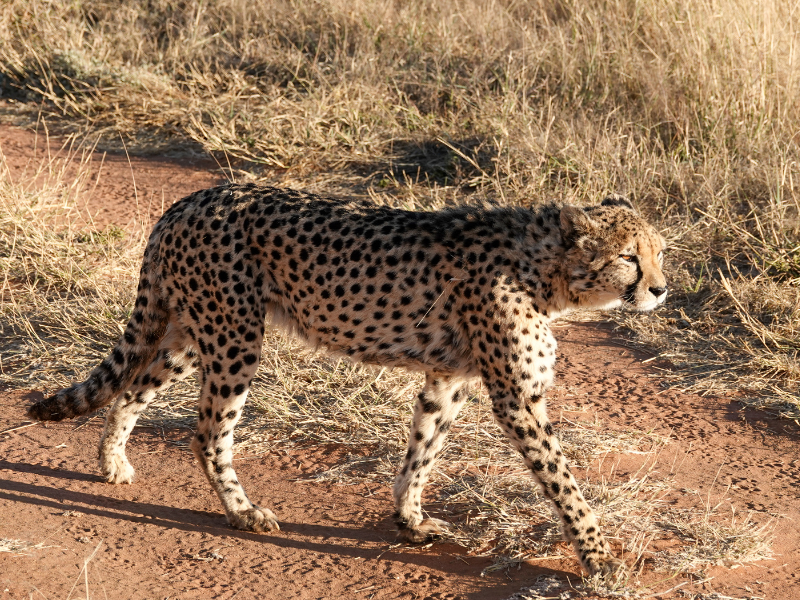
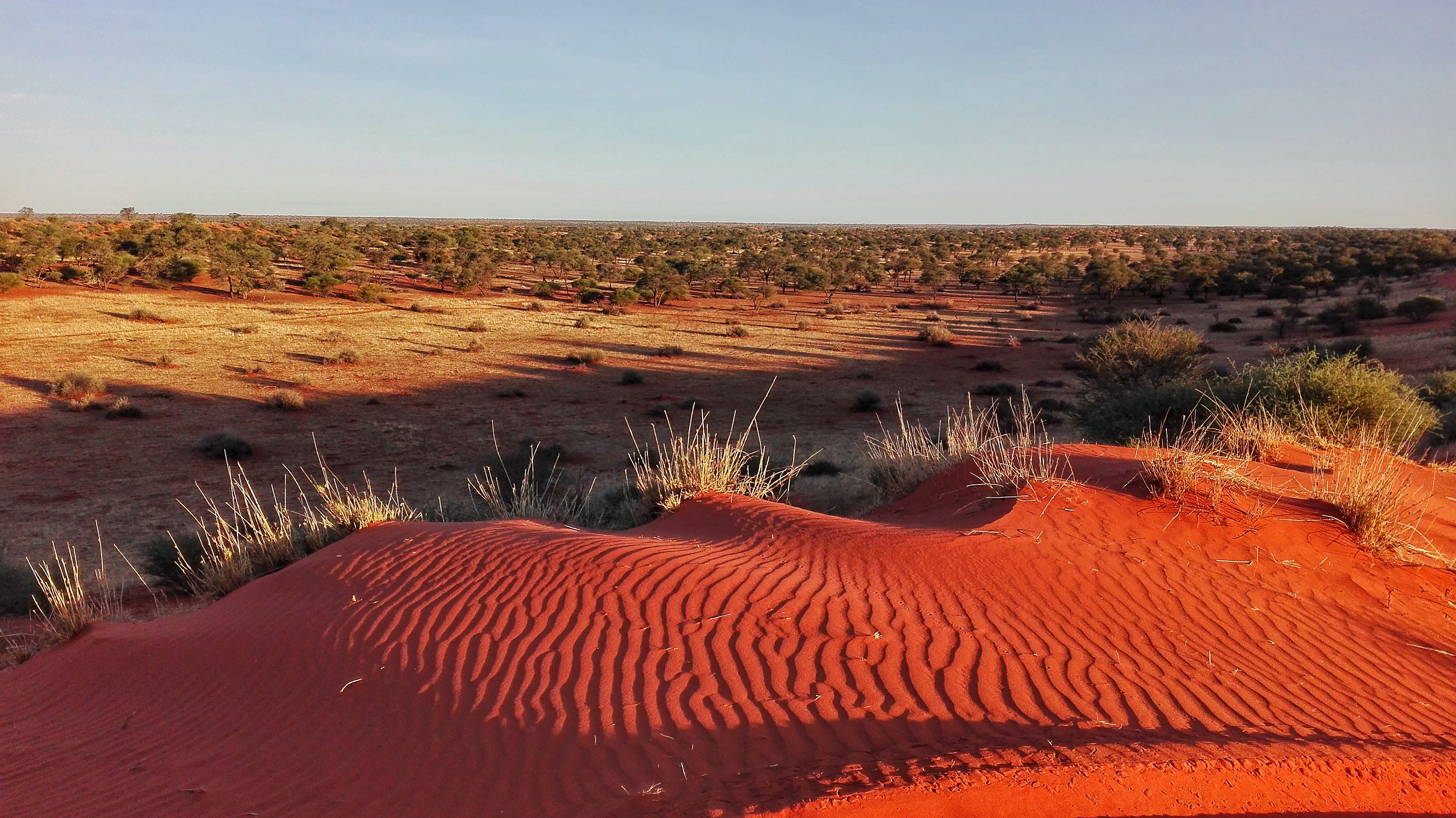
Along the way, you may pass farmland and, with some luck, spot wildlife such as antelope or ostriches. The iconic reddish dunes of the Kalahari slowly begin to appear, giving the region its distinctive look.
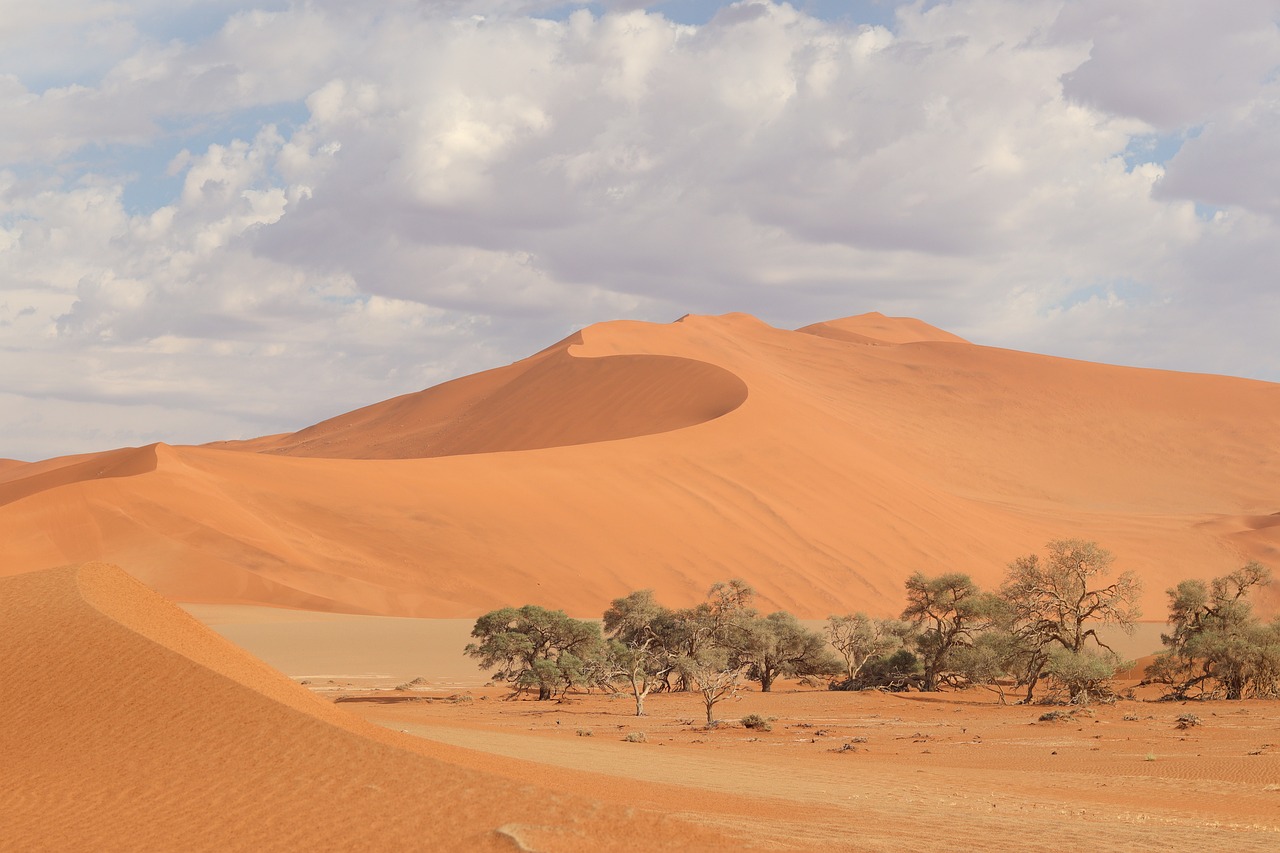
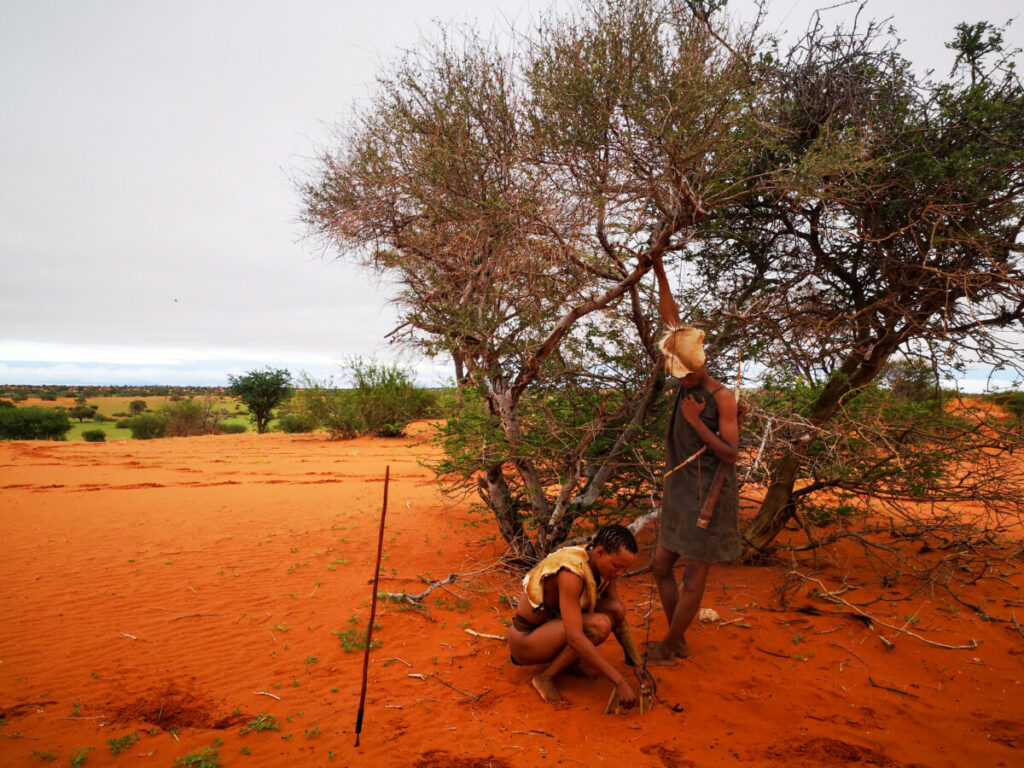
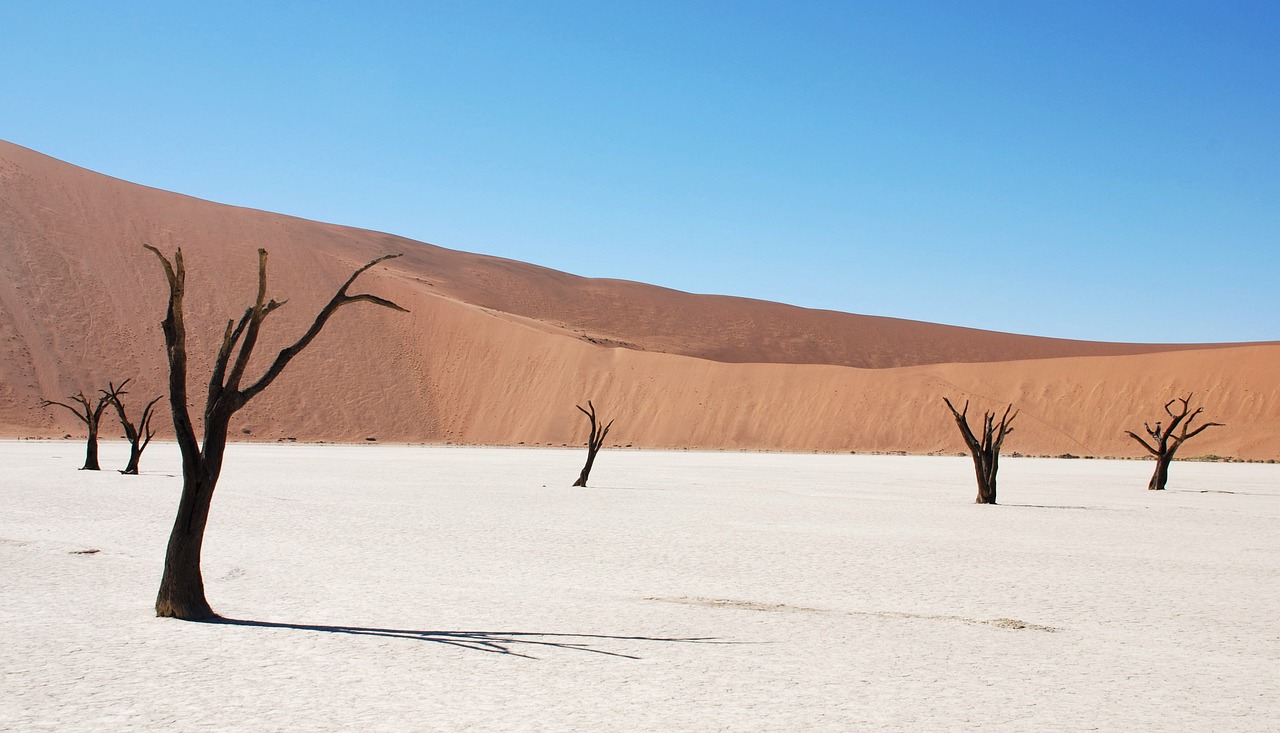
You will then arrive in the Kalahari region, where vast horizons, red sand dunes, and unique wildlife create a memorable setting – perfect for early safari experiences and spectacular sunsets. The Namibian Kalahari spreads across the southern and south-eastern part of the country, a vast semi-arid basin of reddish dunes anchored by vegetation where the shrub savanna creates landscapes of silent, desert beauty. Despite what its name might suggest, it is not a true desert: rainfall, though sparse and irregular, supports a vegetative cover of acacia trees, Kalahari grass and thorny shrubs that sustain a surprisingly rich wildlife. Gemsbok (oryx), wildebeest with paler coats than their southern subspecies counterparts, jackals, mongooses and a variety of raptors move among the dunes in a scene of boundless tranquility. The Kalahari Gemsbok National Park, shared with Botswana and South Africa in the Kgalagadi Transfrontier Park, offers safaris among some of the most iconic red dunes in southern Africa, with sightings of black-maned lions that have adapted to arid conditions. The luxury lodges and tented camps in Namibia's Kalahari region organise dawn game drives, guided walks with San bushmen to learn traditional survival techniques, and nights under skies of extraordinary clarity, far from any light pollution. The Namibian Kalahari is an ideal choice for travellers seeking solitude, cultural authenticity and African landscapes less visited than the great parks of the north.
_20260415122218.png)
_20260415122219.png)
_20260415122220.png)
_20260415122220.png)