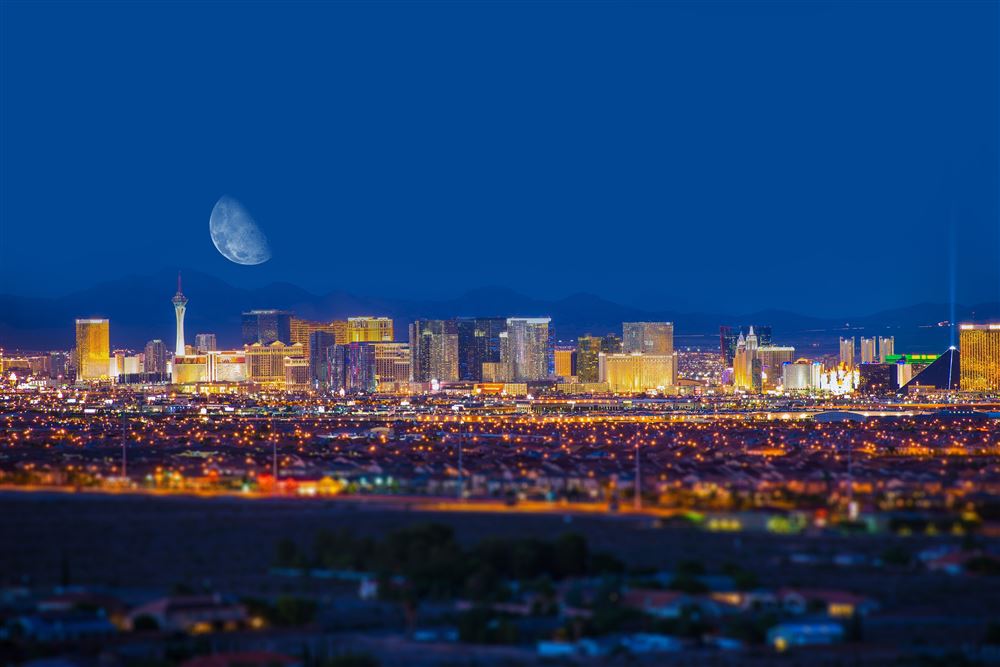
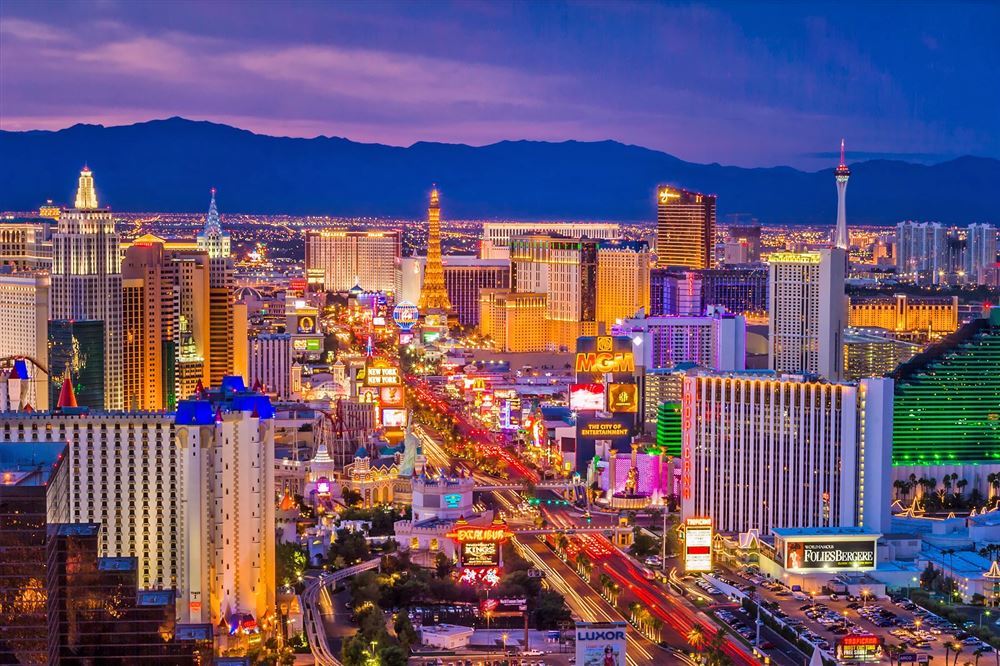
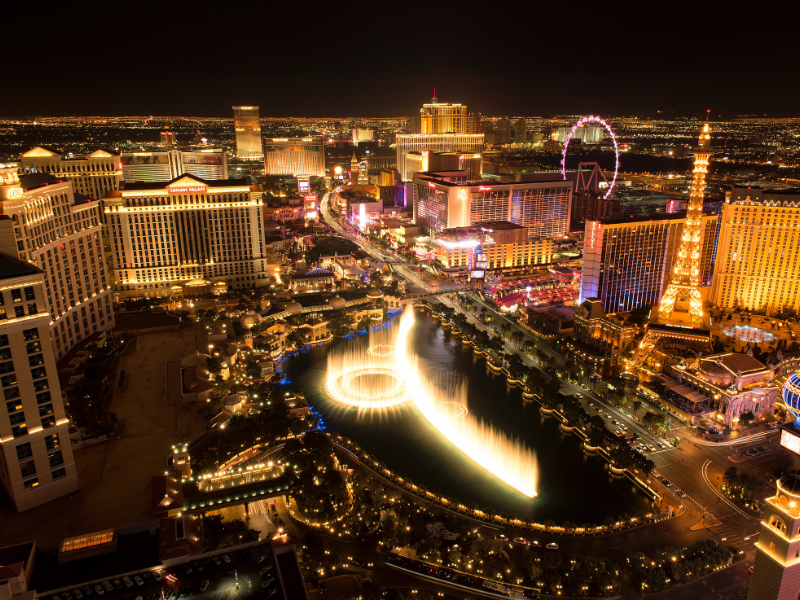
Las Vegas rises like a luminous mirage in the Mojave Desert, the world capital of entertainment, where excess becomes spectacle and the night never ends. Its pulsing artery is the Strip, the famous Las Vegas Boulevard lined with themed resorts that recreate the planet's great icons in miniature: at the Bellagio, fountains dance in choreographies of water and music before an artificial lake; the Paris Las Vegas is crowned by a replica of the Eiffel Tower; at the Venetian, gondoliers glide along Venetian-style canals beneath painted skies; at the Luxor, a black glass pyramid and a great sphinx evoke ancient Egypt, while the Mirage and the other gaming giants animate the scene with dazzling casinos. By night the city becomes a continuous stage: Cirque du Soleil shows, concerts, magic acts and residencies by major stars fill the theatres, while celebrated restaurants and gaming tables keep the metropolis awake until dawn. A short distance away, historic Downtown preserves the city's original face around the Fremont Street Experience, a pedestrian arcade canopied by a barrel vault of LED lights that brings the old Las Vegas back to life amid vintage neon signs and a more intimate atmosphere. Yet Las Vegas is also the gateway to magnificent natural landscapes: nearby, the Hoover Dam blocks the Colorado River to create Lake Mead, an ideal basin for boating and outdoor activities; Red Rock Canyon offers red sandstone formations crossed by trails and climbing walls; the Valley of Fire sets the desert ablaze with scarlet rock; and to the east opens the immensity of the Grand Canyon, one of the most beloved day trips. The city's most theatrical tradition is here too, that of the wedding chapels where couples marry in minutes, now an integral part of its legend. Between lights, desert and desire, Las Vegas remains a place where anything seems possible.
Auto
Giorno 2 — Las Vegas → Bryce Canyon National Park
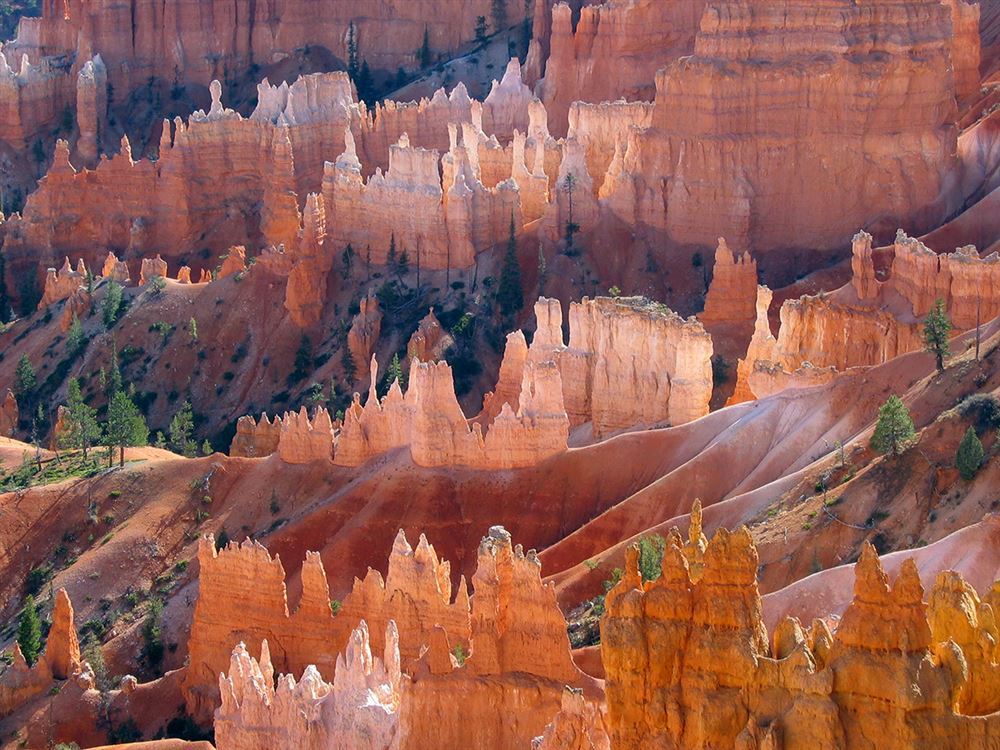
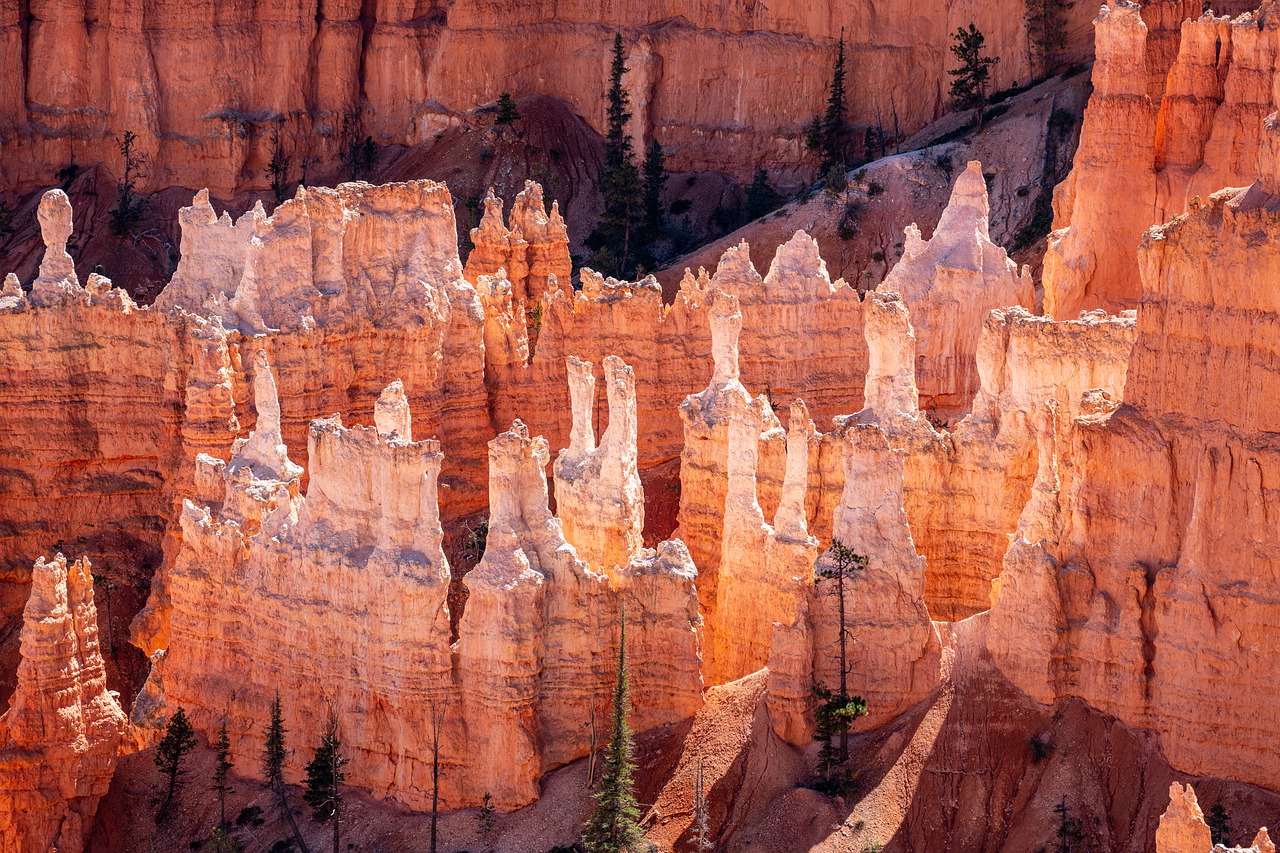
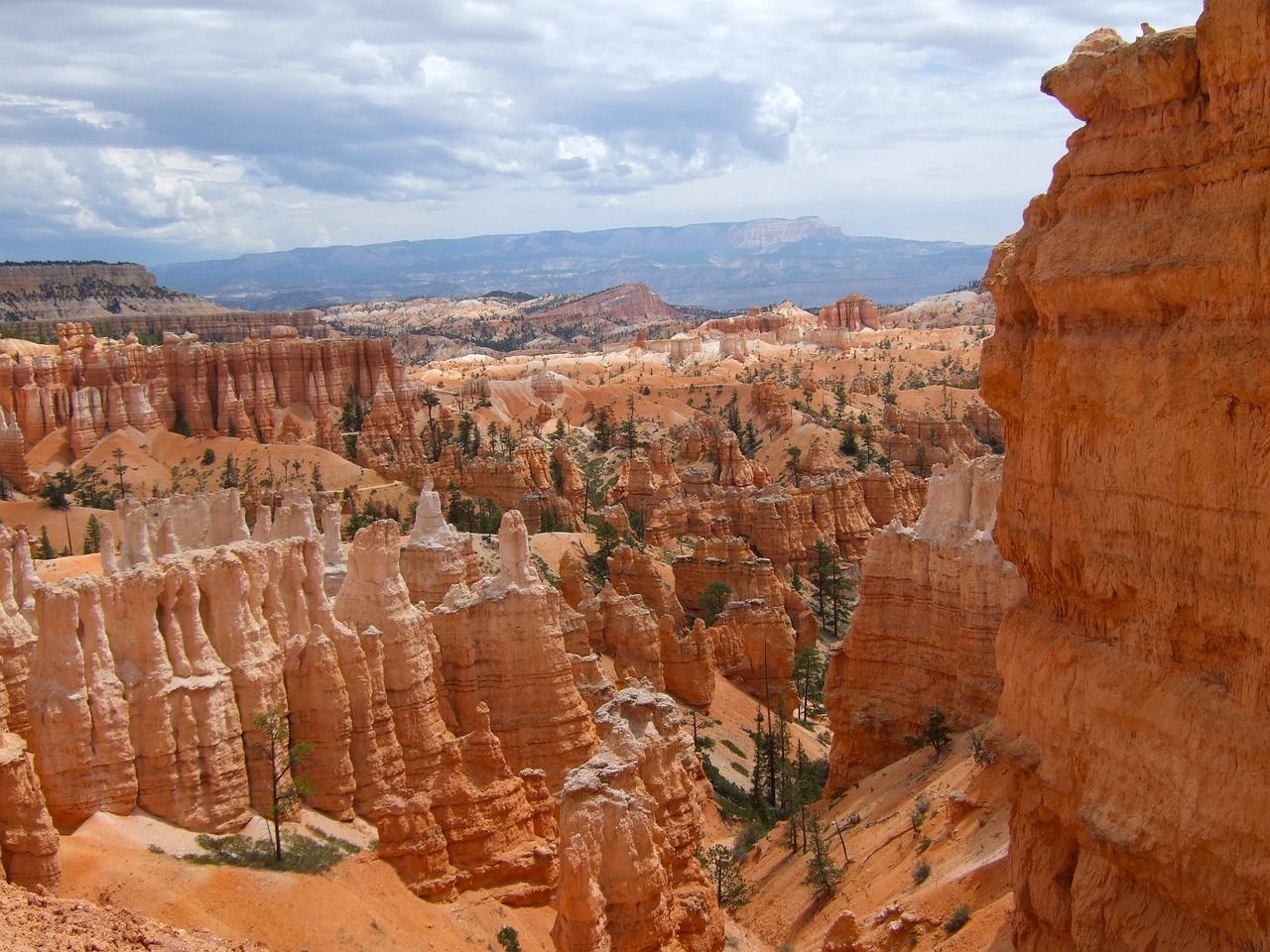
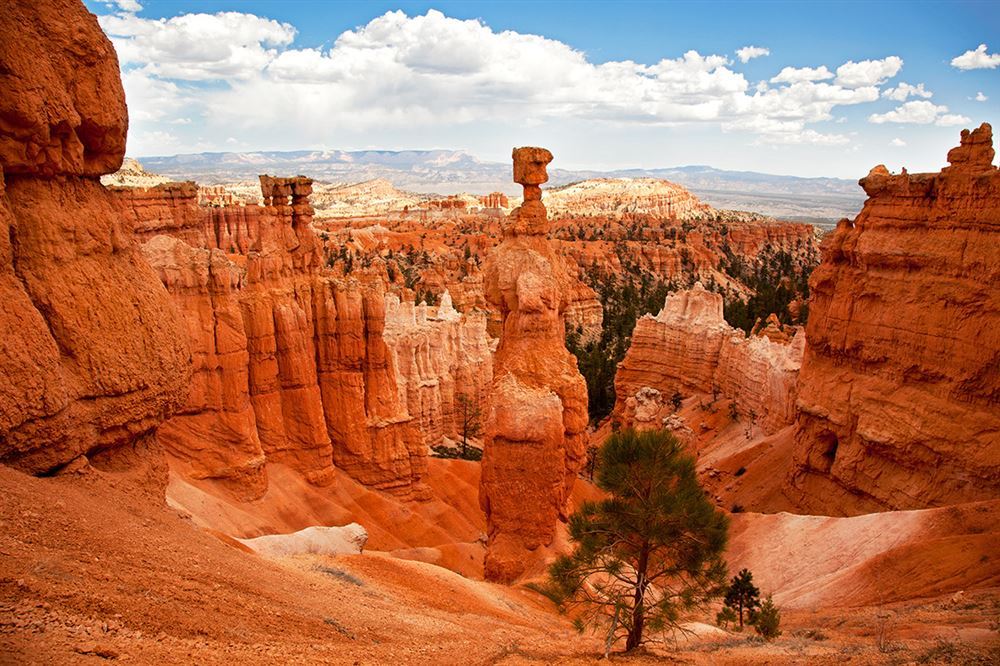
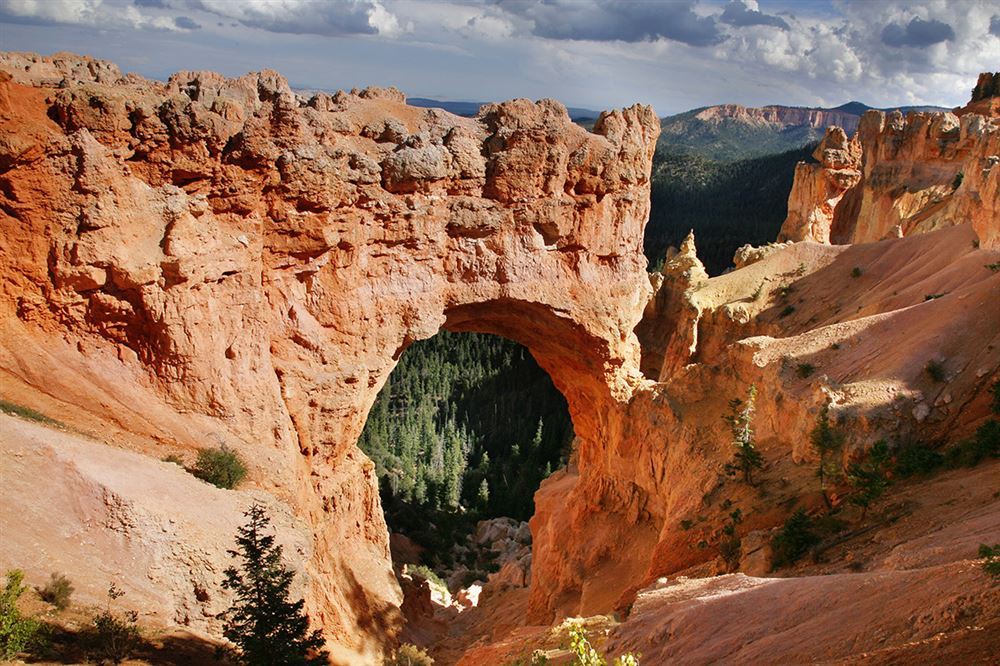
From the expanse of lights and golden skyscrapers of Las Vegas, through the Nevada desert, you reach the magnificent scenery of red rocks and green forests of Bryce. Before leaving the desert, however, if you have time, you might consider taking exit 75 from Interstate I-15 to Valley of Fire State Park (entrance fee $10 per car, subject to change without notice), a detour of about 70 km to one of the most photogenic places in the Southwest, a stunning landscape dominated by the red color of petrified dunes, cliffs, and oddly shaped rocks. Return to I-15 following RT 169. We recommend leaving I-15 after St George, taking Route 9 to Zion National Park at exit 16. Since Bryce Canyon is less than two hours from Zion, if your schedule allows, you can leave your car at the Visitor Center and take one of the convenient shuttle buses, the only means of transportation allowed in the narrow Zion Canyon, following the course of the Virgin River between towering red rock walls. Alternatively, continue along RT 9, with breathtaking scenery, but be sure to make a stop at Checkerboard Mesa. At Mount Carmel Junction, take a refreshment break for a slice of "Ho-made pie" at the Thunderbird Restaurant; try the strawberry and rhubarb flavor. Bryce Canyon National Park reveals one of the most astonishing landscapes on Earth, a vast natural amphitheatre dotted with hoodoos, amber and pink rock spires sculpted by erosion on the Utah plateau. Viewpoints such as Sunrise and Sunset Point offer breathtaking views at dawn and dusk, while trails descend among the formations into the heart of the canyon. The high elevation ensures some of America's starriest night skies.
Auto
Giorno 3 — Bryce Canyon National Park → Page (Lake Powell)
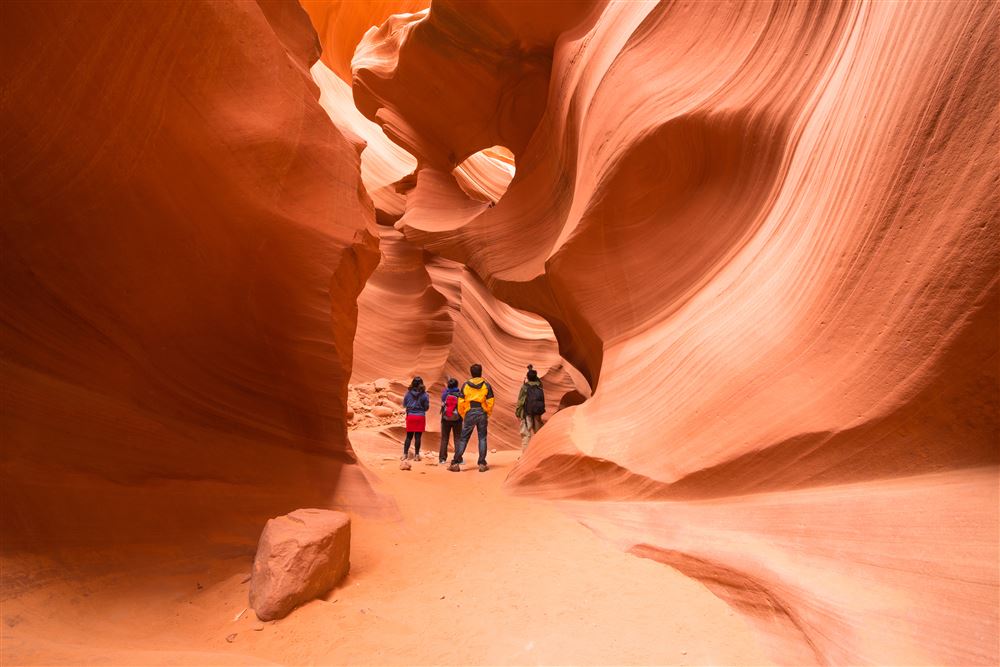
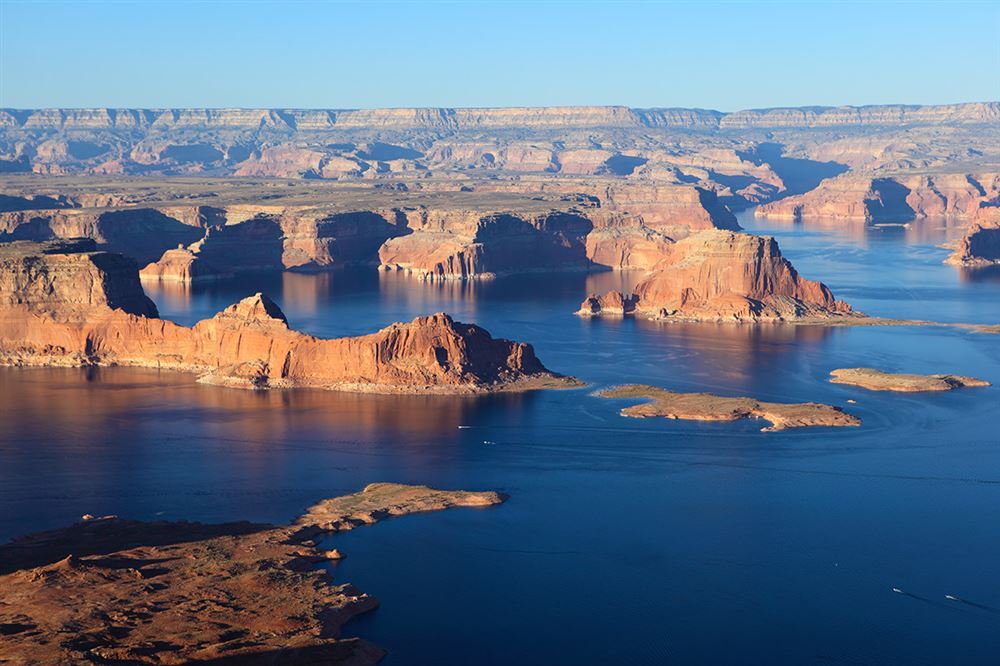
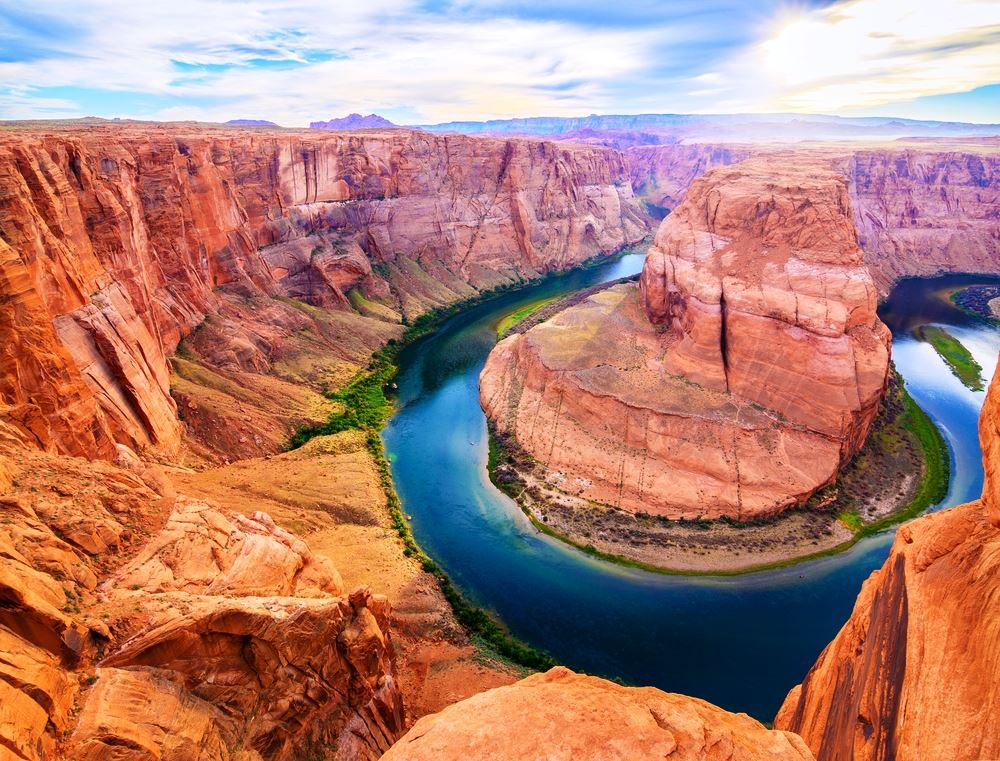
After leaving Bryce Canyon, you can stop for some photos at Red Canyon. If you love minerals, at the Orderville Mine Rock Shop in Orderville you will find a wide selection of local stones. It is also recommended to stop at Mount Carmel Junction for a slice of "Ho-made pie" at the Thunderbird Restaurant; try the strawberry and rhubarb one. For a wider choice, stop in Kanab, known as Little Hollywood, due to the many films shot in the region in the 1950s. From Kanab, you have two options: follow the classic and more direct US 89 to Page, or take a detour on 89A, adding about 70 km to the route, but passing through the picturesque Vermilion Cliffs National Monument, the town of Fredonia, and the Colorado River from the Marble Canyon Bridge. If you come from US-89, you will pass the impressive Glen Canyon Dam. The dam forms Lake Powell, one of the largest artificial lakes in the United States (about 300 km long) and undoubtedly one of the most scenic. Page was founded in the heart of the northern Arizona desert as a small service town for the construction of the Glen Canyon Dam, and is today an ideal base for exploring some of the most spectacular landscapes of the American Southwest. A few minutes away opens Lake Powell, a vast turquoise reservoir set among red sandstone canyons, a paradise for boat trips and houseboats. Nearby lie two icons of travel photography: Antelope Canyon, a slot canyon with undulating walls pierced by beams of light, and Horseshoe Bend, the dramatic curve of the Colorado River wrapping around a rock spur. The area, home to the Navajo Nation, offers guided tours, fiery sunsets and starry skies of rare purity.
Altro
Giorno 4 — Page (Lake Powell) → Monument Valley
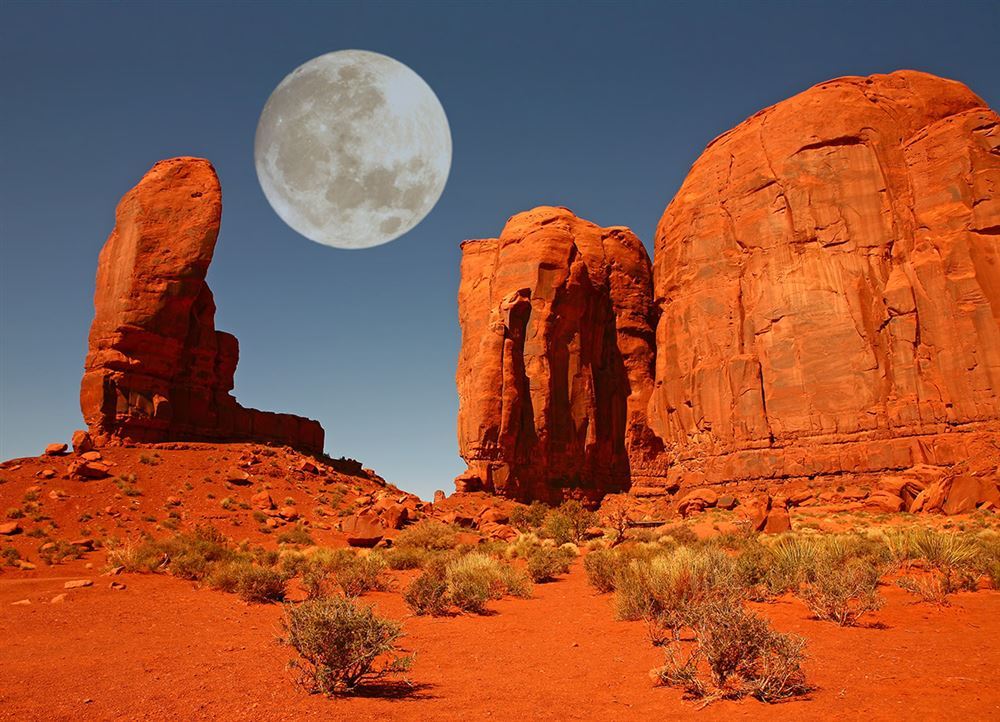
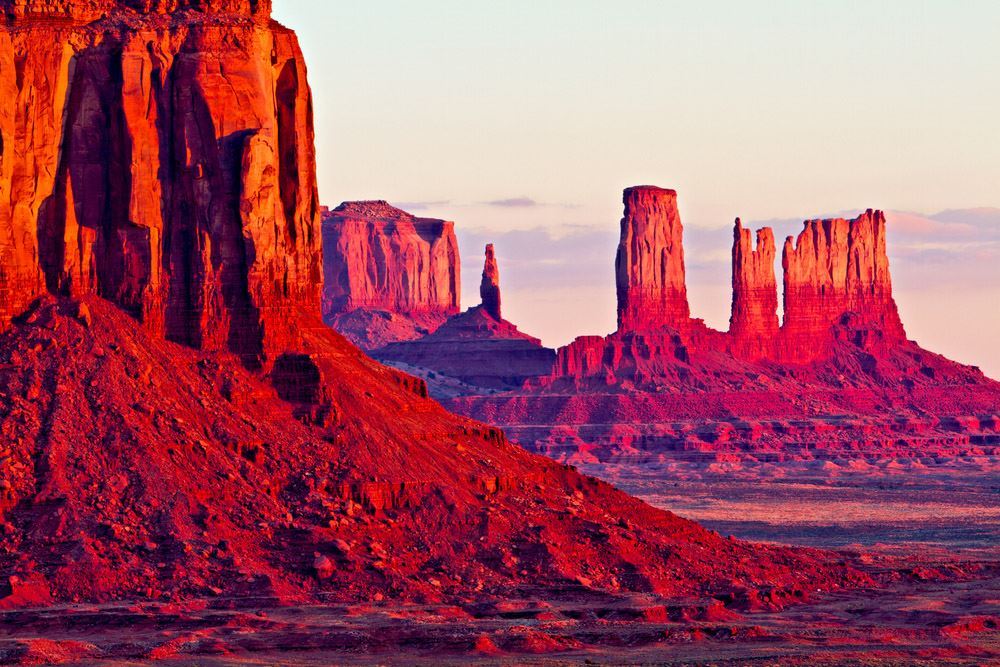
If you haven't done it yet, before leaving Page for Monument Valley, you absolutely must make a stop at Horseshoe Bend, about 7 km from the center of Page. The Horseshoe Bend overlook is reached by a 2.5 km walk along an easy dirt trail. Bring water with you. After leaving Page, you still have about two hours of driving to Monument Valley. Make sure you have $20 in cash to pay for the entrance to the tribal park. Monument Valley raises in the desert on the Arizona–Utah border its iconic spires of red sandstone, an immortal symbol of the American West. Part of the Navajo Nation, this sacred landscape has been captured in countless films and photographs, with its mesas and pinnacles outlined against the sky. Navajo-guided tours reveal the culture and legends of the place. Monument Valley is the grand, silent quintessence of the American frontier.
Auto
Giorno 5 — Monument Valley → Grand Canyon South Rim
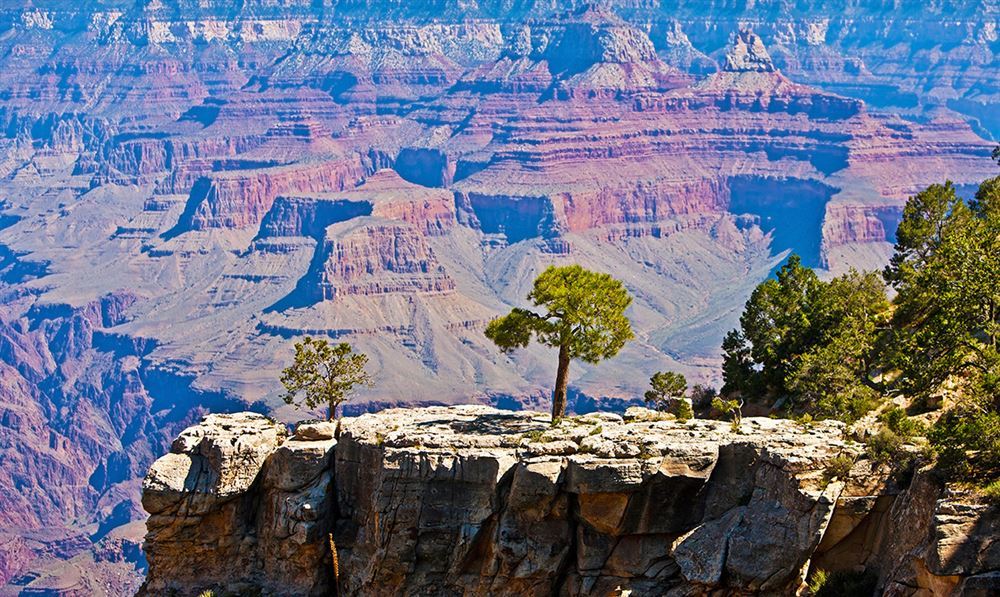
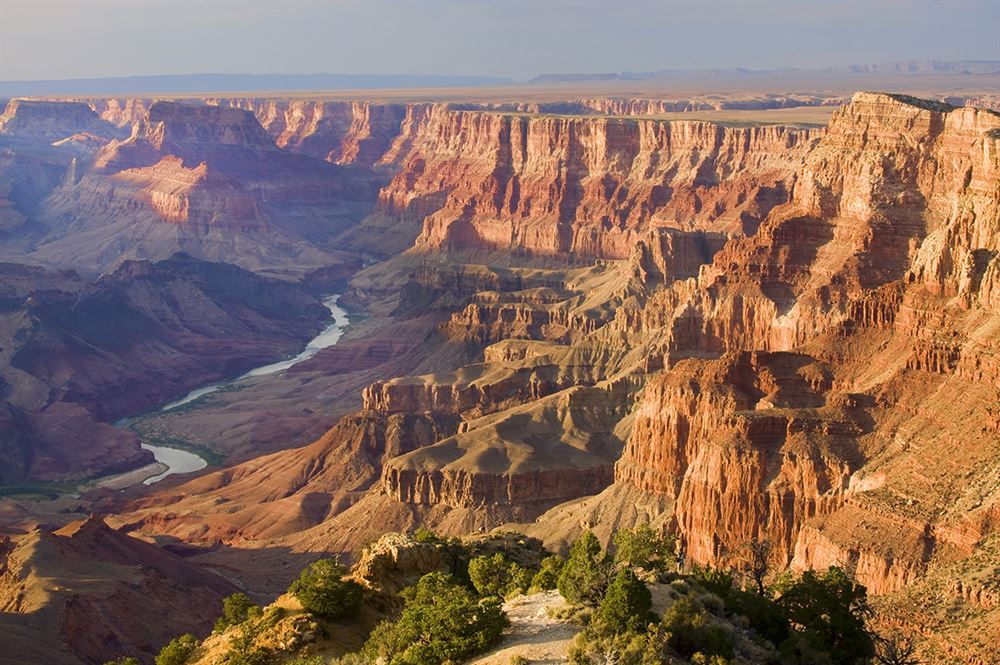
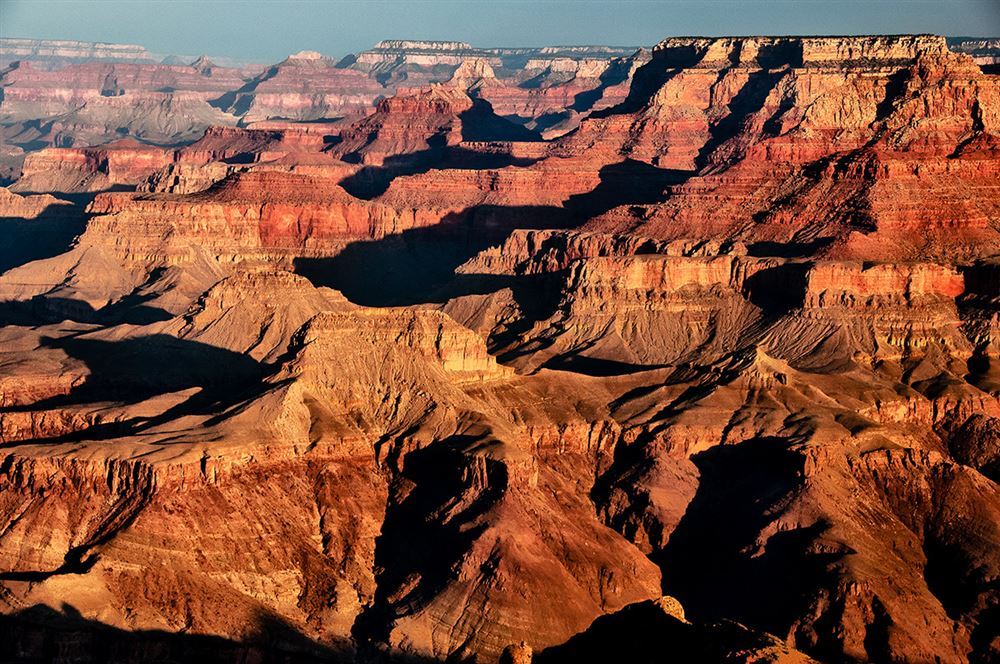
we continue on Navajo land passing the old Cameron post office. The South Rim of Grand Canyon National Park is the most visited side of one of the planet's most famous natural wonders, in Arizona. From here open dizzying vistas over the immense gorge carved by the Colorado River, over 1,600 metres deep and up to 29 kilometres wide. Grand Canyon Village, the historic El Tovar Hotel and overlooks such as Mather Point and Yavapai Point offer unforgettable views. Trails like the Bright Angel Trail descend toward the river. A geological spectacle and UNESCO World Heritage Site, the South Rim leaves visitors breathless.
Auto
Giorno 6 — Grand Canyon South Rim → Las Vegas
The long journey from the Grand Canyon to Las Vegas has some interesting points. You descend along Route 64 through the ponderosa pines of the Kaibab National Forest until you reach Williams, where we recommend a short stop before getting on the I-40 highway to Las Vegas. Williams' Main Street is the best-preserved stretch of Route 66 in the USA: at every corner, you can see old gas pumps, diners, jukeboxes, and various memories from the 1950s. You continue on Interstate I-40 until you reach Kingman, where you take US-93. You enter Nevada through a new bridge over the Colorado River, downstream from the Hoover Dam, built in the 1930s during the Great Depression and still a spectacular engineering feat. The dam forms Lake Mead, the largest artificial lake in the USA in terms of volume.
_20260518122319.png)
.jpg)
_20260518122319.png)