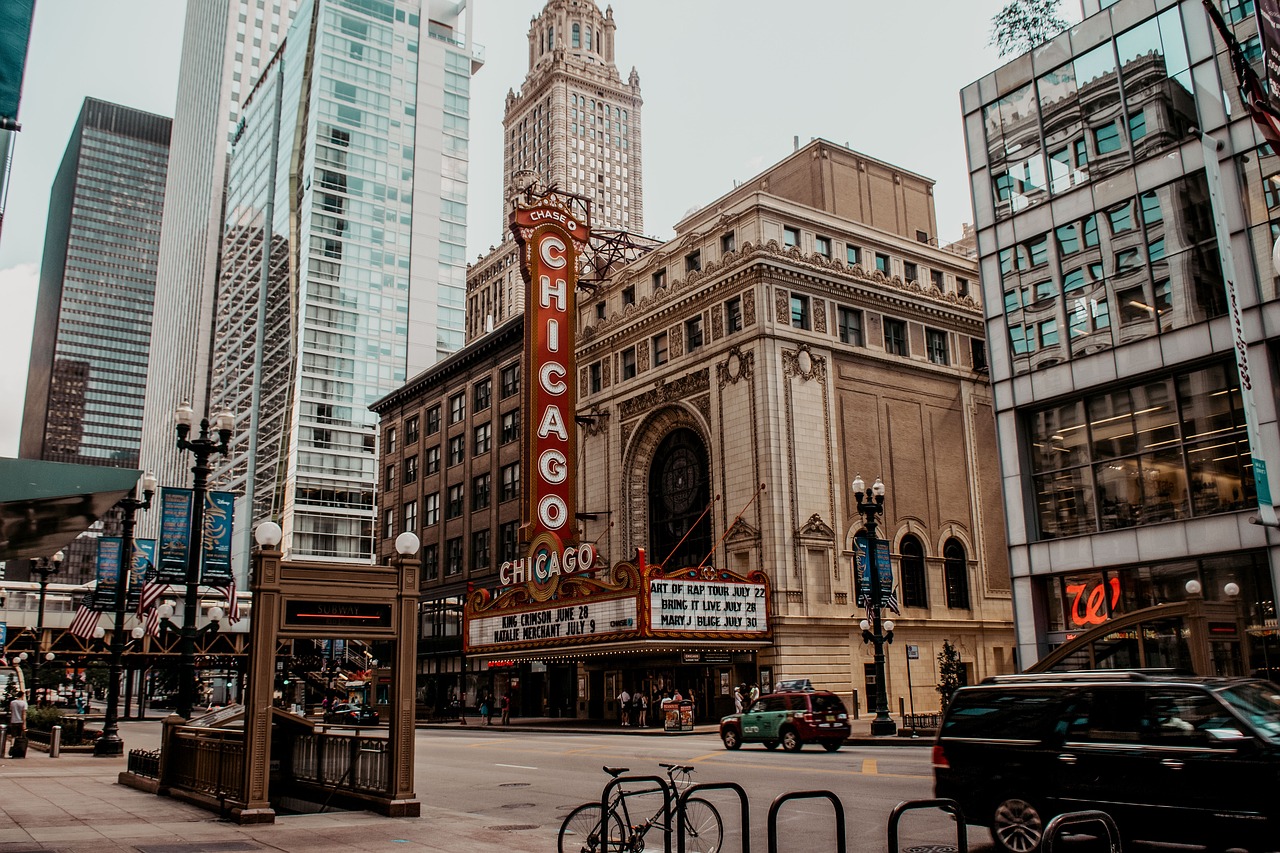
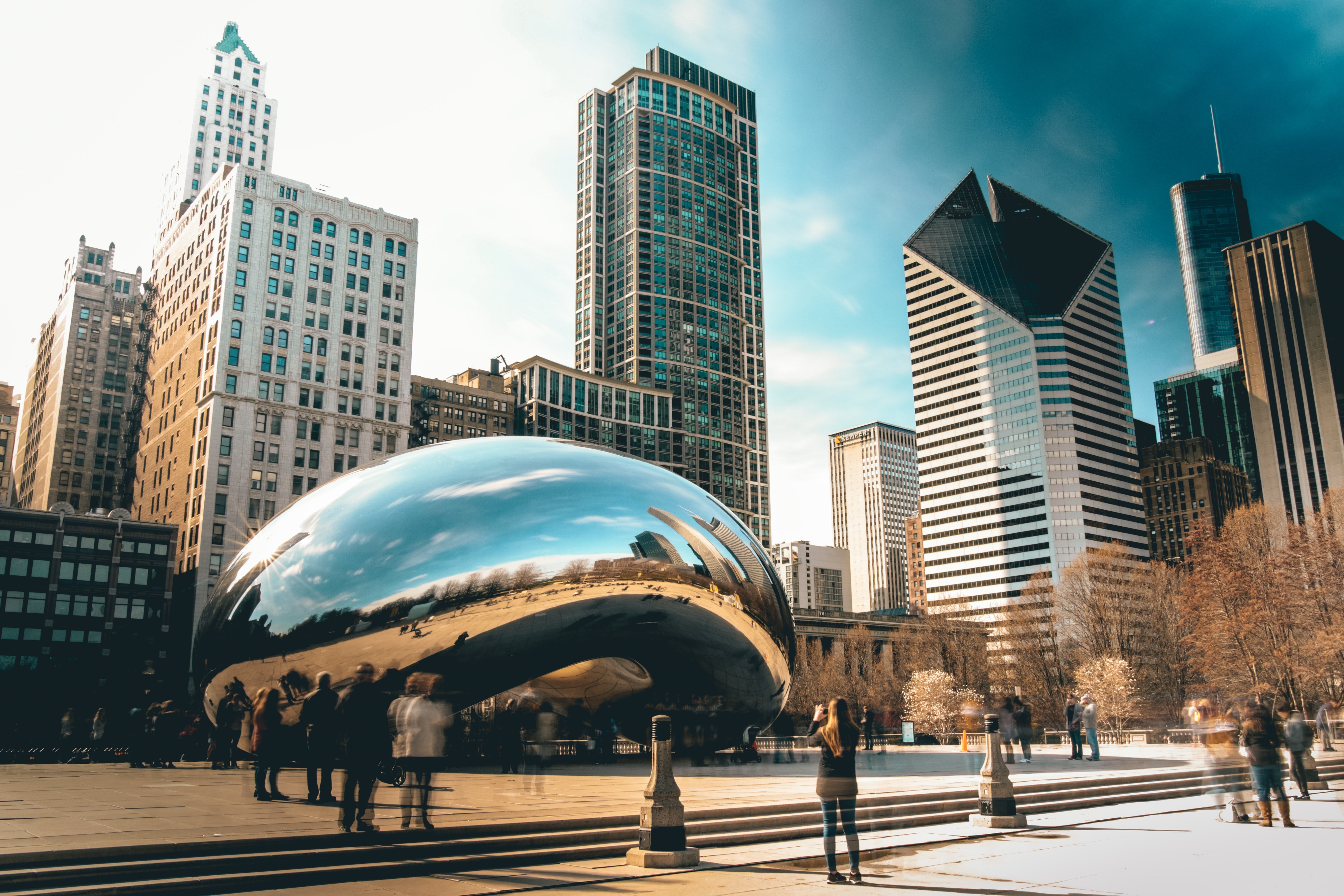
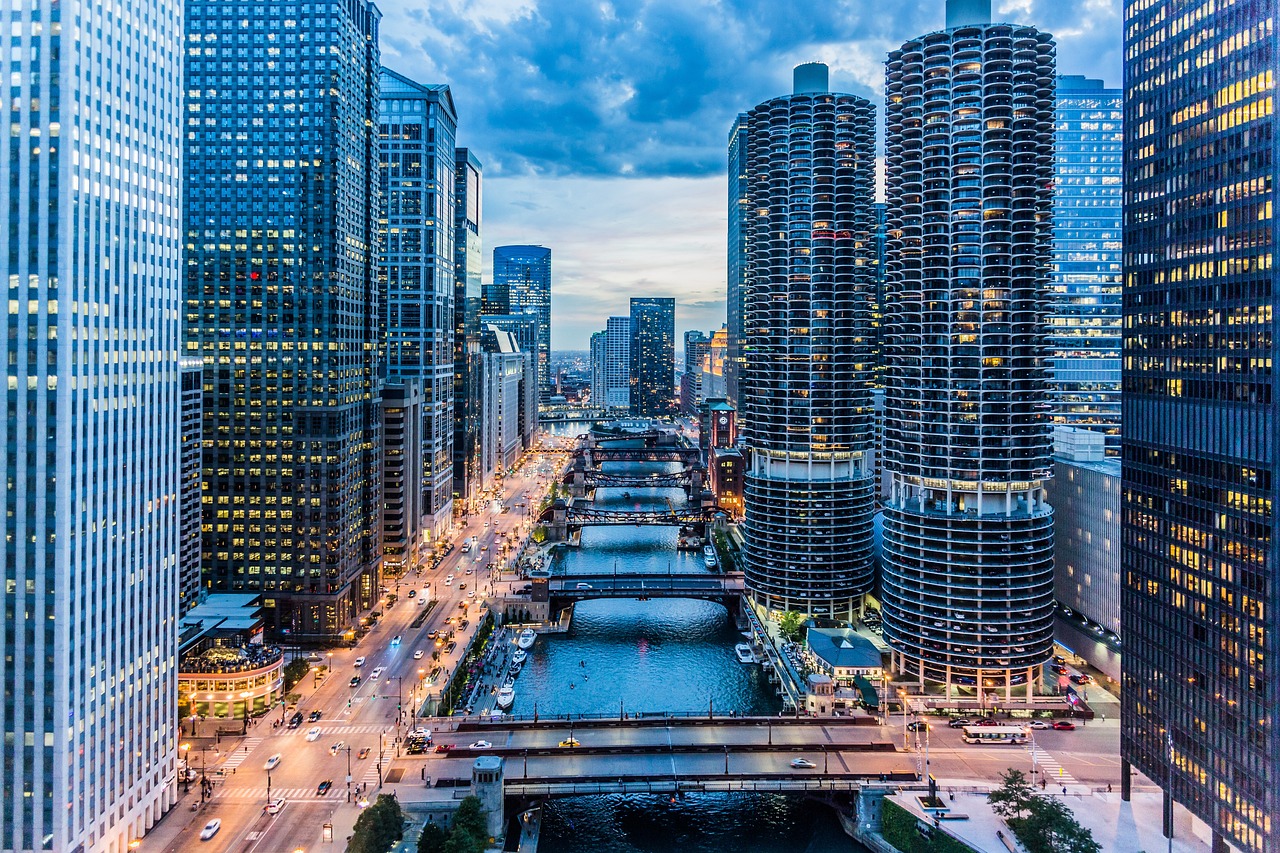
Chicago rises along the southwestern shore of Lake Michigan, the third-largest city in the United States and the acknowledged birthplace of the modern skyscraper: here, after the Great Fire of 1871, American architecture reinvented itself, giving rise to one of the most famous skylines in the world. Its beating heart is the Loop, the business district encircled by the elevated 'L' train, where masterpieces by Louis Sullivan, Mies van der Rohe and Frank Lloyd Wright stand side by side. A short walk leads to Millennium Park, with the gleaming 'Cloud Gate' sculpture (nicknamed 'The Bean' by locals) and the Jay Pritzker Pavilion designed by Frank Gehry. Nearby, the Art Institute of Chicago, one of America's great museums, guards Impressionist masterpieces and Grant Wood's celebrated 'American Gothic'. Along the water, the Chicago Riverwalk offers another vantage on the city, while the boats of the Architecture River Cruise glide between the façades, recounting a century and a half of building ingenuity. Toward the lake, Navy Pier with its Ferris wheel and the Magnificent Mile, the elegant stretch of Michigan Avenue lined with shops and hotels, set the rhythm of city life. Yet Chicago is also music and flavour: the home of electric blues and jazz resounds in the clubs of the South Side, while its tables serve the hearty deep-dish pizza, Chicago-style hot dogs and the food markets of lively neighbourhoods such as Pilsen and West Loop. Rising to the 412-metre Skydeck of the Willis Tower, the gaze sweeps across the lake and the boundless Illinois plain. A city of lakes and skyscrapers, of jazz and bold architecture, Chicago reveals itself on foot, amid the gusts that earned it the nickname 'Windy City' and the unmistakable energy of the American Midwest.
Auto
Giorno 3 — Chicago → Springfield (IL)
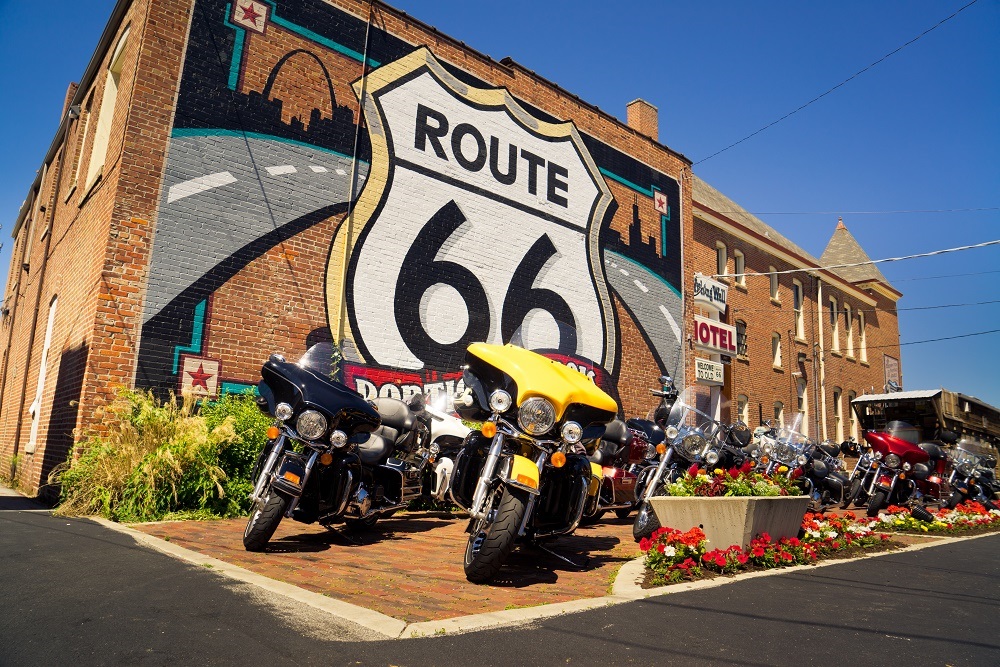
From Chicago, embark on the historic Route 66 to discover a piece of authentic America. This famous road, which connects Chicago to Los Angeles, stretches for 482 km in Illinois and is dotted with rustic cafes, quirky shops, and unique and bizarre works of art and architecture. Take a photo of the imposing Railsplitter Covered Wagon in Lincoln, or the enormous pink elephant near the Pink Elephant Antique Mall in Livingston. Discover Route 66 memorabilia in Pontiac, at the Route 66 Association of Illinois Hall of Fame and Museum. From here, drive south for about two hours to immerse yourself in the life of Abraham Lincoln in Springfield, at the Abraham Lincoln Presidential Library Museum, the Old State Capitol, and the Lincoln Home. Stop at Doc's Soda Fountain in Girard, along Route 66 (about 30 minutes from Springfield), to enjoy a gigantic Banana Split. Springfield, the capital of Illinois in the heart of the Midwest, is inseparably tied to Abraham Lincoln, who lived here and built his career before the presidency. The city guards his legacy at the Lincoln Home National Historic Site, the only home the president ever owned, at the Old State Capitol where he delivered famous speeches, and at the solemn Lincoln Tomb in Oak Ridge Cemetery. The modern Abraham Lincoln Presidential Library and Museum recounts his life through immersive displays. Along Route 66, which runs through town, vintage diners and signs survive, and the local “horseshoe sandwich” tradition offers a taste of Illinois cooking. Springfield reveals itself as a stop rich in American history and authentic Midwestern atmosphere.
Auto
Giorno 4 — Springfield (IL) → St Louis
St. Louis announces itself from afar with the unmistakable silhouette of the Gateway Arch, the 192-metre steel arch celebrating the westward expansion of the United States. Overlooking the banks of the Mississippi, this historic Missouri city blends grand nineteenth-century boulevards, a fervent musical past and a lively dining scene. The Forest Park district, larger than New York's Central Park, is home to museums, the zoo and the Saint Louis Art Museum, all free to enter. A cradle of blues and ragtime, it preserves historic venues where live music has never fallen silent, while the famous Anheuser-Busch brewery recounts the city's beer-making heritage. Don't miss the scenic ride to the top of the arch. St. Louis is where frontier America meets the great river metropolises.
Auto
Giorno 5 — St Louis → Joplin (MO)
Joplin rises in the southwestern corner of Missouri, at the crossroads of four states, in a region of gentle hills once made prosperous by lead and zinc mining. A historic stop on the legendary Route 66, the town preserves the charm of small-town America, with murals, vintage signs and stretches of the Mother Road running through its centre. Among its green spaces, Grand Falls stands out as the largest continuously flowing waterfall in Missouri, while local museums recount the mining past and the legacy of figures such as George Washington Carver, born nearby. A welcoming crossroads between Missouri, Kansas, Oklahoma and Arkansas.
Auto
Giorno 6 — Joplin (MO) → Oklahoma City
Oklahoma City spreads broad and modern across the heart of the Great Plains, capital of a state where cowboy culture meets contemporary urban energy. The revitalised Bricktown district, with its old brick warehouses overlooking a navigable canal, brims with restaurants, bars and galleries. The National Cowboy & Western Heritage Museum tells the saga of the West, while the Oklahoma City National Memorial honours, with quiet intensity, the victims of the 1995 bombing. Those drawn to tradition will find a tribute to the state's native nations at the First Americans Museum. Local cuisine celebrates grilled meats and Southwestern flavours, best enjoyed in classic steakhouses and the still-active stockyards. Oklahoma City is an authentic stop along the routes of Route 66, balancing frontier spirit and renewal.
Auto
Giorno 7 — Oklahoma City → Amarillo
After leaving Oklahoma City, continue along Route 66 until you reach Hydro, Texas, and visit Lucille's Service Station. Built in 1929, it is one of the few remaining historic service stations on Route 66 in Oklahoma. Continue along Route 66 to the Oklahoma Route 66 Museum in Clinton. Here you will find memorabilia that tells the story and legends of the most famous highway in the United States. As you cross the state border towards Amarillo, Texas, you will travel through a part of Route 66 rich in vintage icons and references to the Wild West. Long stretches of the old road still remain, in various places with the original pavement. Amarillo rises in the heart of the Texas Panhandle, a land of endless prairies and Route 66 legends. A historic crossroads on the famous "Mother Road", the city preserves the rugged, authentic spirit of the Wild West, with its legendary steakhouses and sprawling ranches. A few kilometres south opens Palo Duro Canyon, the second-largest canyon in the United States, a spectacular red-rock gorge crossed by trails for hiking and horseback riding. Not to be missed is the quirky Cadillac Ranch, an art installation of graffiti-covered cars planted in the ground that has become an icon of road-trip culture. Amarillo is an authentic stop for those crossing the great American plains in search of endless horizons.
Auto
Giorno 8 — Amarillo → Santa Fe
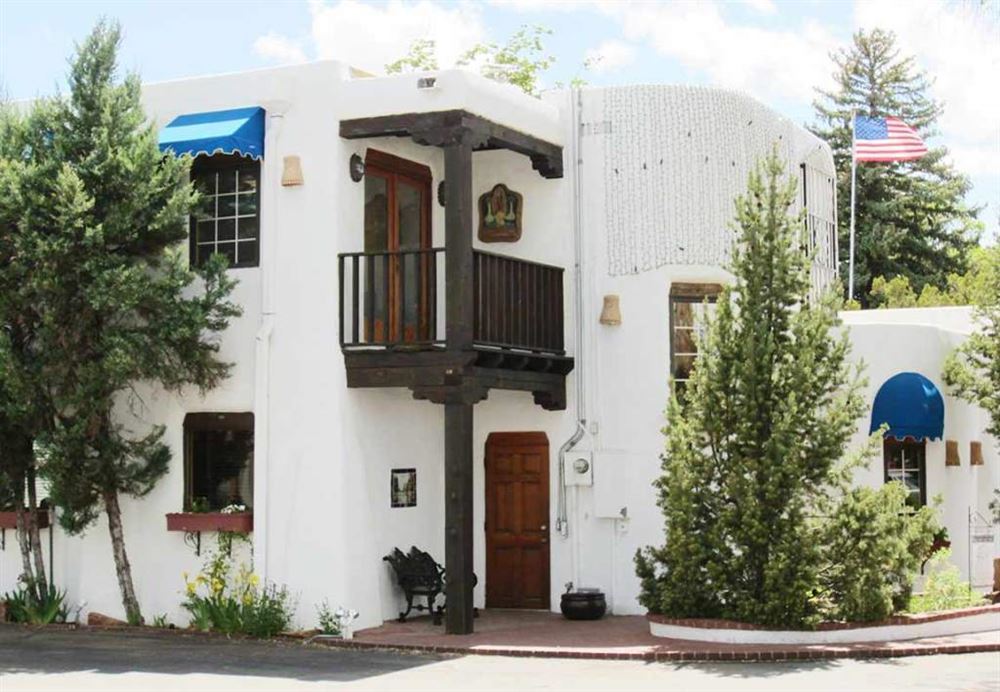
Continue west along Route 66 until you reach Adrian, Texas, and make a stop at the Midpoint Cafe. This is the midpoint of Route 66: from here, Chicago is 1,833 km to the east, and Los Angeles is the same distance to the west. Enter New Mexico and stop in Tucumcari to visit one of the last curiosity shops in this state, the Tee Pee Curios. It's fun not only from the outside but also inside, with all the souvenirs, t-shirts, and jewelry dedicated to Route 66. Head west and then north on Route 84, which was once part of the old Route 66 on the way to Santa Fe, while the landscape becomes desert-like and mountainous with the classic mesas (flat-topped hills). Santa Fe guards a singular soul: capital of New Mexico and the oldest of all the United States' state capitals, it wins you over at first glance with its unmistakable terracotta-coloured adobe architecture. Its beating heart is the historic Plaza, flanked by the Palace of the Governors, where Native American artisans display silver and turquoise jewellery. Nearby rise the Cathedral Basilica of St. Francis of Assisi and Canyon Road, the famous gallery-lined street that made Santa Fe one of America's art capitals. The city pulses with Hispanic and Pueblo culture, with its green-chile spiced cuisine, museums devoted to Georgia O'Keeffe and the peaks of the Sangre de Cristo mountains as a backdrop. Santa Fe reveals itself through art, spirituality and desert light.
Auto
Giorno 10 — Santa Fe → Gallup
Gallup lies in northwestern New Mexico, along historic Route 66 and on the edge of the great Navajo and Zuni reservations, for which it has long served as the main gateway. Nicknamed "the Indian Capital of the World," the town owes its identity to the trading posts and galleries where you find silver-and-turquoise jewellery, weavings and pottery made by Native artisans. Each summer the Inter-Tribal Indian Ceremonial draws dances, rodeos and parades from dozens of tribes. All around stretch landscapes of red mesas and sandstone formations such as Red Rock Park, perfect for hiking and for tasting the authenticity of the American Southwest.
Auto
Giorno 11 — Gallup → Grand Canyon South Rim
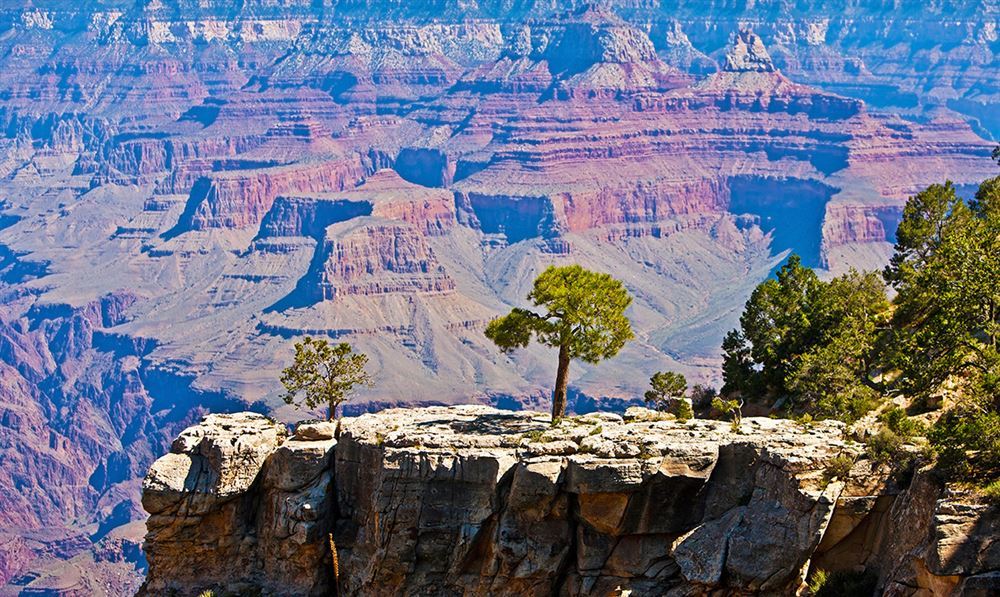
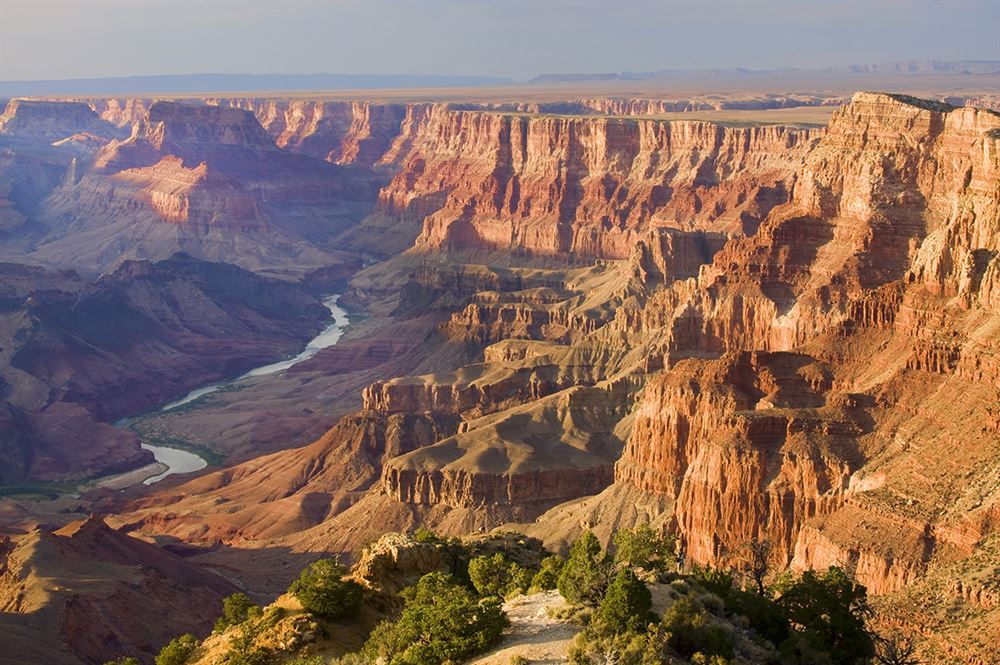
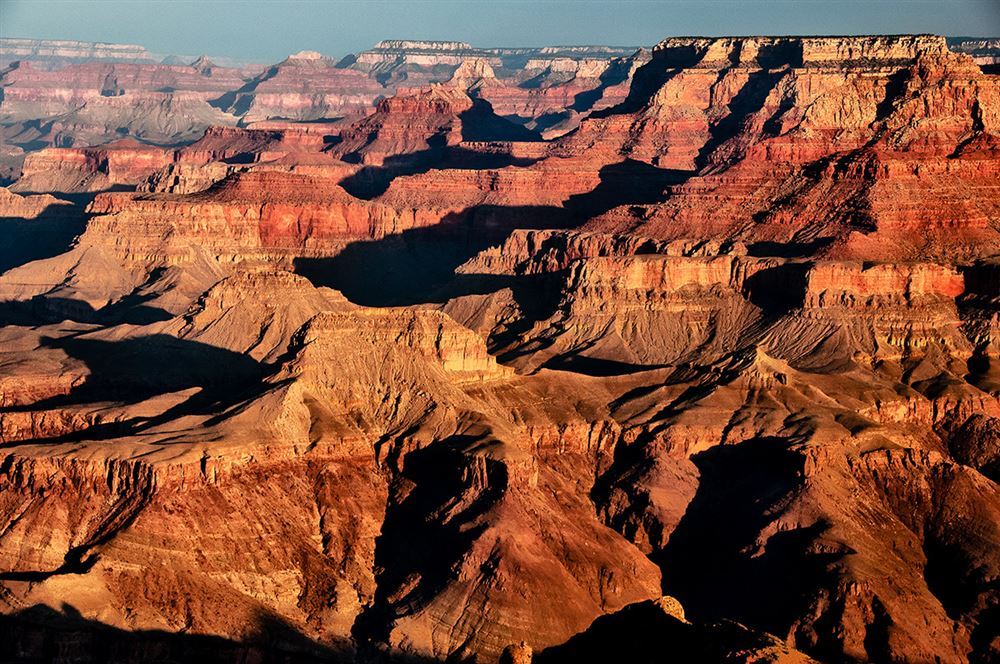
The South Rim of Grand Canyon National Park is the most visited side of one of the planet's most famous natural wonders, in Arizona. From here open dizzying vistas over the immense gorge carved by the Colorado River, over 1,600 metres deep and up to 29 kilometres wide. Grand Canyon Village, the historic El Tovar Hotel and overlooks such as Mather Point and Yavapai Point offer unforgettable views. Trails like the Bright Angel Trail descend toward the river. A geological spectacle and UNESCO World Heritage Site, the South Rim leaves visitors breathless.
Auto
Giorno 12 — Grand Canyon South Rim → Laughlin
Gradually leaving behind the Kaibab National Forest, an extensive forest of Ponderosa pines, Douglas firs, aspens, and junipers that reaches the edge of the Grand Canyon, we continue along the historic Route 66, passing through the towns of Seligman and Kingman. Laughlin rises in the far south of Nevada, along the banks of the Colorado River, at the border with Arizona and California, a casino town nicknamed 'the little Las Vegas on the river'. Its large waterfront resorts offer gaming, shows and entertainment in a more relaxed and affordable atmosphere than nearby Las Vegas. The river invites cruises, water sports and relaxation, while the hot Mojave Desert provides the backdrop.
Auto
Giorno 13 — Laughlin → Las Vegas
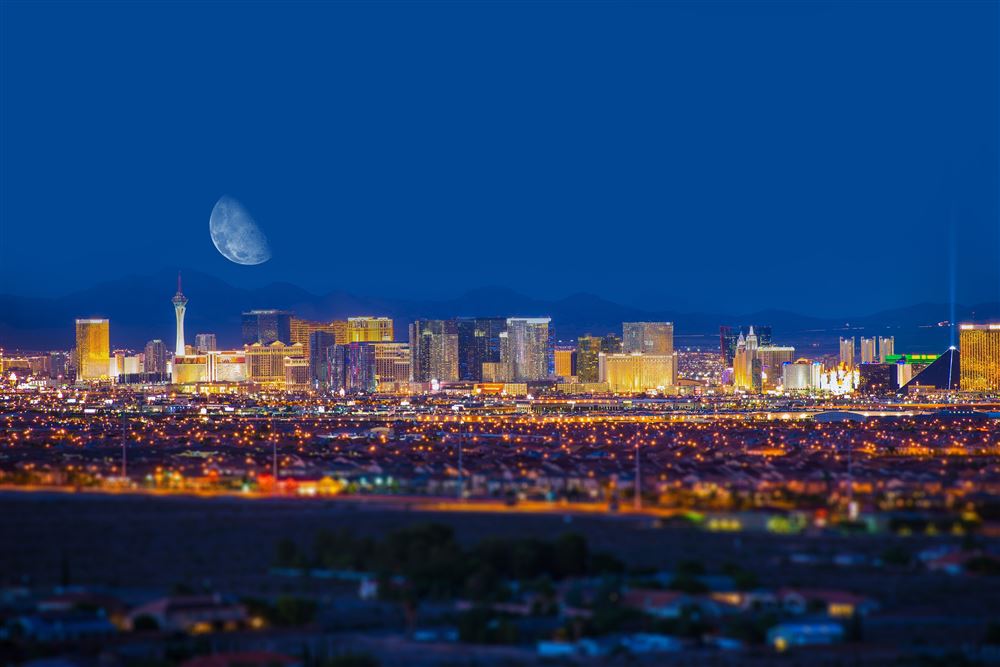
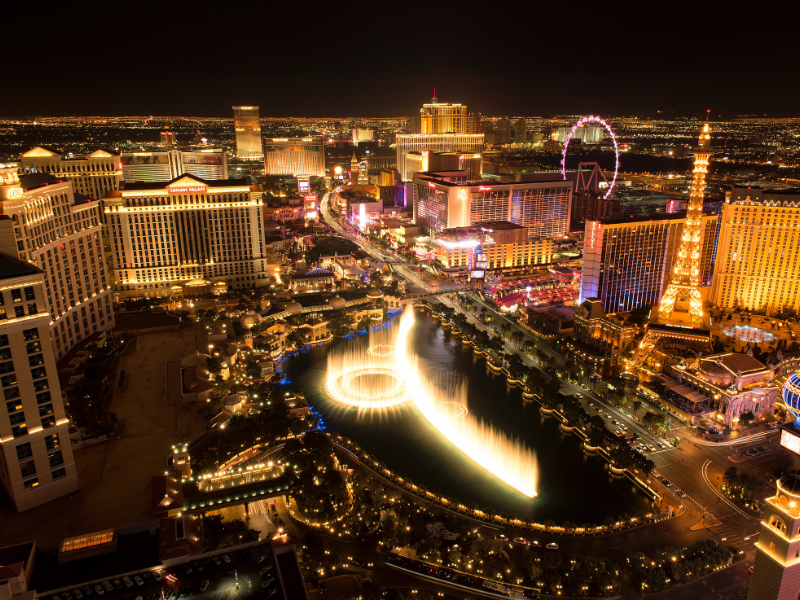
Las Vegas rises like a luminous mirage in the Mojave Desert, the world capital of entertainment, where excess becomes spectacle and the night never ends. Its pulsing artery is the Strip, the famous Las Vegas Boulevard lined with themed resorts that recreate the planet's great icons in miniature: at the Bellagio, fountains dance in choreographies of water and music before an artificial lake; the Paris Las Vegas is crowned by a replica of the Eiffel Tower; at the Venetian, gondoliers glide along Venetian-style canals beneath painted skies; at the Luxor, a black glass pyramid and a great sphinx evoke ancient Egypt, while the Mirage and the other gaming giants animate the scene with dazzling casinos. By night the city becomes a continuous stage: Cirque du Soleil shows, concerts, magic acts and residencies by major stars fill the theatres, while celebrated restaurants and gaming tables keep the metropolis awake until dawn. A short distance away, historic Downtown preserves the city's original face around the Fremont Street Experience, a pedestrian arcade canopied by a barrel vault of LED lights that brings the old Las Vegas back to life amid vintage neon signs and a more intimate atmosphere. Yet Las Vegas is also the gateway to magnificent natural landscapes: nearby, the Hoover Dam blocks the Colorado River to create Lake Mead, an ideal basin for boating and outdoor activities; Red Rock Canyon offers red sandstone formations crossed by trails and climbing walls; the Valley of Fire sets the desert ablaze with scarlet rock; and to the east opens the immensity of the Grand Canyon, one of the most beloved day trips. The city's most theatrical tradition is here too, that of the wedding chapels where couples marry in minutes, now an integral part of its legend. Between lights, desert and desire, Las Vegas remains a place where anything seems possible.
Auto
Giorno 14 — Las Vegas → Victorville
Victorville rises in the High Desert of southern California, along historic Route 66 at the foot of the San Bernardino Mountains, a classic stop on the legendary road trip. The town is home to the California Route 66 Museum, which celebrates the culture of the Mother Road with relics and memorabilia. A crossroads between Los Angeles and Las Vegas, surrounded by desert landscapes and rock formations, it is a stopping point toward the destinations of the Southwest. Between Route 66 nostalgia, open deserts and starry skies, Victorville evokes the golden age of the great American road trips.
Auto
Giorno 15 — Victorville → Los Angeles
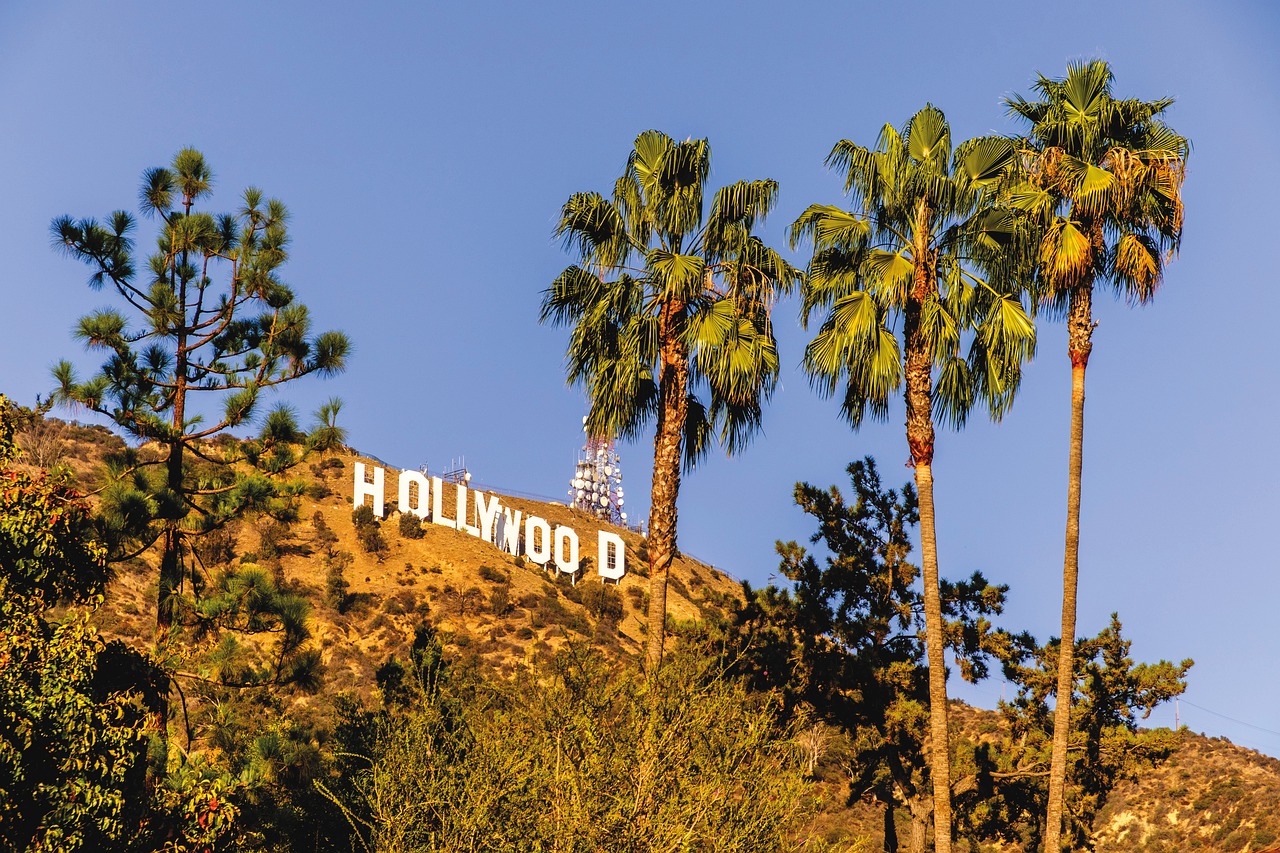
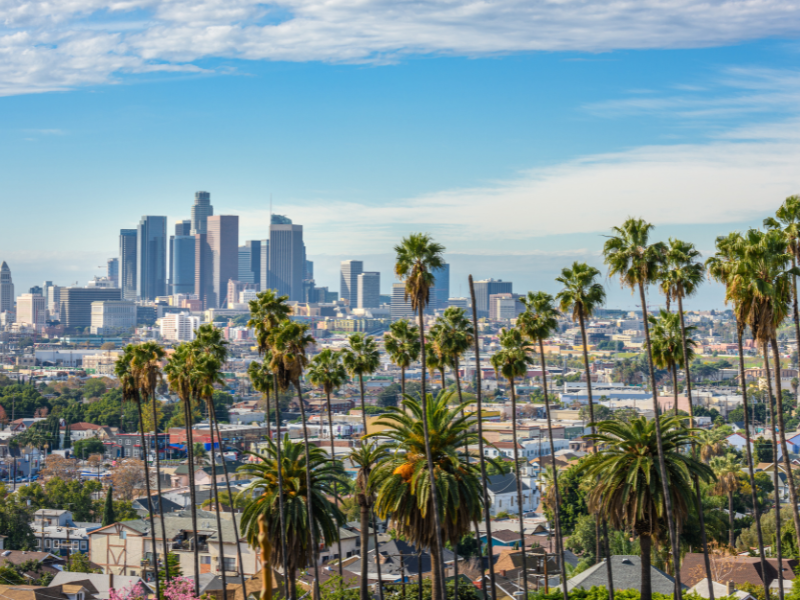
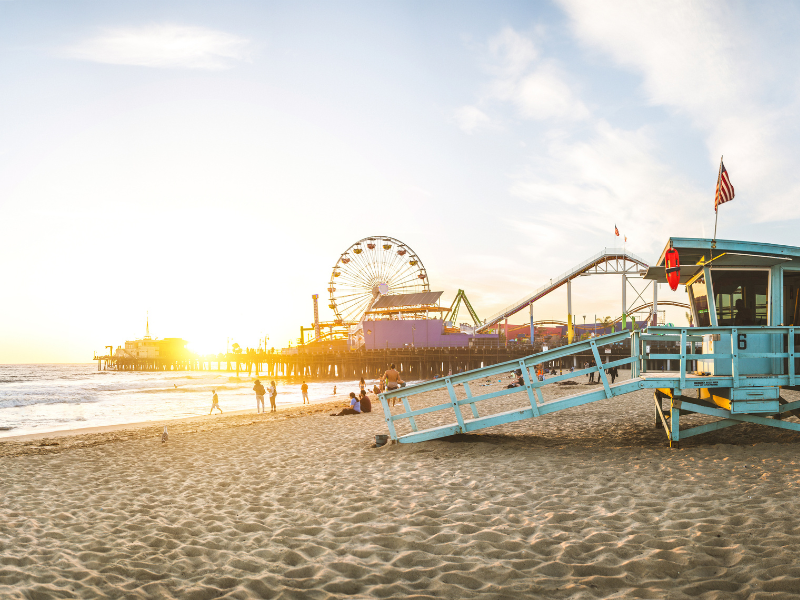
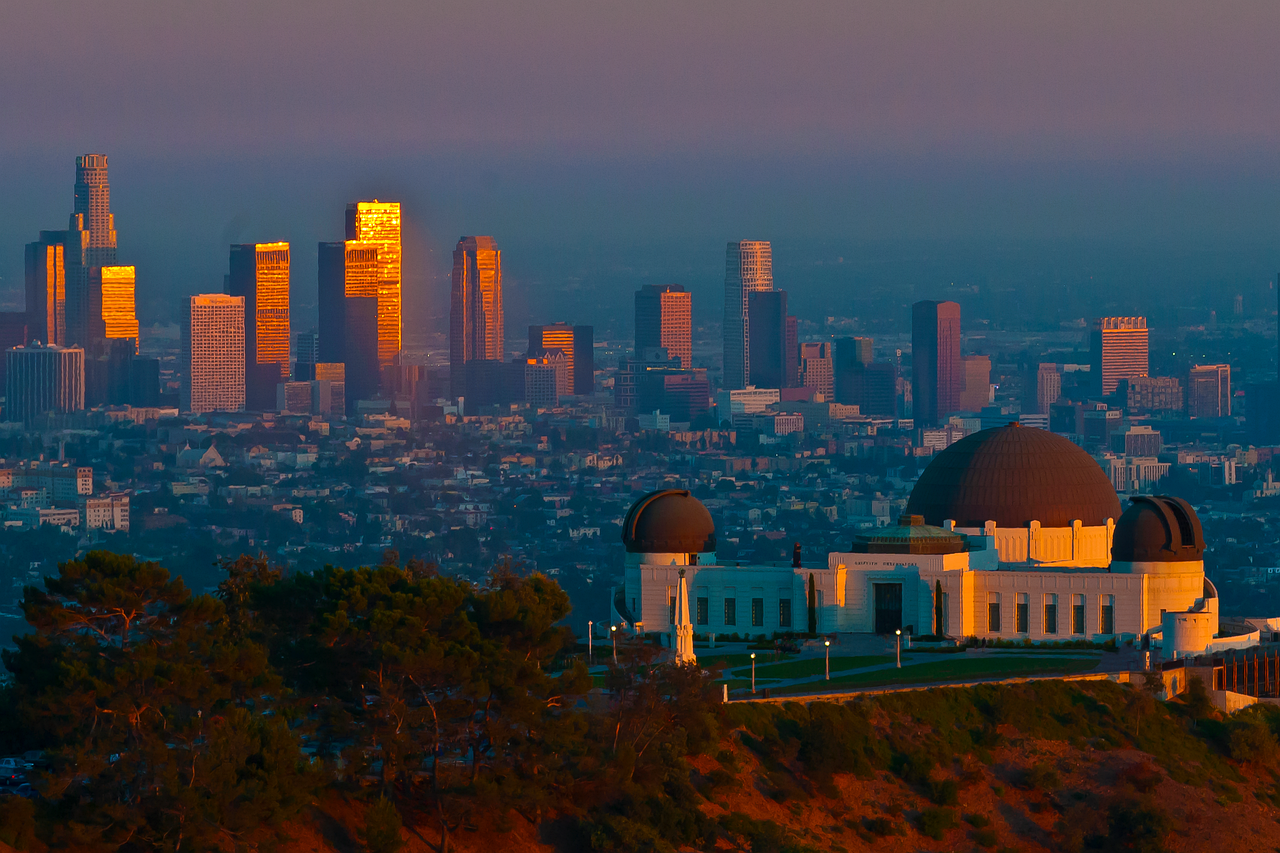
Los Angeles, home to Hollywood, Disneyland, and Universal Studios, is the epitome of carefree living for visitors: year-round sunshine, palm trees swaying in the wind, movie stars with luxurious residences in the hills of Beverly Hills, stunning museums, avant-garde architecture, and surf beaches.
_20260518122319.png)
_20260518122319.png)