Giorno 3 — Puerto Natales → Torres del Paine
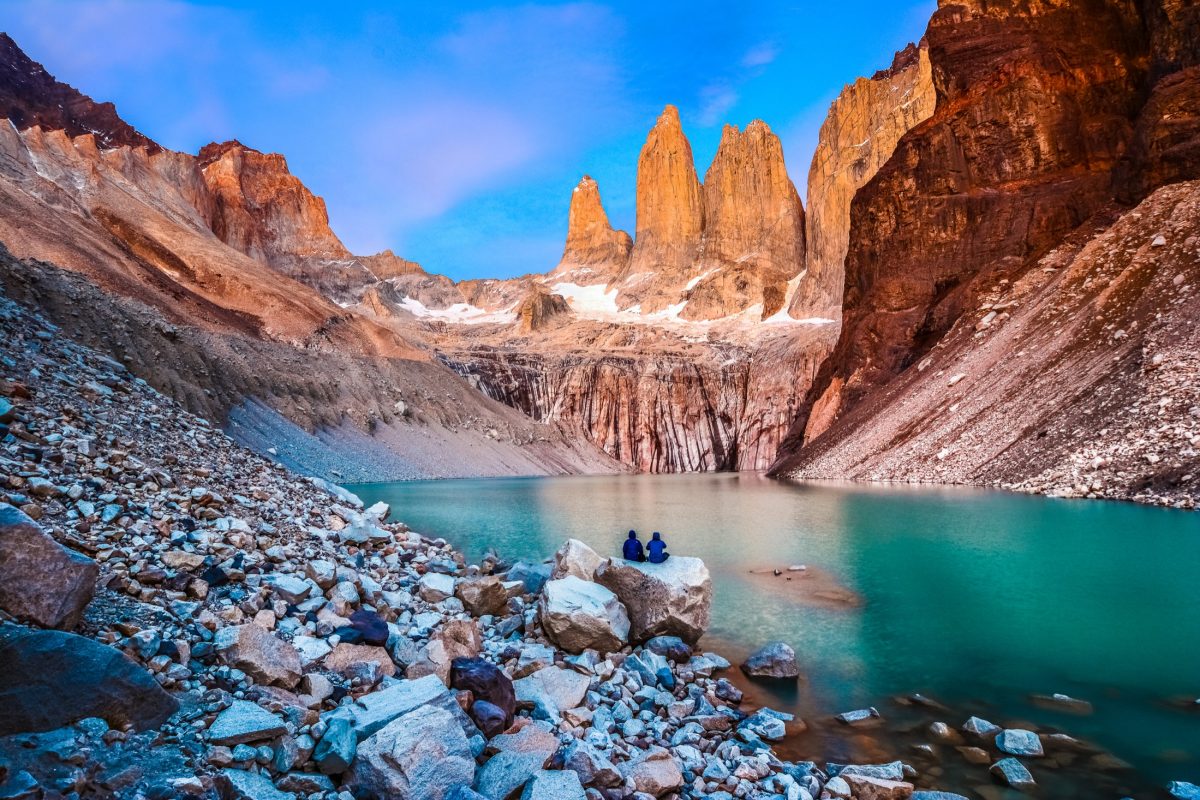
From Puerto Natales, you head west across the vast and remote region of Patagonia. Along the way, you can enjoy the untouched beauty of nature and the wide expanses of the Patagonian steppe. Upon arriving at Torres del Paine National Park, you are immersed in breathtaking landscapes of majestic mountains, glaciers, lakes, and valleys. Torres del Paine is Chile's most famous national park and one of the great natural landscapes on Earth: a territory of 181,000 hectares in southern Patagonia where pink granite towers, blue glaciers, lagoons of impossible colours and wind-swept grasslands compose landscapes of primordial beauty. The three towers that give the park its name — Paine Grande, Paine Chico and Paine Torre Sur — rise vertically for almost three thousand metres, and the view at dawn, when the rosy light tinges them gold, is considered one of the most moving in all of South America. The W Circuit trek is the classic five-day route that crosses the most scenic highlights: the Mirador Las Torres, the Valle del Francés with its avalanches of rock and ice, and Glaciar Grey, an immense field of blue ice flowing into the lake of the same name. The park is home to guanacos, condors, rheas, pumas and an extraordinary variety of wild birds. The waters of Lago Pehoé, an unreal shade of blue, reflect the Cuernos del Paine creating a natural tableau that appears in every photograph of Chile. For those who prefer not to hike the circuits, kayaking on glacial lakes, horse riding and cruises on Glaciar Grey offer equally memorable alternatives. Torres del Paine is a place to be experienced with respect and unhurried attention, allowing wild Patagonia to slowly get under the skin.