Giorno 6 — Kyoto
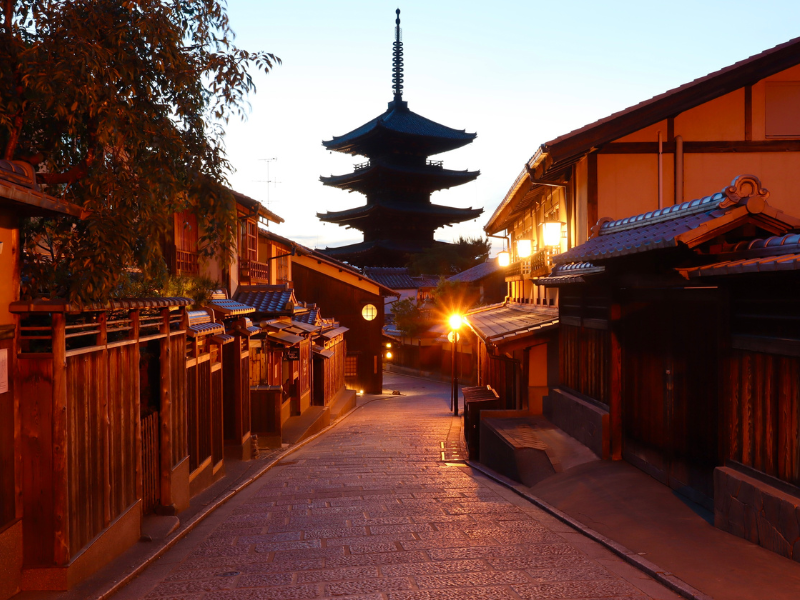
Breakfast, free day, we recommend visiting Kyoto, The Buddhist temple Kiyomizu-dera, one of the must-see destinations when visiting the city of Kyoto. Since 1994, it has been declared a UNESCO World Heritage Site, and in 2007, it was nominated as one of the possible monuments to be included among the New Seven Wonders of the World, although it did not receive the recognition. Despite being founded in the late 8th century, the current complex dates back to 1633, built by the order of the shogun Tokugawa Iemitsu during the early Edo period (1631-1633). The name derives from the waterfall that flows inside the complex: Kiyomizu means "clear water" or "pure water". Alternatively, there is the hall with 1001 statues of Sanjusangen-do: developed over a length of 120 meters, the main building seems to extend as far as the eye can see. The site seems to cultivate an interest in the symbolism of numbers and abundance: the name "sanjusan", the sacred number in Buddhism "33", refers to the number of intervals between the pillars that support its wooden architecture. From the outside, it may seem of little value, apart from the charm of simplicity. But inside, it will immerse you in another world, thanks to the incredible number of perfectly aligned statues that will leave you speechless. Alternatively, you can use the Japan Rail Pass to visit the towns of Uji, famous for green tea and the Byodo-in Temple, a UNESCO World Heritage Site, or the large Lake Biwa, both reachable by train from Kyoto Station in just a few tens of minutes. (The building may be partially covered for ongoing restoration work),
_20260505143525.png)
_20260505143526.png)
_20260505143526.png)
_20260505140955.png)
_20260505140955.png)